
Deadly Hong Kong Highrise Fire Exposes Dangers of Traditional Bamboo Scaffolding Practices
- Date & Time:
- |
- Views: 53
- |
- From: India News Bull
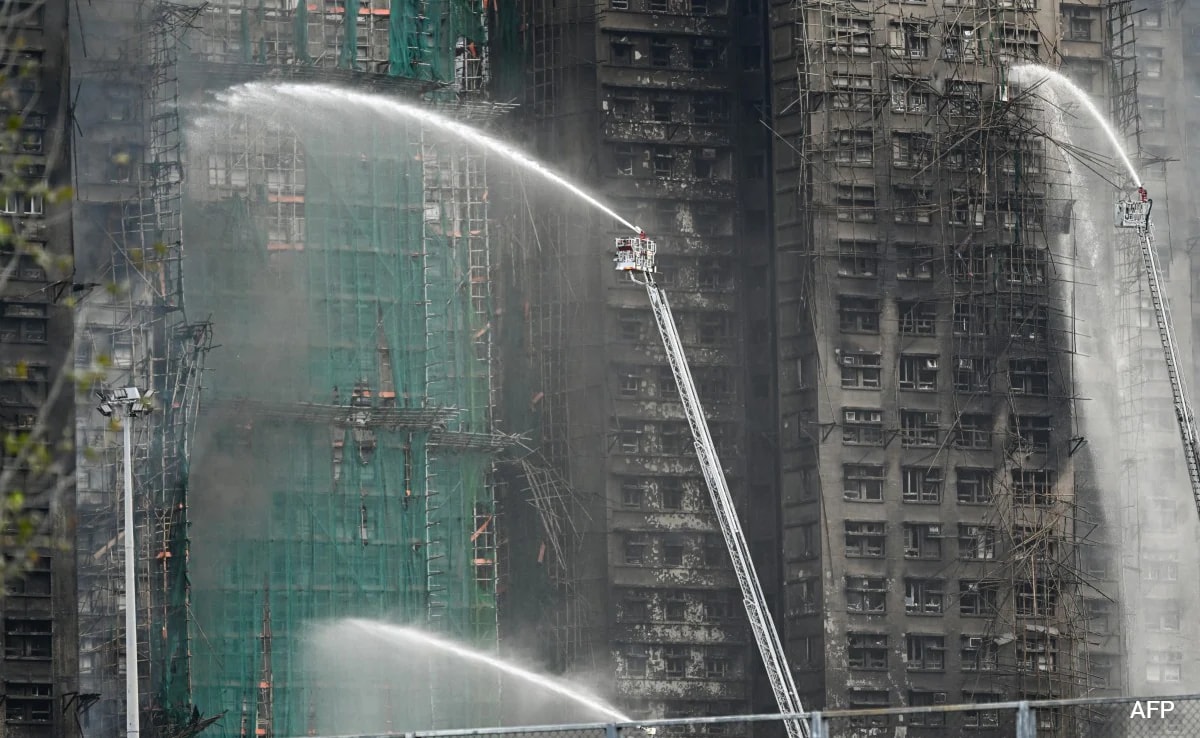
A devastating fire has claimed at least 55 lives after engulfing a highrise apartment complex in Hong Kong.
The territory's most lethal blaze in three decades has drawn critical attention to the hazardous practice of using flammable bamboo scaffolding and mesh for construction work—a tradition with roots extending centuries back to mainland China.
While the fire's exact cause remains undetermined, there was clear evidence of how rapidly flames spread across the green netting, causing bamboo structures to collapse in fiery heaps.
For generations in this former British colony filled with skyscrapers, bamboo has remained the preferred scaffolding material—valued for being economical, plentiful and adaptable—secured together with nylon cords.
This architectural technique originated in mainland China, where bamboo—symbolizing elegance and moral strength—has been fundamental to construction since ancient times, reportedly even utilized for scaffolding during the building of the Great Wall.
However, mainland China has largely transitioned to more robust metal scaffolding and fasteners, while Hong Kong, despite its modernity, still maintains approximately 2,500 registered bamboo scaffolding specialists according to official statistics.
Metal scaffolders outnumber them roughly three to one.
The sight of small teams of scaffolders climbing up towering, gleaming facades to encase a building within weeks has become emblematic of this global financial center.
These bamboo frameworks are frequently paired with green construction mesh designed to protect pedestrians from falling debris, as was the arrangement at the Wang Fuk Court housing complex in Hong Kong's northern Tai Po district.
Hong Kong's Chief Executive John Lee announced the formation of a task force to investigate the fire's cause.
"Buildings Departments' independent review unit will investigate whether the building's exterior walls meet the fire retardant standard," he stated during a press conference.
"If there's any wrongdoing we'll pursue accountability in accordance with laws and regulations."
SCAFFOLDING CHECKS PROMISED
Lee also indicated that the government would implement special measures for ongoing projects, verifying whether scaffolding mesh materials comply with fire retardant standards and other safety requirements.
In March, authorities mandated that 50% of new public works contracts would need to employ metal scaffolding moving forward.
However, the focus appeared to concentrate more on worker safety than fire hazards. Official data shows 22 fatalities involving bamboo scaffolders between 2019 and 2024.
Despite safety initiatives, Hong Kong's labor secretary Chris Sun stated in July that "the government has no intention to ban the use of bamboo scaffolds at the moment."
In October, a significant fire engulfed bamboo scaffolding at the Chinachem Tower in the Central business district. Once again, flames consumed construction netting and bamboo poles, leaving windows destroyed and exterior walls severely damaged.
The Association for the Rights of Industrial Accident Victims in Hong Kong reported via Facebook that at least two other fires involving bamboo scaffolding had occurred this year.
According to the Hong Kong Labour Department's Code of Practice for Bamboo Scaffolding Safety, protective nets, screens, and tarpaulin or plastic sheeting installed on scaffolding "should have appropriate fire retardant properties in compliance with a recognised standard."
Jason Poon, a whistleblower who previously exposed substandard construction work in Hong Kong, stated in a Wednesday Facebook post that fire hazard risks existed in scaffolding at numerous housing complexes.
He claimed to have contacted various government departments last year regarding the absence of fire retardant in scaffolding nets at another complex, but received no response.
Reuters did not receive immediate comments from the fire, buildings and labor departments when requested.
Source: https://www.ndtv.com/world-news/hong-kong-inferno-puts-spotlight-on-risky-bamboo-scaffolding-9707456