
NASA's Perseverance Rover Discovers "Mini-Lightning" Electrical Discharges in Mars' Atmosphere
- Date & Time:
- |
- Views: 61
- |
- From: India News Bull
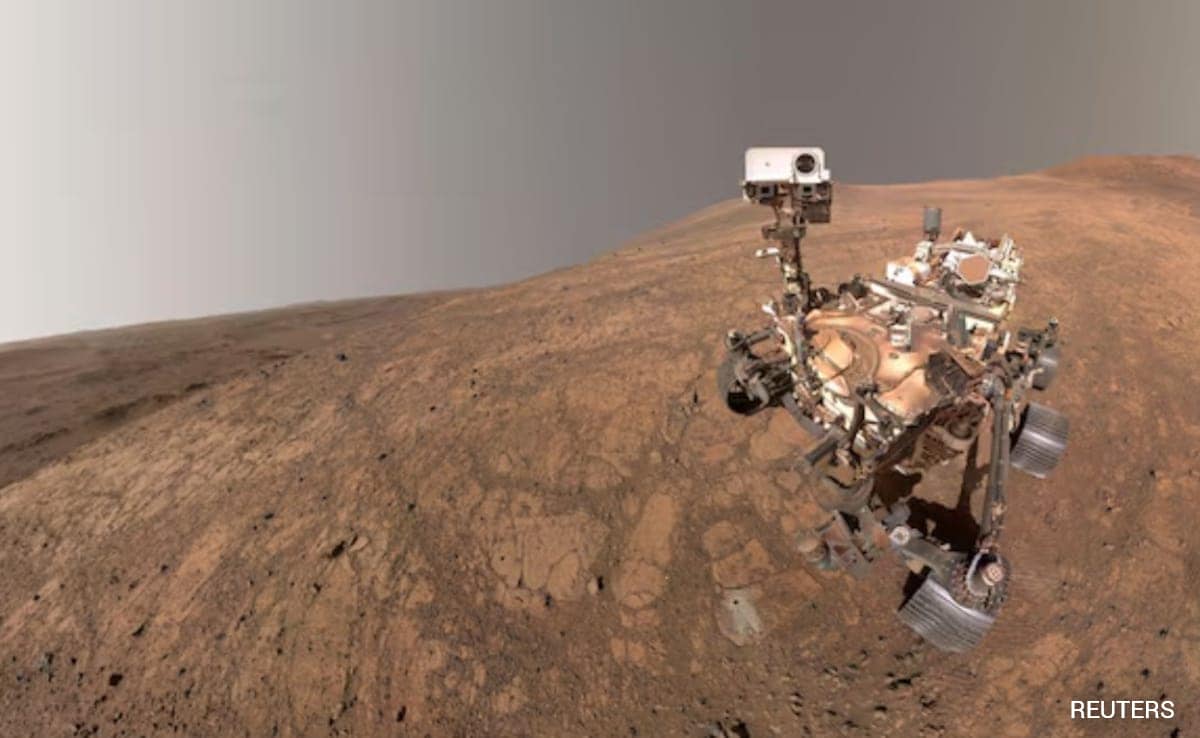
Electrical activity in the Martian atmosphere has been confirmed after years of scientific speculation.
Washington:
NASA's Perseverance rover has discovered evidence of electrical activity in Mars' atmosphere, detecting electrical discharges described by one scientist as "mini-lightning." These phenomena are frequently associated with dust devils, whirlwind formations that regularly traverse the Martian landscape.
Since 2021, the six-wheeled rover has been exploring Jezero Crater in the northern hemisphere of Mars. Using its SuperCam remote-sensing instrument, Perseverance captured these electrical discharges through both audio and electromagnetic recordings, marking the first documented evidence of electrical activity in Mars' thin atmosphere.
"These electrical discharges represent a significant breakthrough with direct implications for Martian atmospheric chemistry, climate, habitability, and future robotic and human exploration efforts," explained Baptiste Chide, planetary scientist at the Institute for Research in Astrophysics and Planetology in France and lead author of the study published Wednesday in Nature journal.
"The electrical charges necessary for these discharges likely influence dust transportation on Mars, a fundamental process to the planet's climate that remains poorly understood. Furthermore, these electrostatic discharges could potentially threaten electronic equipment on current robotic missions and even pose hazards for future astronauts exploring the Red Planet," Chide added.
The research team analyzed 28 hours of microphone recordings collected by the rover over two Martian years, identifying 55 electrical discharges typically linked to dust devils and dust storm fronts.
"What we detected wasn't lightning in the conventional sense. It was more like a small spark, perhaps measuring a few millimeters, not actual lightning. The sound resembled a spark or whip-crack," explained Ralph Lorenz, planetary scientist and study co-author from Johns Hopkins University Applied Physics Laboratory in Maryland.
Sixteen of these electrical discharges were recorded during Perseverance's two close encounters with dust devils.
A separate study published in October documented how dust devils are prevalent on Mars' dry, dusty surface, with two orbiting spacecraft detecting wind speeds reaching approximately 98 miles per hour (158 kph) in these dust-lifting whirlwinds.
The internal dynamics of these dust devils generate the electrical discharges.
"I would describe it as 'mini-lightning,'" stated Chide. "The phenomena result from friction between tiny dust particles rubbing against each other in the air, accumulating electrons before releasing their charge as electrical arcs just a few centimeters long, accompanied by audible shockwaves."
This phenomenon is known as triboelectricity.
"Consider a sunny, dry day when you walk across a rug or rubber surface and bring your hand near a door handle. The small spark you might generate is the same type of electrostatic discharge we detected with SuperCam on Perseverance," explained Franck Montmessin, planetary scientist and study co-author from the French research agency CNRS and research laboratory LATMOS.
Scientists had long suspected electrical activity in the Martian atmosphere.
"Our observations result from having exceptionally sensitive instrumentation operating over an extended period, allowing us to detect very small discharges with energy comparable to an automobile ignition system," Lorenz noted.
Mars now joins Earth, Saturn, and Jupiter as planets known to have atmospheric electrical activity. The researchers suggest other worlds in our solar system may share this characteristic, including Venus, Uranus, and Saturn's moon Titan, though this has not yet been documented.
"The Martian atmosphere presents ideal conditions for electrification: abundant dust, extreme dryness, and turbulence," Chide explained. "While electrification of dust and sand is well-documented in Earth's deserts, it rarely produces actual electrical discharges. On Mars, however, the thin carbon dioxide atmosphere makes this phenomenon much more likely, as the charge required to generate sparks is significantly lower than on Earth."
SuperCam recorded the first-ever Martian sounds in 2021, shortly after Perseverance's landing.
"Since then, it has been used daily to monitor the atmosphere, building a collection of over 30 hours of sounds from the Red Planet: from wind howls to the whirring of the Ingenuity helicopter's blades, and now a new addition: electrostatic discharges," Chide concluded.
Source: https://www.ndtv.com/world-news/mini-lightning-nasa-rover-detects-electrical-discharges-on-mars-9705872