
'Walk Back': Immigration Lawyer On US $1,00,000 H-1B Visa Fee Clarification
- Date & Time:
- |
- Views: 81
- |
- From: India News Bull
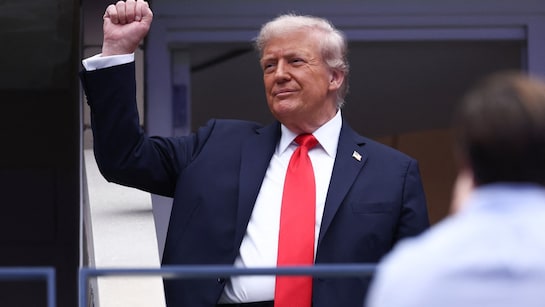
Trump has endorsed the cutback in the H-1B visa programme as an "incentive" to hire "American workers."
Washington:
A prominent immigration attorney has described the White House clarification on the $100,000 H-1B visa fee as a "walk back" from the Trump administration's initial position. The White House informed IANS that this substantial fee would be a "one-time" charge applicable only to new visa applications, not renewals or current visa holders.
Speaking exclusively with IANS, Steven Brown, partner at immigration law firm Reddy Neumann Brown PC, noted that the clarification appears to contradict the original presidential proclamation issued by Donald Trump on Friday.
"In my opinion, this definitely represents a walk back from what Secretary Lutnick stated and what the proclamation's text indicated. The proclamation doesn't distinguish between new and current H-1B visas - it's described as an entry ban," Brown explained.
The White House officially responded to IANS on Saturday, emphasizing: "This is a one-time fee that applies only to the petition. It only applies to new visas, not renewals or current visa holders. It will first apply in the upcoming lottery cycle."
White House Press Secretary Karoline Leavitt reinforced this clarification on X, stating that current H-1B visa holders temporarily outside the United States "will not be charged $100,000 to re-enter. H-1B visa holders can leave and re-enter the country."
Brown indicated that while awaiting "official guidance," the clarification offers "relief" for existing H-1B holders.
"This provides welcome relief for those in the US who have established connections or are working here. People can perhaps breathe easier now, but let's wait until Monday to see what develops from this," he advised.
The need for clarification arose because Trump's signed proclamation did not explicitly differentiate between existing H-1B visa holders and new applicants.
Brown described the situation as "weird," noting that a signed proclamation is being interpreted differently through social media posts by administration officials.
"We're in this unusual territory where immigration policy is being implemented through proclamations and then modified through tweets, which might be unprecedented in administrative law," he remarked.
A White House Spokesperson told IANS on Saturday that the policy aims to "discourage companies from spamming the system."
"President Trump promised to prioritize American workers, and this common-sense measure fulfills that promise by discouraging system abuse and wage depression. It also provides certainty to American businesses genuinely seeking to bring skilled workers to our country who have been disadvantaged by system abuses," stated Taylor Rogers, White House Spokeswoman.
On Friday, Trump had endorsed restricting the H-1B visa program as an "incentive" for hiring "American workers."
"We need workers. We need great workers, and this pretty much ensures that," Trump added.
Commerce Secretary Howard Lutnick defended the measure, explaining it would discourage foreign worker recruitment.
"The concept is to eliminate the economic incentive for major tech and other companies to train foreign workers. With a $100,000 government fee plus employee compensation, it's no longer financially viable. Companies will train American graduates from our excellent universities instead. The policy aims to stop importing people to take our jobs by charging $100,000 a year for H-1B visas," he explained.
Brown emphasized that regardless of the current situation, legal challenges to the proclamation are likely forthcoming.
"Extensive litigation will follow. Corporations with skilled foreign employees, individuals, and organizations representing immigrants could all potentially file lawsuits," he added.
He stressed that executive proclamations cannot adequately address H-1B program challenges, and Congressional action is necessary.
"Congress must implement reform since immigration is constitutionally a congressional power. While the executive branch has some authority, meaningful H-1B reform would require congressional legislation," he concluded.