
China's Strategic Dominance in Rare Earths: How Beijing Secured a Global Monopoly and Its Impact on US-China Relations
- Date & Time:
- |
- Views: 61
- |
- From: India News Bull
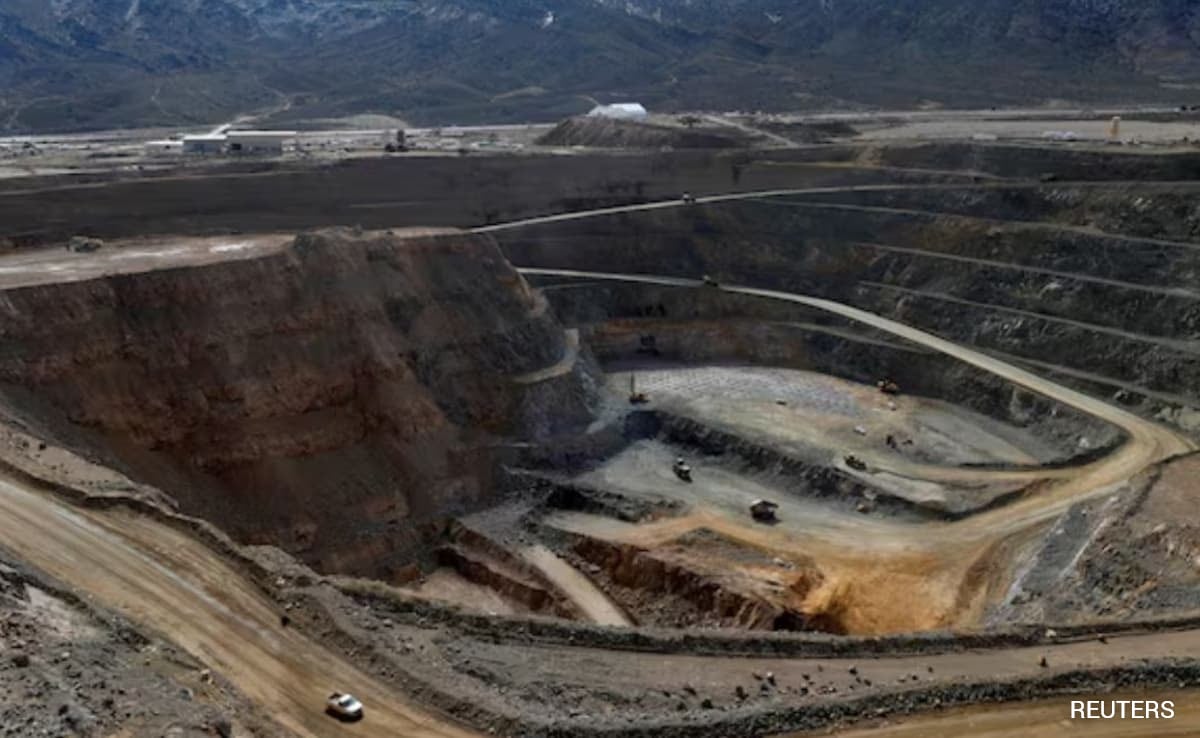
China has established dominance over approximately two-thirds of global rare earths mining, according to most industry estimates.
China's commanding position in the rare earths sector—spanning from natural reserves and extraction to processing and technological innovation—stems from decades of strategic planning, providing Beijing significant leverage in its ongoing trade tensions with the United States.
These 17 essential elements will become increasingly vital to the global economy in the coming years, with analysts cautioning that Western efforts to establish alternative supply networks could take considerable time to become effective.
Rare earths are essential for defense applications—utilized in fighter jets, missile guidance systems, and radar technology—while also being critical components in everyday products including smartphones, medical devices, and automobiles.
During a recent AFP visit to Ganzhou, a southeastern mining region specializing in "heavy" rare earths such as yttrium and terbium, significant industrial activity was observed.
While media access to China's secretive rare earths industry is seldom granted, AFP journalists—despite being under constant surveillance by unidentified monitors—witnessed dozens of trucks entering and exiting one mining facility, alongside several busy processing operations.
In Ganzhou, expansive new headquarters are under construction for China Rare Earth Group, one of the country's two primary state-owned enterprises in this sector following years of Beijing-directed industry consolidation.
This year's challenges have "created opportunities for more countries to explore expansion of rare earth metal production and processing," explained Heron Lim, economics lecturer at ESSEC Business School, to AFP, noting that "this investment could yield longer-term benefits."
Comprehensive export restrictions implemented by China in early October sent shockwaves throughout global manufacturing sectors.
These constraints triggered alarm in Washington, which has been engaged in a renewed trade conflict with Beijing since President Donald Trump began his second term.
During a crucial meeting in South Korea late last month, Trump and Chinese President Xi Jinping agreed to a one-year suspension of the escalating tariff battle between the world's two largest economies.
The agreement—which ensures supply of rare earths and other critical minerals, at least temporarily—effectively neutralized the most severe American measures and was widely interpreted as a diplomatic victory for Beijing.
"Rare earths will likely remain central to future Sino-US economic negotiations despite tentative agreements thus far," Heron Lim told AFP, adding that "China has demonstrated willingness to employ additional trade levers to keep the United States at the negotiating table."
"The instability has created a challenging environment for manufacturers dependent on various rare earth metals, as near-term supply remains uncertain."
Washington and its allies are now racing to develop alternative mining and processing chains, though experts warn this process will require years to complete.
During the Cold War, the United States pioneered techniques for extracting and processing rare earths, with California's Mountain Pass mine supplying the majority of global demand.
However, as tensions with Moscow subsided and awareness grew regarding the substantial environmental impact of rare earth production, the United States gradually transferred capacity overseas throughout the 1980s and 1990s.
Currently, China controls approximately two-thirds of global rare earths mining, according to most estimates.
According to geological surveys, China already possesses the world's largest natural reserves of these elements among all nations.
China also maintains a near-complete monopoly on separation and refining processes, with recent analysis indicating control of approximately 90 percent of global processing capacity.
Furthermore, China's commanding lead in patents and strict export controls on processing technology reinforce Beijing's efforts to prevent expertise from leaving the country.
"The United States and European Union remain heavily dependent on rare earth element imports, highlighting significant vulnerabilities for critical industries," stated Amelia Haines, commodities analyst at BMI, during a seminar this month, adding that "this persistent risk will likely accelerate a broader pivot toward rare earth security."
In recent years, US defense authorities have allocated substantial resources toward strengthening domestic production—part of efforts to establish a complete "mine-to-magnet" supply chain by 2027.
Washington has also been collaborating with allies to develop extraction and processing alternatives to reduce China dependence.
Last month, Trump signed an $8.5 billion rare earths agreement with Australian Prime Minister Anthony Albanese, targeting critical minerals projects in Australia, whose vast territory contains extensive rare earth resources.
The US president also established cooperation agreements covering critical minerals with Japan, Malaysia, and Thailand last month.
Despite this year's flurry of activity and headlines, Washington has long recognized its vulnerability regarding rare earths.
In 2010, a maritime territorial dispute with Tokyo prompted Beijing to suspend mineral shipments to Japan—the first major incident highlighting the geopolitical implications of China's control over this strategic sector.
This episode triggered calls from then-President Barack Obama's administration to strengthen US domestic capabilities in this critical field.
Nevertheless, fifteen years later, China remains the dominant global power in rare earths.
Source: https://www.ndtv.com/world-news/how-china-gained-a-near-monopoly-of-rare-earths-mining-against-us-9700931