
Inside the Diplomatic Back Channel: How US Envoy Guided Russia on Pitching Ukraine Peace Plan to Trump
- Date & Time:
- |
- Views: 56
- |
- From: India News Bull
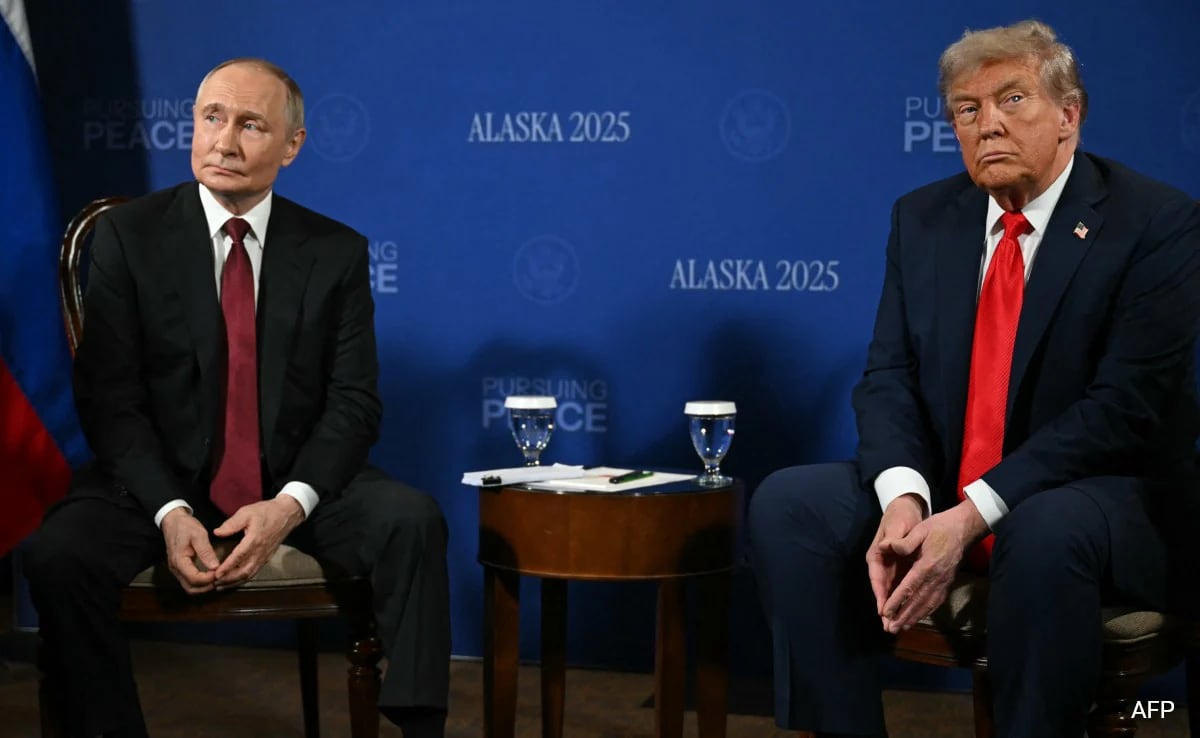
Trump engaged in a lengthy two and a half hour conversation with Putin on October 16.
US presidential envoy Steve Witkoff, riding the wave of success from the Gaza peace deal, conducted a telephone conversation last month with a high-ranking Kremlin official to propose collaboration on a similar plan for Ukraine and suggested that Vladimir Putin should discuss this with Donald Trump.
During a brief five-minute phone call on October 14, Witkoff provided guidance to Yuri Ushakov, Putin's chief foreign policy advisor, on how the Russian president should approach the topic with Trump. His recommendations included arranging a Trump-Putin call prior to Volodymyr Zelensky's White House visit later that week and using the Gaza agreement as an entry point.
"We created a 20-point Trump plan that constituted 20 points for peace, and I'm considering perhaps we develop something similar with you," Witkoff explained to Ushakov, according to a recording of the conversation reviewed and transcribed by Bloomberg.
A White House spokesperson, Anna Kelly, confirmed receipt of a comment request but did not provide an immediate response. Kremlin spokesman Dmitry Peskov also did not immediately respond to requests for comment.
The conversation provides unprecedented direct insight into Witkoff's recent negotiation strategies with Russia and appears to reveal the origins of the 28-point peace proposal that emerged earlier this month—which the US has urged Ukraine to accept as the foundation for an agreement.
Putin indicated this month that he believed the US plan could serve as the basis for a peace settlement. He informed senior officials during a Russian Security Council meeting that while the 28-point plan had not yet been discussed in detail with the US, Moscow had received a copy of it.
At the time of the Witkoff-Ushakov call, Trump was celebrating the success of his efforts to end the war in Gaza. The previous day, he had become the first US president to address the Israeli Knesset since 2008 after securing the release of the final 20 living hostages held by Hamas.
Trump's attitude toward Putin, however, seemed to be deteriorating. As he prepared for his meeting with Zelenskiy on October 17, he was considering supplying Ukraine with longer-range Tomahawk missiles, discussing new sanctions against Russia, and expressing his frustration with Putin.
"I don't understand why he persists with this war," Trump stated on October 14, the same day that Witkoff spoke with Ushakov. "He simply refuses to end that war. And I believe it's making him appear very unfavorable."
Timeline: US Engagement With Russia Over Ukraine Plans
Oct. 13 Trump addresses Knesset as Israeli hostages freed
Oct. 14 Witkoff speaks to Ushakov, discussed Putin-Trump call
Oct. 16 Trump speaks with Putin for two and a half hours
Oct. 17 Zelenskiy visits the White House
Around Oct. 24-26 Witkoff meets with Dmitriev in Miami
Oct. 29 Ushakov and Dmitriev discuss Russian strategy in call
During his conversation with Ushakov, Witkoff expressed profound respect for Putin and mentioned that he had informed Trump of his belief that Russia has consistently desired a peace agreement. The US envoy noted Zelenskiy's upcoming visit and suggested that Putin could communicate with Trump prior to that meeting.
"Zelenskiy is coming to the White House on Friday," Witkoff stated. "I will attend because they want me present, but I think if possible we should arrange the call with your boss before that Friday meeting."
Ushakov inquired whether it would be "useful" for Putin to call Trump. Witkoff confirmed it would.
He also advised that Putin should congratulate Trump on the Gaza peace deal, acknowledge Russia's support for it, and express respect for the president as a man of peace. "From that starting point, it's going to be a really productive call," Witkoff said.
"Here's what I think would be remarkable," Witkoff then continued. "Perhaps he mentions to President Trump: you know, Steve and Yuri discussed a very similar 20-point peace plan and that could be something that we believe might advance progress a bit, we're open to such approaches."
Ushakov appeared receptive to the advice. Putin "will congratulate" and will say "Mr. Trump is a genuine peace advocate," he responded.
Trump and Putin held their call two days later, at Russia's request, and the US president characterized the two-and-a-half-hour-long discussion as "very productive." Afterward, he announced plans to meet with the Russian leader in Budapest, a summit that has yet to occur, and also mentioned that Putin had congratulated him on the Gaza deal.
Following up on that call, Witkoff met with Kirill Dmitriev, another senior Kremlin advisor, in Miami, according to an interview that Dmitriev gave to Axios. Dmitriev told Axios he spent three days in Miami from October 24. A spokesperson for Dmitriev declined to comment.
On October 29, Dmitriev and Ushakov spoke by phone in Russian and debated how forcefully Moscow should push for its demands in any peace proposal, according to another recording reviewed by Bloomberg.
As the two Putin aides evaluated various options, Ushakov argued for requesting "the maximum" in their submissions to the White House.
He expressed concern that the US might misinterpret any proposals and might remove certain elements but then claim there was an agreement, which would risk terminating the negotiations, he explained to his colleague.
Dmitriev, who also leads the Russian Direct Investment Fund, suggested sharing a paper informally and expressed confidence that even if the US didn't completely accept Russia's version, they would at least adopt something very similar.
He later assured Ushakov that he would adhere to his instructions, and that Ushakov could also discuss the paper subsequently with "Steve."
Bloomberg has been unable to verify exactly what proposals Russia shared with the US and the extent to which they shaped the final 28-point blueprint.
Since then, however, Ukraine has faced intense pressure to accept the proposal that Witkoff developed with assistance from his Kremlin counterparts. US officials had threatened to cut off critical intelligence support to the Ukrainian military if Zelenskiy refused to accept the proposal, although Kyiv has subsequently secured some concessions and convinced the US to decelerate following discussions with Secretary of State Marco Rubio on Sunday.
Under the terms initially proposed by the US earlier this month, Ukraine would be required to withdraw troops from parts of the eastern Donbas region that Russia has failed to capture through military force. The area would become a neutral demilitarized buffer zone internationally recognized as Russian.
Moscow would also obtain de facto recognition of Russian claims to the regions of Crimea, Luhansk and Donetsk. Most of the remainder of the front line, including in Kherson and Zaporizhzhia, would be effectively frozen. Ukraine and its European allies have insisted that the war should cease along current lines.
These are among the conditions that Witkoff and Ushakov appear to preview during their call last month.
"Between us, I know what will be necessary to achieve a peace deal," Witkoff said. "Donetsk and maybe a land swap somewhere. But I'm suggesting instead of discussing it that way, let's speak more optimistically because I believe we're going to reach an agreement here."
"The president will grant me substantial flexibility and discretion to finalize the deal," he added. "So if we can create the opportunity that after this I spoke with Yuri and we had a conversation, I think that could lead to significant developments."
"Ok," Ushakov replied. "That sounds promising."
Source: https://www.ndtv.com/world-news/us-envoy-advised-russia-on-how-to-pitch-ukraine-plan-to-trump-report-9700853