
'Company Got 5,189 H-1B Visas, Then Laid Off 16,000 Americans': US Defends Move
- Date & Time:
- |
- Views: 85
- |
- From: India News Bull
The White House has released a document defending President Donald Trump's decision to implement a $100,000 annual fee on H-1B visa applications, citing concerns about American workers being replaced with "lower-paid foreign labour."
Washington:
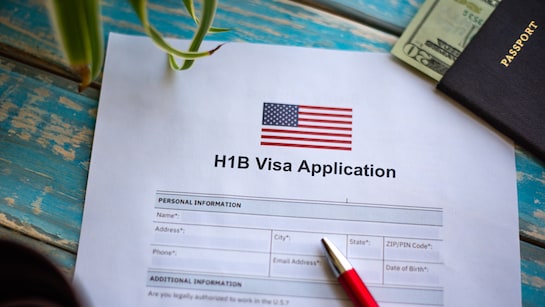
In a recently issued fact sheet, the White House justified President Donald Trump's controversial decision to impose a substantial $100,000 annual fee on H-1B visa applications. The administration expressed significant concern over U.S. companies replacing American workers with what they described as "lower-paid foreign labour."
According to the White House document, the proportion of IT workers holding H-1B visas has grown dramatically from 32 percent in fiscal year 2003 to over 65 percent in recent years. This trend has been linked to rising unemployment among American citizens, which the administration characterizes as "abuse" of the H-1B visa program.
"Unemployment among recent computer science graduates has reached 6.1 percent and 7.5 percent for computer engineering graduates - more than double the rates for biology or art history majors. The number of foreign STEM workers in the United States has more than doubled between 2000 and 2019, while overall STEM employment only increased 44.5 percent during that time," stated the White House fact sheet.
The administration specifically highlighted examples of American companies replacing U.S. workers with H-1B visa holders.
"One company was approved for 5,189 H-1B workers in FY 2025, while laying off roughly 16,000 US employees this year. Another company was approved for 1,698 H-1B workers in FY 2025, yet announced it was laying off 2,400 US workers in Oregon in July. A third company has reduced its US workforce by 27,000 since 2022 while receiving 25,075 H-1B approvals. Yet another company reportedly cut 1,000 American jobs in February despite receiving 1,137 H-1B approvals for FY 2025," the White House detailed.
The administration emphasized that this policy change aims to prioritize American workers, underscoring President Trump's commitment to increasing domestic employment opportunities.
"Voters gave President Trump a resounding mandate to put American workers first, and he has worked every day to deliver on that commitment. President Trump has aggressively and successfully negotiated new trade deals to bring manufacturing jobs back home and attract new investments to the US," the White House asserted.
"Since President Trump returned to office, all employment gains have gone to American-born workers--unlike last year during the same period under President Biden, when all employment gains went to foreign-born workers," the statement continued.
This policy decision has raised significant concerns about its potential impact on Indian technology professionals and remittances, especially considering that 71-72% of H-1B visas are currently issued to Indians.
On Saturday, the Indian government acknowledged the situation, stating that they are still evaluating the full implications of the U.S. decision to impose the $100,000 annual fee. They noted that this measure could have humanitarian consequences by disrupting families.
In an official statement regarding the U.S. H1B visa program restrictions, Randhir Jaiswal, Official Spokesperson of the Ministry of External Affairs, indicated that industry stakeholders in both India and the U.S. have vested interests in fostering innovation and creativity, and will likely consult on the most appropriate path forward.
"The Government has seen reports related to the proposed restrictions on the US H1B visa program. The full implications of the measure are being studied by all concerned, including by Indian industry, which has already put out an initial analysis clarifying some perceptions related to the H1B program," the statement explained.
"Industry in both India and the US has a stake in innovation and creativity and can be expected to consult on the best path forward," it concluded.