
Ethiopian Hayli Gubbi Volcano Erupts After 12,000 Years: What Scientists Are Discovering
- Date & Time:
- |
- Views: 62
- |
- From: India News Bull
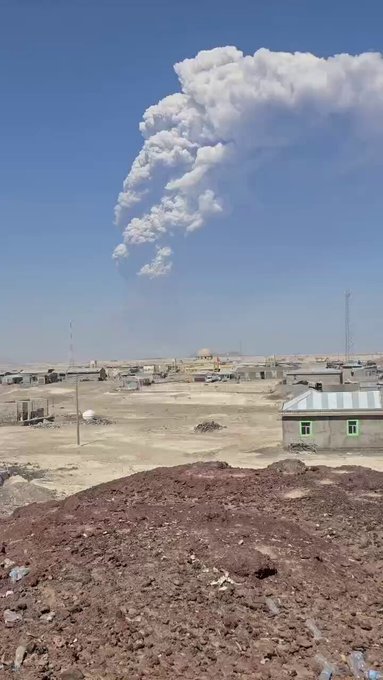
The Hayli Gubbi volcano in northern Ethiopia, dormant for approximately 12,000 years, erupted on Sunday, generating massive ash plumes that traveled across the Red Sea towards Yemen, Oman, and even reached parts of India.
Located in the Afar region about 800 km northeast of Addis Ababa, the volcano erupted for several hours, covering the nearby village of Afdera in ash.
Volcanic experts have described this event as highly unusual, highlighting how understudied volcanic activity is in this particular region.
Arianna Soldati, a volcanologist at North Carolina State University, explained to Scientific American Magazine, "As long as conditions for magma formation persist, a volcano can experience an eruption even after remaining inactive for 1,000 or 10,000 years."
Hayli Gubbi is classified as a shield volcano situated within the East African Rift Zone, an area where African and Arabian tectonic plates are slowly separating at a rate of 0.4 to 0.6 inches annually.
Juliet Biggs, an earth scientist from the University of Bristol in England, expressed skepticism about the 12,000-year dormancy period, stating, "I would be really surprised if that truly represents the last eruption date."
Biggs noted that while no confirmed eruptions occurred during this extensive period, satellite imagery suggests the volcano may have released lava more recently.
"Observing such an impressive eruption column with an umbrella-like cloud is exceptionally rare in this region," she added.
Local authorities reported no casualties, though the eruption's aftermath could significantly impact pastoral communities in the area.
Scientists had previously detected warning signs of a potential eruption at Hayli Gubbi. In July, an eruption at the nearby Erta Ale volcano triggered ground movement beneath Hayli Gubbi, revealing magma intrusion almost 30 km below the surface. Prior to Sunday's eruption, Biggs and her team had documented white puffy clouds at Hayli Gubbi's summit and slight ground elevation changes.
Derek Keir, an earth scientist from the University of Southampton who happened to be in Ethiopia during the eruption, collected ash samples on Monday. According to Biggs, analysis of these samples will help determine the magma type and verify whether the volcano had indeed been dormant for 12,000 years. "This event clearly demonstrates how understudied this region remains," she remarked.
The eruption propelled ash clouds up to 14 km into the atmosphere, affecting Yemen, Oman, India, and northern Pakistan, as reported by the Toulouse Volcanic Ash Advisory Centre (VAAC) in France. Rising approximately 500 metres, Hayli Gubbi is situated within the geologically active Rift Valley where tectonic plates converge.
According to the Smithsonian Institution's Global Volcanism Program, Hayli Gubbi has no recorded eruptions during the Holocene, the current geological epoch that began approximately 12,000 years ago following the conclusion of the last Ice Age.
Source: https://www.ndtv.com/world-news/why-volcano-hayli-gubbi-erupted-after-12-000-years-what-experts-said-9694900