
Google Enables Pixel-to-iPhone File Sharing Using Apple's AirDrop Protocol: Breaking Down Device Barriers
- Date & Time:
- |
- Views: 53
- |
- From: India News Bull
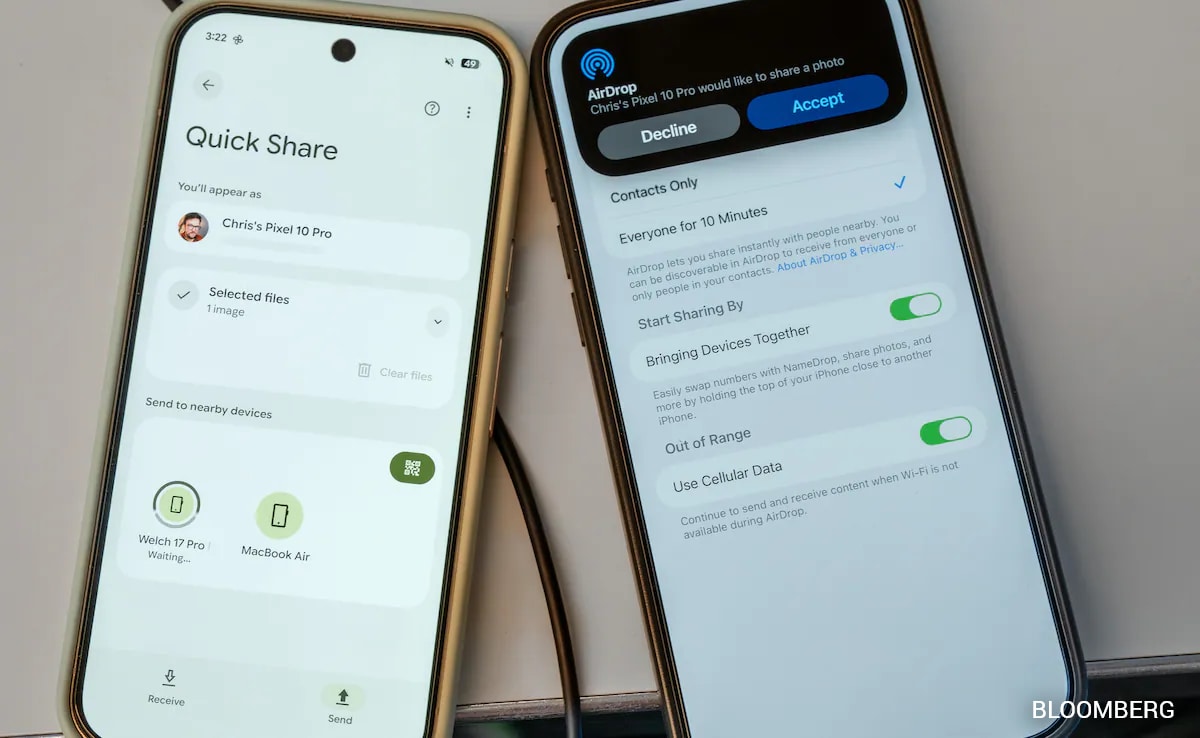
The Pixel was also able to send files to a nearby Mac.
Alphabet Inc.'s Google has developed a capability for its latest Pixel smartphones to exchange images and files with iPhones using Apple Inc.'s AirDrop protocol, marking a significant move to challenge the exclusivity of Apple's carefully protected ecosystem.
AirDrop, available for over a decade, is integrated into Apple's software platforms, enabling rapid wireless file transfers between Apple devices including iPhones, iPads, and Macs. Google offers a parallel feature called Quick Share for Android devices.
"Sharing moments between family and friends shouldn't be limited by device choice — sharing should simply work," Google stated in their unexpected Thursday announcement. A Google spokesperson confirmed to Bloomberg News that Apple had no involvement in developing this feature.
"We achieved this through our own implementation," the spokesperson explained, noting that Google engaged a third-party security firm and the system underwent thorough review by their internal privacy and security teams.
Apple has not yet provided a response when asked for comment.
"This feature doesn't use any workaround; the connection is direct and peer-to-peer, meaning your data never routes through servers, shared content is never logged, and no additional data is shared," Dave Kleidermacher, Google's vice president of platforms security and privacy, wrote in a separate blog post.
For iPhone users to receive files from Android phone users, they must set their AirDrop settings to be visible to "everyone for 10 minutes." Similar to standard AirDrop transfers, users can accept or decline incoming requests based on the sender's name displayed on screen. Currently, this functionality requires a device from Google's newly released Pixel 10 series, and the feature is being gradually deployed.
Initial tests demonstrated successful image exchanges between a Pixel 10 Pro and iPhone 17 Pro Max. The Pixel could also transmit files to a nearby Mac. As a privacy measure, AirDrop automatically reverts to "contacts only" when the 10-minute window expires. Users need to ensure it's set to "everyone for 10 minutes" each time they want to send or receive files from a Pixel 10.
Google is positioning this new solution as a consumer benefit, allowing convenient media sharing regardless of operating system. They compare it to the adoption of RCS (rich communication services), which has enhanced texting and high-quality photo and video sharing between iPhone and Android users. Apple implemented this standard last year after regulatory pressure.
Previous attempts to replicate signature iPhone features have faced resistance from Apple. In 2023, messaging app Beeper tried introducing iMessage support for Android, but Apple quickly blocked the attempt. Beeper, now owned by Automattic Inc., has avoided revisiting the public dispute. Earlier, when Palm Inc. was still making smartphones, it attempted to make its Palm Pre compatible with iTunes syncing, but that workaround was also eliminated.
Source: https://www.ndtv.com/world-news/google-launches-unauthorized-pixel-to-iphone-file-sharingwith-apples-airdrop-9675012