
Brazil's Controversial Amazon Railway Project: Environmental Concerns vs. Agricultural Benefits at COP30
- Date & Time:
- |
- Views: 50
- |
- From: India News Bull
Brazil:
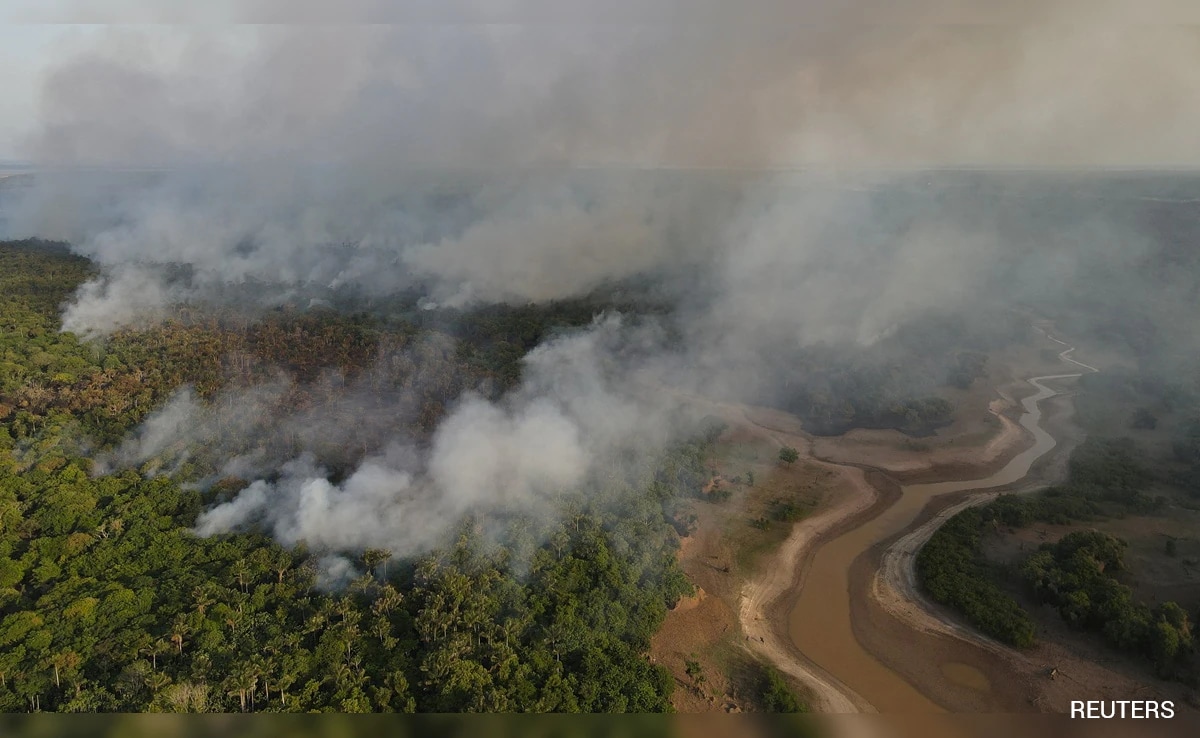
Indigenous protesters at UN climate talks in Brazil have focused on a significant concern: A proposed railway project that would span nearly the distance from London to Berlin and traverse through the Amazon rainforest.
For agricultural producers, the Ferrograo - translated as Grain Railway - represents a transformative logistical solution.
However, critics view it as another substantial infrastructure development threatening the Amazon, potentially contradicting President Luiz Inacio Lula da Silva's environmental commitments.
What is the concept behind the Ferrograo? Brazil currently holds the position of the world's leading exporter of soybeans and corn, with a substantial portion produced in the central state of Mato Grosso.
Presently, these agricultural products must travel extensive distances by truck to reach either southern seaports or northern river ports.
For over ten years, successive Brazilian governments have attempted to advance a 933-kilometer (580-mile) railway project connecting Sinop in Mato Grosso to the northern river port of Miritituba.
From Miritituba, grain shipments can access the Amazon River and ultimately the Atlantic Ocean.
What do project advocates say? Elisangela Pereira Lopes, a technical advisor with CNA, Brazil's primary agricultural organization, informed AFP that the railway is "essential to guarantee the competitiveness of Brazilian agribusiness."
She emphasized that Mato Grosso, which accounts for approximately 32 percent of national grain production, "needs a more efficient logistics route to keep pace with the sector's growth."
According to Lopes, the railway is expected to reduce grain export logistics costs by up to 40 percent, while simultaneously decreasing road traffic and associated carbon emissions.
What concerns do critics raise? Mariel Nakane of the Socio-Environmental Institute (ISA) told AFP that the railway will negatively impact Indigenous territories and accelerate deforestation and land grabbing.
She noted that the shift by agribusiness over the past decade toward exporting goods more economically via northern river ports has already significantly altered the Tapajos River where the Miritituba port is located.
"Riverside communities are being displaced... they can no longer fish in certain areas because these locations are now dominated by ports and barge traffic.
"The plan involves installing the railway and increasing the volume transported along this route by five times."
Furthermore, she worries about unregulated activities in regions already vulnerable to deforestation.
Nakane expressed concern that Brazil's current licensing procedures are insufficient to protect the rainforest and its inhabitants.
She referenced other controversial projects, including oil exploration near the Amazon River—which commenced in October—and plans to pave the BR-319, a major highway cutting through the rainforest.
"The government lacks the capability to implement this properly. It's very convenient for the government to claim commitment to the climate agenda while concealing these controversial projects."
Why has this issue emerged during COP climate talks? With global attention focused on Belem during the UN climate summit, Indigenous communities have sought to highlight their concerns, including the Ferrograo project.
Protesters are also expressing outrage regarding a decree signed by President Lula in August designating major Amazon rivers, including the Tapajos, as priorities for cargo navigation and private port expansion.
"We will not permit this because it is our home, our river, our forest," stated Indigenous leader Alessandra Korap of the Munduruku people.
"The river is the mother of the fish."
What is the project's current status? Brazil's environmental agency Ibama stated to AFP that "the licensing process for the Ferrograo railway is in its initial stage, with an assessment of its environmental viability."
However, the process was suspended in 2021 by Supreme Court judge Alexandre de Moraes following a constitutional challenge to plans for altering the boundaries of a national park to accommodate the railway.
Moraes allowed the case to resume in 2023, and the court began reviewing it again last month.
Moraes—a influential figure in Brazil who has personally led several major investigations—voted to permit the project to proceed.
However, the hearing is currently paused after another judge requested additional time to analyze the case.
Source: https://www.ndtv.com/world-news/brazils-planned-railway-to-amazon-draws-fire-on-margins-of-cop30-9667085