
Pakistan's Democratic Decline: How the Military Regained Control Without Tanks in the Streets
- Date & Time:
- |
- Views: 56
- |
- From: India News Bull
The transition to military control in a nation is typically unmistakable—marked by tanks patrolling streets, uniformed officers occupying grand governmental buildings, and political leaders detained en masse. However, Pakistan has experienced a more subtle military takeover in recent years, culminating in last week's constitutional amendment that granted Army Chief Asim Munir additional authority and permanent immunity from prosecution.
Pakistan's military, colloquially referred to as "the establishment," has wielded significant influence since shortly after the nation's independence. Traditionally, democratic politicians have served as counterbalances, occasionally gaining dominance when military leadership faltered—such as after Pakistan lost its eastern territory (now Bangladesh) in 1971.
The current situation differs markedly. Prime Minister Shehbaz Sharif recognizes that his position depends on Munir's support rather than the National Assembly's. The same applies to President Asif Zardari of the Pakistan People's Party, formerly Sharif's rival but now coalition partner. In recent years, both leaders have surrendered hard-won civilian authority back to the military, particularly to Munir.
Initially, General Munir received economic decision-making powers, co-chairing a special investment council with Sharif to oversee strategic projects. Later, he was elevated to Field Marshal, becoming only the second person in Pakistan's history to hold this distinction alongside Ayub Khan, Pakistan's first military dictator.
The recent amendment further places the army chief above leaders of other military branches and grants him sole control over Pakistan's nuclear weapons systems. As Chief of Defence Forces, Munir's tenure has been reset, allowing him a fresh five-year term rather than retirement.
Given the extensive power already granted to Munir, it seems implausible that civilian leaders would refuse his reappointment request when his term concludes. The fundamental issue is that while Munir may have sought power, civilian leadership willingly provided it.
These civilian leaders likely believe their reasons are justified. Zardari, having spent years imprisoned, may welcome constitutional changes that effectively provide presidential immunity alongside protection for the defence chief. Sharif may prioritize maintaining military contentment while addressing Pakistan's economic challenges—inflation has decreased from 38% in his first year to approximately 3.6% year-on-year, with GDP growing at 2.9% after contracting in 2023.
Both leaders likely view Munir as an ally against former Prime Minister Imran Khan, a populist whose party secured the most seats in the recent election despite his imprisonment. Khan, initially supported by the military before opposing them, maintains substantial popularity throughout the country.
However, these considerations hardly justify relinquishing hard-won civilian advantages over the military establishment. Two decades ago, Pakistan's last outright military dictator, Pervez Musharraf, had to adopt civilian attire and present himself as a conventional president before resigning in 2008 when faced with potential impeachment.
Musharraf's successor as army chief, Ashfaq Parvez Kayani, chose retirement when appropriate, asserting that "institutions and traditions are stronger than individuals and must take precedence." Even Munir's immediate predecessor, Qamar Javed Bajwa, acknowledged the military's unpopularity due to "interference in politics for the last 70 years" and pledged this would cease.
While Pakistan's democratic forces never fully escaped military influence, institutional and symbolic shifts had begun favoring civilian leadership. Concerns about instability, India, and Imran Khan should not have prompted politicians to abandon two decades of progress.
The military's current approach may have succeeded precisely because traditional signs of takeover are absent. Unlike Musharraf, Munir shares public visibility with civilians. His increased involvement in areas beyond military jurisdiction—foreign affairs, economics—is accompanied by theatrical deference to civilian authorities even as his power grows.
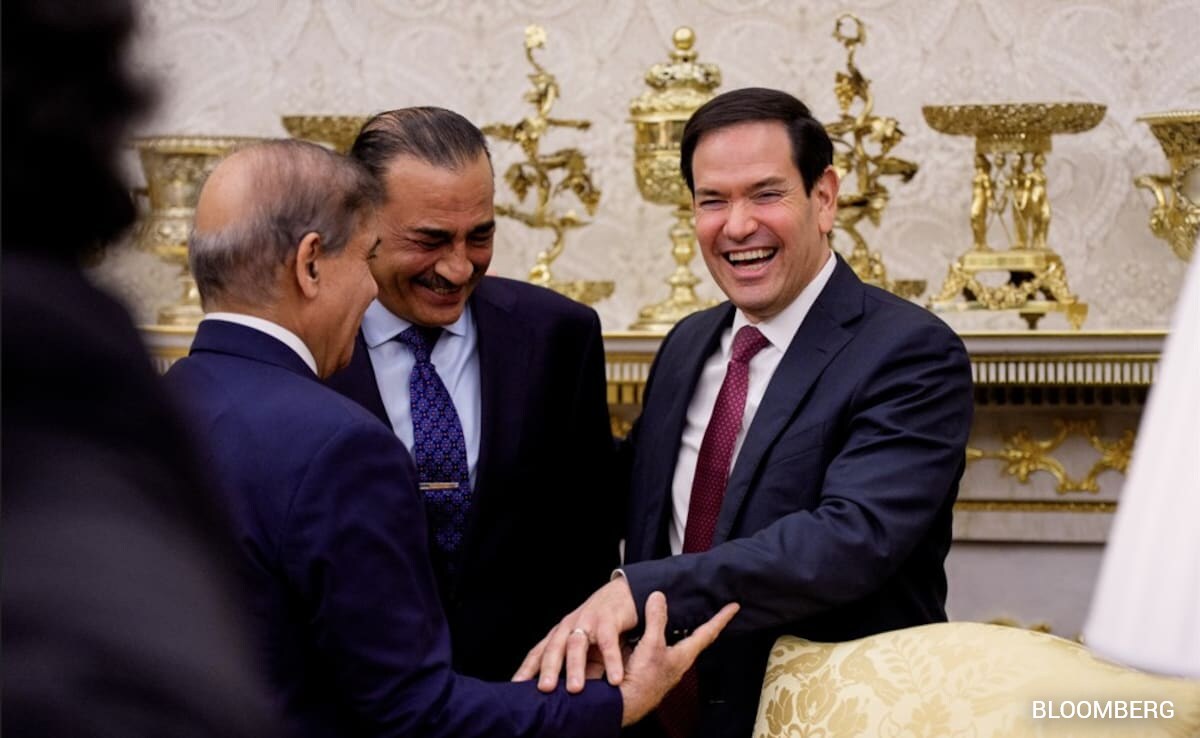
This dynamic becomes evident at international summits in Saudi Arabia, Beijing, and Washington. Sharif includes Munir in meetings and introduces him to foreign leaders, after which the general steps back, allowing the prime minister to lead discussions. While civilian supremacy appears maintained ceremonially, genuine authority diminishes—or is voluntarily surrendered. Either scenario damages Pakistan's fragile democratic foundation.
(Mihir Sharma is a Bloomberg Opinion columnist. A senior fellow at the Observer Research Foundation in New Delhi, he is author of "Restart: The Last Chance for the Indian Economy.")
Disclaimer: These are the personal opinions of the author
Source: https://www.ndtv.com/opinion/will-pakistan-regret-letting-the-army-back-at-the-centre-of-power-9668458