
Air India Seeks China's Military Airspace Access Amid Mounting Losses from Pakistan Ban
- Date & Time:
- |
- Views: 45
- |
- From: India News Bull
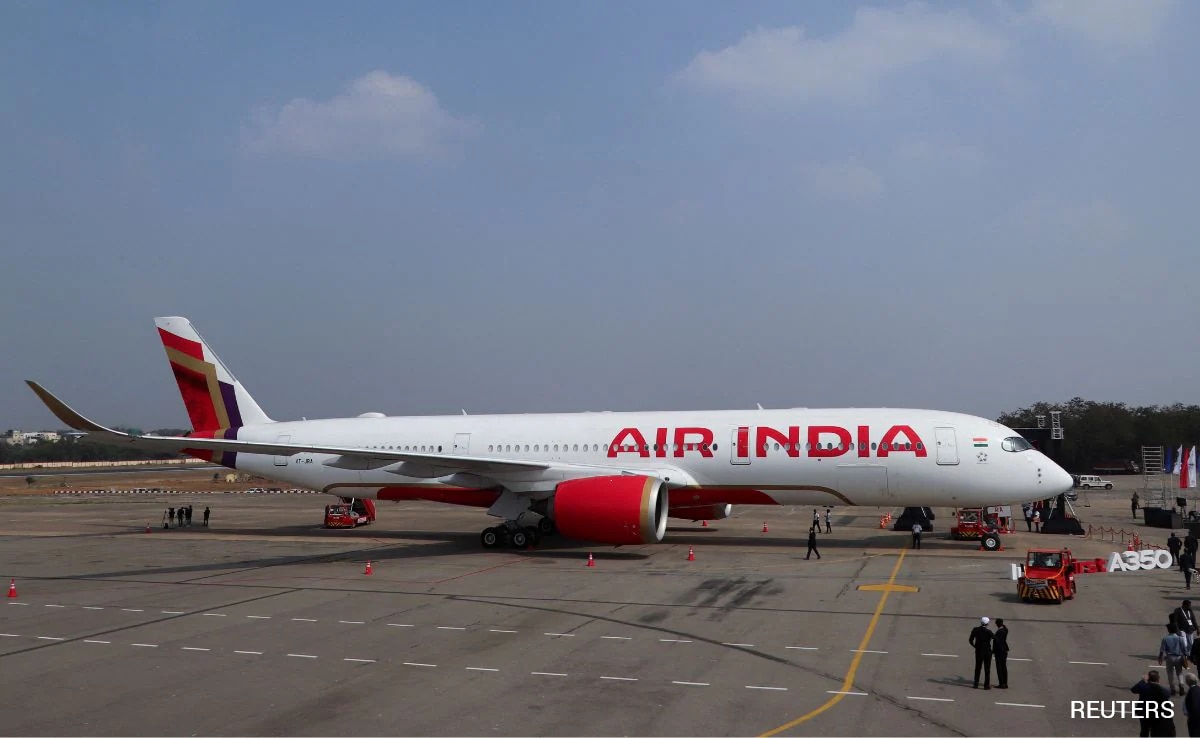
The airspace Air India is seeking to access is surrounded by some of the world's highest mountains. (File)
New Delhi/Hong Kong:
Air India is appealing to the Indian government to persuade China to permit use of a restricted military airspace zone in Xinjiang, aiming to create shorter flight routes as financial losses from Pakistan's airspace ban on Indian carriers continue to escalate, according to a company document.
This extraordinary request comes shortly after direct flights between India and China resumed following a five-year suspension triggered by a border conflict in the Himalayan region.
Air India has been working to restore its international reputation and route network after a devastating crash of its Boeing 787 Dreamliner in Gujarat this June, which claimed 260 lives and necessitated temporary flight reductions for safety evaluations.
These recovery efforts face additional complications due to Pakistan closing its airspace to Indian airlines since diplomatic relations deteriorated in late April.
For Air India, India's sole carrier with an extensive international network, the Pakistan ban has resulted in fuel cost increases of up to 29% and extended journey times by as much as three hours on certain long-haul flights, according to the previously undisclosed document submitted to Indian officials in October that Reuters examined.
The Indian government is considering Air India's request for diplomatic intervention with China to allow an alternative routing and emergency access to airports at Hotan, Kashgar and Urumqi in Xinjiang, with the goal of creating faster routes to the United States, Canada, and Europe, the document revealed.
"Air India's long-haul network is under severe operational and financial strain... Securing Hotan route will be a strategic option," the airline stated.
The carrier, owned by Tata Group and Singapore Airlines, calculated the financial impact of Pakistan's airspace closure at $455 million annually on profit before tax—a substantial amount considering its fiscal 2024-25 loss was $439 million.
China's foreign ministry indicated no knowledge of the situation and directed Reuters to the "relevant authorities".
Air India and civil aviation authorities from India, China, and Pakistan did not respond to inquiries from Reuters.
Without access to the Hotan route, certain Air India services are becoming "unviable." The Chinese airspace the airline seeks to utilize is encircled by mountains exceeding 20,000 ft (6,100 m), an area typically avoided by international carriers due to potential safety concerns during decompression incidents.
More significantly, this airspace falls within the People's Liberation Army's Western Theater Command, which is equipped with extensive missile, drone, and air-defense capabilities and shares several airports with civilian aircraft, according to military experts.
The Pentagon's December report on China's military noted that this command's responsibilities include responding to any conflict with India.
China's military exercises greater control over the country's airspace than most aviation markets, imposing restrictions on flight paths. Open-source intelligence analyst Damien Symon reported that China's military has recently expanded its airbase at Hotan.
China's defense ministry did not immediately respond to a request for comment.
Data from AirNav Radar indicates no non-Chinese airlines have operated flights to or from Hotan airport in the past 12 months.
Shukor Yusof, founder of aviation consultancy Endau Analytics, commented: "Air India can try, but it's doubtful China will accede" to such access given the region's challenging terrain, limited emergency landing facilities, and potential security considerations.
Global airspace has become increasingly restricted due to expanding conflict zones.
American carriers have been prohibited from flying over Russia since the Ukraine conflict began in 2022, causing many to withdraw from US-India routes. This created a near-monopoly for Air India on non-stop flights from India.
However, following the Pakistan airspace closure, Air India suspended its Delhi-Washington route in August. Other routes are now under review, with direct flights from Mumbai and Bengaluru to San Francisco "becoming unviable" due to an additional three hours of travel time, including a technical stop in Kolkata, according to the document.
A flight from San Francisco to Mumbai on Lufthansa via Munich now takes only five minutes longer than Air India's service.
"Passengers (are) shifting to foreign carriers due to shorter flight time as they have the benefit of Pakistan overflight," the document stated.
Air India estimates that the requested Hotan route through China could significantly reduce extra fuel requirements and flight times, help restore passenger and cargo capacity it reduced by up to 15% on routes such as New York and Vancouver to Delhi, and decrease losses by approximately $1.13 million weekly.
With no indication of the airspace ban being lifted, Air India is also requesting a "temporary subsidy till Pakistan airspace opens," according to the document.
Air India, which has placed $70 billion in aircraft orders, is seeking assistance resolving legacy tax issues.
India's government indemnified the airline against claims payable before selling it to Tata in 2022, but numerous notices have been received regarding old tax liabilities totaling $725 million, creating legal and reputational risks, the document revealed.
A confidential government notice from March, viewed by Reuters, showed tax authorities threatened "coercive steps"—potentially including asset freezes—to recover $58 million in one case.
Contesting these tax demands has created an "additional cashflow burden... despite assurances during disinvestment," the airline stated.
Source: https://www.ndtv.com/world-news/air-india-lobbies-new-delhi-to-convince-china-to-use-its-military-airspace-9660989