
Understanding MAGA's Obsession with Epstein Files: Why Trump's Support Remains Unwavering Despite Controversies
- Date & Time:
- |
- Views: 47
- |
- From: India News Bull
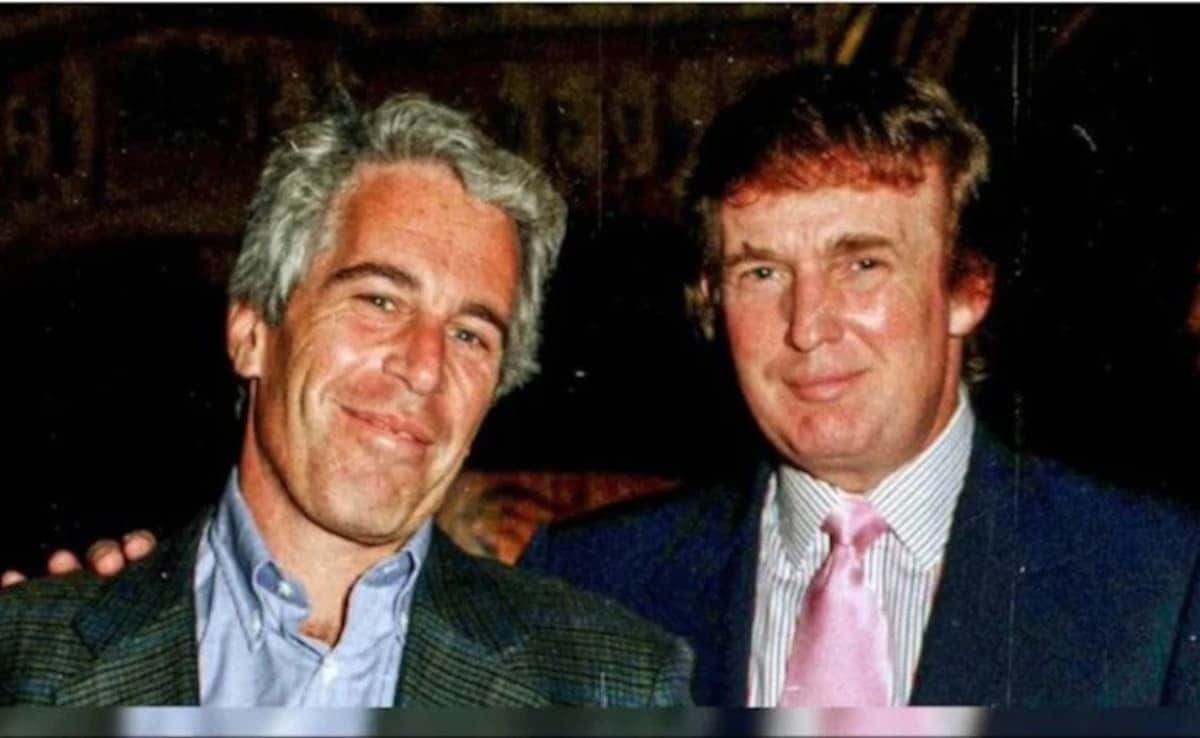
Trump asserts that the Epstein files will reveal powerful Democrats' connections to the notorious sex trafficker.
Following President Donald Trump's fluctuating stance on releasing the Epstein files held by the US Department of Justice—initially supporting, then opposing, and now supporting again—the MAGA base may finally access these long-sought documents. On November 18, 2025, the House overwhelmingly voted to pursue the files' release, with just one Republican opposing. The Senate unanimously passed the measure later that day, forwarding it to the president for signature.
The Conversation's politics editor, Naomi Schalit, interviewed anthropologist Alex Hinton, who has extensively studied the MAGA movement, about their persistent interest in Jeffrey Epstein's case. Hinton explains how this interest aligns with the core beliefs of Trump's dedicated supporters.
When asked about his methodology for studying MAGA, Hinton explained that as a cultural anthropologist, he conducts fieldwork by immersing himself where supporters gather, observing their interactions, listening to their conversations, and identifying underlying meaning systems through observation and interviews.
Regarding MAGA supporters' concern about the Epstein documents, Hinton confirmed their interest while providing context about the movement itself. He describes MAGA as a nativist movement that prioritizes "the people in the land," embracing America First principles. It exhibits xenophobic tendencies, populist rhetoric, and positions itself against elites.
Hinton referenced Tucker Carlson's interview with Marjorie Taylor Greene, where Carlson outlined five MAGA pillars: America First, border security, anti-globalism, free speech, and opposition to foreign wars. Hinton added the crucial element of "we the people versus elites."
A key dynamic within MAGA, according to Hinton, is conspiracy theory—typically anti-elite narratives. Epstein represents a convergence point for many conspiracy theories including "Stop the Steal," "The Big Lie," "lawfare," "deep state," and "replacement theory." These narratives share the belief that an elite cabal operates against common people's interests, often with antisemitic undertones.
Epstein particularly resonates with MAGA supporters because he embodies the elite figure allegedly involved in sex trafficking—echoing the 2016 Pizzagate conspiracy that claimed Democratic elites were engaged in similar activities.
Hinton observes that Epstein-related theories align perfectly with MAGA's suspicion of the "deep state" and government cover-ups. Despite tensions over the Epstein files, he doesn't anticipate a significant fracture between Trump and his supporters, noting that "there is no Trumpism without Trump" and that without him, MAGA would likely fade like the Tea Party.
Trump's reversal on releasing the documents demonstrates his strategic ability to control narratives. Hinton describes Trump's approach as "don't cross the boss," where loyalty is paramount. By suddenly supporting document release while claiming Democrats are the "evil elites" to be investigated, Trump successfully redirects the narrative.
Regarding whether MAGA supporters genuinely care about sexually abused girls, Hinton notes that sex trafficking is indeed a major concern, particularly among devout Christians within the movement. These concerns connect to notions of innocence violated by "demonic forces" and represent an attack on "we the people" by elites—a violation of rights that resonates strongly in Christian circles.
Alex Hinton is Distinguished Professor of Anthropology and Director of the Center for the Study of Genocide and Human Rights at Rutgers University-Newark.
This article was republished from The Conversation under a Creative Commons license.
Source: https://www.ndtv.com/world-news/why-maga-is-obsessed-with-epstein-and-why-the-files-are-unlikely-to-dent-loyalty-to-trump-9660378