
Chinese State Bank Loans to US: The Hidden $200 Billion Financial Network and Its National Security Implications
- Date & Time:
- |
- Views: 61
- |
- From: India News Bull
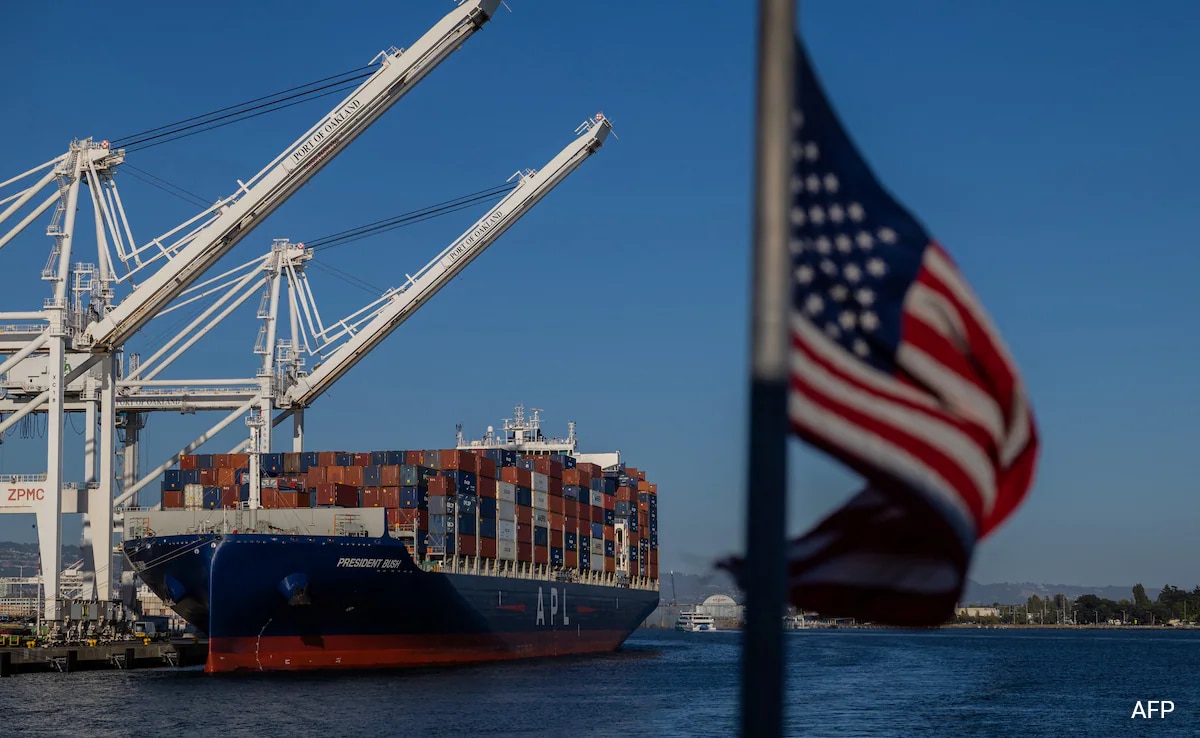
China's state banking institutions have channeled approximately $200 billion into American enterprises over the past 25 years.
Washington has spent years cautioning other nations against accepting loans from Chinese state banks, characterizing them as instruments of China's superpower ambitions. However, a recent study reveals a striking contradiction: the United States itself stands as the largest recipient of these funds, by a significant margin. The security and technological implications of this financial relationship remain inadequately assessed.
According to research from AidData, a laboratory at Virginia's College of William & Mary, Chinese state lenders have directed $200 billion toward American businesses over a quarter-century. Many of these transactions remained concealed because funds were initially routed through shell entities in locations like the Cayman Islands, Bermuda, and Delaware, effectively masking their Chinese origins.
More concerning is that substantial portions of this lending facilitated Chinese acquisitions in American companies connected to critical technology and national security sectors, including firms specializing in robotics, semiconductors, and biotechnology.
The investigation uncovered a lending network far more extensive and sophisticated than previously recognized—a complex web of financial commitments extending beyond developing economies to wealthy nations, including the United Kingdom, Germany, Australia, the Netherlands, and other American allies.
"China was engaged in chess while the rest of us played checkers," observed former White House investment adviser William Henagan, who expresses concern that this concealed lending has given China significant leverage over critical technologies. "Future conflicts will be determined by control over products essential to economic functioning."
Although America generally welcomes foreign investment—with President Donald Trump actively pursuing it—Chinese capital has faced particular scrutiny as the world's two largest economies, representing opposing ideological systems, compete for global dominance.
Transactions financed by China's state-owned banks, which form the focus of the AidData report, present specific challenges. These lending institutions operate under the control of China's central government and the Communist Party's Central Financial Commission, with directives to advance China's strategic objectives.
In total, AidData's research determined that China provided over $2 trillion in global loans between 2000 and 2023, doubling the highest previous estimates and surprising even veteran analysts of China's ascendancy. Much of the lending to prosperous nations concentrated on critical minerals and advanced technological assets—rare earth elements and semiconductors essential for fighter aircraft, submarines, radar systems, precision-guided weaponry, and telecommunications networks.
"American administrations under both Biden and Trump have emphasized for more than a decade that Beijing engages in predatory lending," noted Brad Parks, AidData's executive director. "The irony is particularly striking."
Until now, a comprehensive accounting of China's state lending remained unpublished because much of the financing is concealed beneath multiple layers of secrecy, disguised through Western-appearing shell companies and incorrectly categorized in international databases as standard private financing.
"There exists a complete absence of transparency that demonstrates the extensive measures China employs, whether through shell companies, confidentiality agreements, or redactions, to make assembling this complete picture extremely challenging," said Scott Nathan, who previously headed the US International Development Finance Corporation, an agency established during Trump's first term to invest in foreign projects aligned with American national interests.
Since the report's final documented loan in 2023, American scrutiny has improved. Screening mechanisms, such as the interagency Committee on Foreign Investment in the United States, were strengthened in 2020 to safeguard sensitive economic sectors.
However, China has simultaneously enhanced its approach, partly by establishing banks and branches overseas—more than 100 in recent years—which then provide loans to offshore entities, further obscuring the funding sources.
"In environments with increased regulatory oversight," Parks observed, "China has discovered methods to circumvent entry barriers."
Chinese state bank financing has supported projects across America, particularly in the Northeast, Great Lakes region, West Coast, and along the Gulf of Mexico, which Trump has renamed the Gulf of America. Many loans targeted critical high-technology industries, according to the report.
In 2015, Chinese state-owned banks lent $1.2 billion to a private Chinese enterprise to acquire an 80% stake in Ironshore, an American insurer whose clients included Central Intelligence Agency and Federal Bureau of Investigation officials and undercover agents potentially requiring legal expense assistance. American regulators remained unaware of Chinese government involvement because financing flowed through a Cayman Island business without apparent connections to China, the report states. Upon discovery, US officials mandated the Chinese purchaser to divest.
That same year, the Chinese government published "Made in China 2025," identifying ten high-technology areas, including semiconductors, biotechnology, and robotics, where it aimed to achieve 70% self-sufficiency within a decade. The following year, in 2016, the Export–Import Bank of China provided $150 million in loans to assist a Chinese company in acquiring a Michigan-based robotics equipment manufacturer.
Following China's adoption of this manufacturing strategy, the percentage of projects targeting sensitive sectors such as robotics, defense, quantum computing, and biotechnology increased from 46% to 88% of China's cross-border acquisition lending portfolio, according to AidData.
In 2017, a Delaware private equity firm utilizing a Cayman Islands company attempted to purchase an American chip manufacturer; authorities blocked the transaction after discovering both companies were owned by a Chinese state-owned enterprise. This same Delaware company successfully acquired a British semiconductor manufacturer but was forced to divest when UK authorities learned of the Chinese connection.
In 2022, British authorities compelled a Chinese company to divest another sensitive UK firm in the semiconductor industry—a designer of chips used in Apple phones but potentially adaptable for military applications. The Chinese company had made the acquisition through a Netherlands-based company under its ownership. This Dutch firm now stands accused of withholding semiconductors vital to automakers amid the US-China trade conflict.
To trace China's hidden lending, AidData examined regulatory filings, private contracts, and stock exchange disclosures across more than 200 countries in multiple languages.
The effort to monitor China's state loans and investments began over a decade ago when Beijing launched its Belt & Road Initiative for developing countries' infrastructure. The project expanded dramatically three years ago when the AidData team, eventually growing to 140 researchers, recognized that many loans were reaching advanced economies like the United States, Australia, the Netherlands, and Portugal, where acquisitions could provide access to technologies Beijing considers crucial to its global advancement.
The report indicates a shift in state credit deployment from promoting economic development and social welfare toward securing geo-economic advantages.
"Global concern exists that this represents part of a coordinated effort to gain control over economic chokepoints and leverage this position," stated Brad Setser, who advised the US Trade Representative during the Biden administration. "Understanding their actions is essential, and they deliberately make this difficult."
Source: https://www.ndtv.com/world-news/us-warned-others-to-avoid-loans-from-chinese-state-banks-but-excluded-itself-9654831