
12,000-Year-Old Woman-Goose Figurine Reveals Ancient Mythological Beliefs in Prehistoric Israel
- Date & Time:
- |
- Views: 57
- |
- From: India News Bull
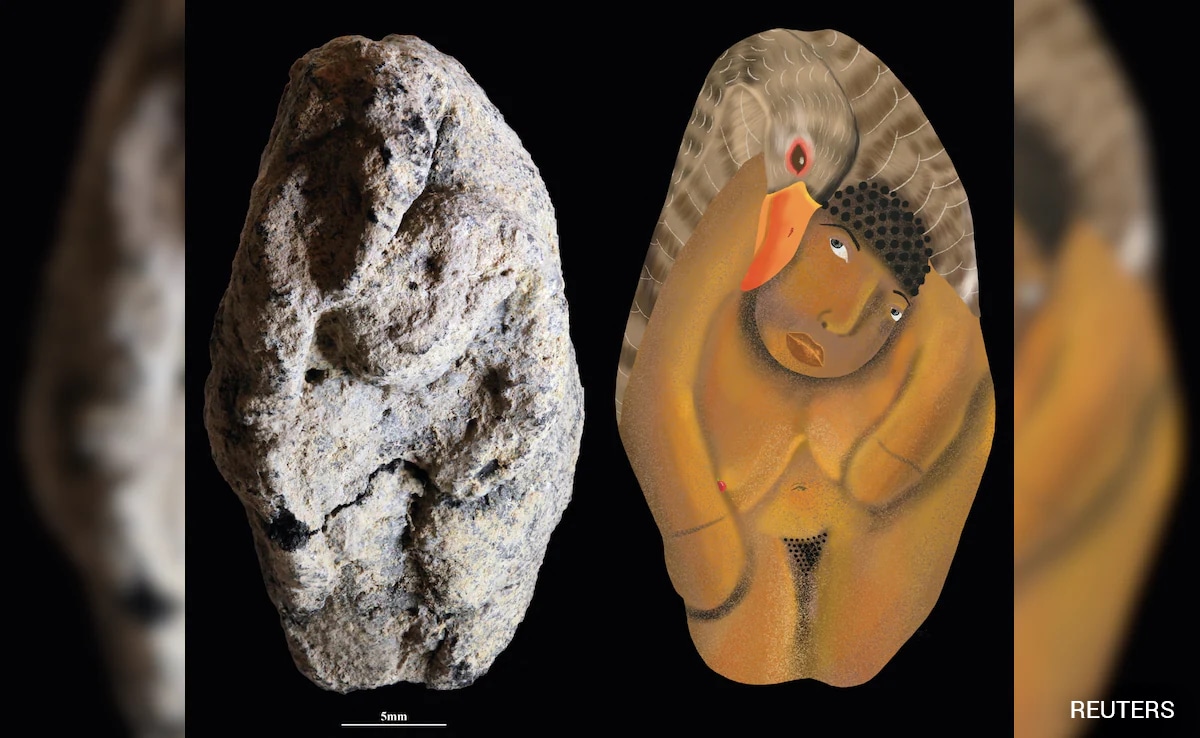
Positioned on the crouching woman's back, the goose displays its wings in a characteristic mating posture, creating an intriguing prehistoric scene.
Archaeologists have uncovered a remarkable clay figurine approximately 12,000 years old at Nahal Ein Gev II, a prehistoric village overlooking the Sea of Galilee in northern Israel. This small artifact, measuring just 1.5 inches (3.7 cm) tall, potentially represents one of the world's earliest depictions of mythology through its portrayal of a woman and a goose.
The figurine was discovered within a semicircular stone structure measuring about 16 feet (5 meters) in diameter. It originates from the Natufian culture of Southwest Asia, a civilization that existed during the crucial transition period between nomadic hunting-gathering societies and settled agricultural communities.
According to Laurent Davin, a postdoctoral archaeology researcher at the Hebrew University of Jerusalem and the study's lead author, this artifact holds the distinction of being the earliest known figurine worldwide depicting human-animal interaction. The research, published in the Proceedings of the National Academy of Sciences, also notes that it represents the oldest naturalistic portrayal of a woman in Southwest Asian art.
The scene shows a goose on the back of a crouching woman with its wings spread in a mating position. Hebrew University archaeologist and study co-author Leore Grosman explains that this imagery offers valuable insights into the belief systems of this prehistoric culture.
"We interpreted the interaction scene as the depiction of the imagined mating between an animal spirit and a human. This theme is very common in animistic societies across the world in specific situations such as erotic dreams, shamanistic visions and myths," Grosman stated.
Animism, a belief system that attributes spiritual essence to natural elements including plants, animals, and inanimate objects like rocks and rivers, likely influenced the creation of this figurine.
University of Connecticut anthropologist and study co-author Natalie Munro elaborates: "The scene itself - depicting a sexualized interaction between a human and an animal - is part of a long tradition in myth. Such imagery is rarely meant to be literal. Instead, it often symbolizes fertility, spiritual beliefs or the sacredness of life."
"In many myths across history and cultures, gods or beings take on hybrid human-animal forms to convey symbolic meanings, not actual sexual activity," Munro added.
While this figurine appears to be the oldest mythological scene from Southwest Asia, the researchers acknowledge that it's younger than some other examples worldwide, such as the mythological scenes in France's Lascaux Cave paintings dating back approximately 18,000 years.
The creation process involved sculpting clay that was air-dried before firing to ensure durability. The artist then applied a red pigment, traces of which remain visible today. Remarkably, a fingerprint from the original sculptor can still be observed on the figurine.
The artifact showcases innovative artistic techniques for its era. The sculptor employed light and shadow to create depth and perspective—methods that would fully develop much later in art history.
"Given the way it was modeled, with an emphasis on its left profile, we know that this figurine was probably displayed in a particular spot to receive light, from the sun or a fireplace, on its left profile to reveal the play of light and shadows that brings to life the interaction between the goose and the woman," Davin explained.
Researchers suggest such figurines may have served various purposes—as ornaments, protective amulets, or storytelling props. This particular piece might have been part of a staged installation that village inhabitants gathered to observe.
Eventually, the figurine was buried within the structure alongside other ritually significant objects, including a collection of human teeth and a child's remains.
The Natufian people represent the first hunter-gatherers in Southwest Asia to adopt a sedentary lifestyle—a transformative shift predating agriculture. Inhabitants of this village hunted gazelles, practiced sophisticated crafts including weaving, and gathered local resources such as flint and limestone.
The site contained goose remains showing evidence of hunting, butchering, and feather utilization. Notably, the figurine's depiction appears unrelated to hunting practices.
"The implication of this discovery," Grosman concluded, "is that the sedentary lifestyle generated major transformations in social structures - both between humans and between humans and their surrounding environment - which then led to major transformations in storytelling, symbolic expression and artistic techniques."
Source: https://www.ndtv.com/world-news/12-000-year-old-figurine-of-woman-goose-offers-peek-in-prehistoric-belief-9654240