
Trump's Second Term Challenges: Affordability Concerns and Epstein Files Test Presidential Authority
- Date & Time:
- |
- Views: 68
- |
- From: India News Bull
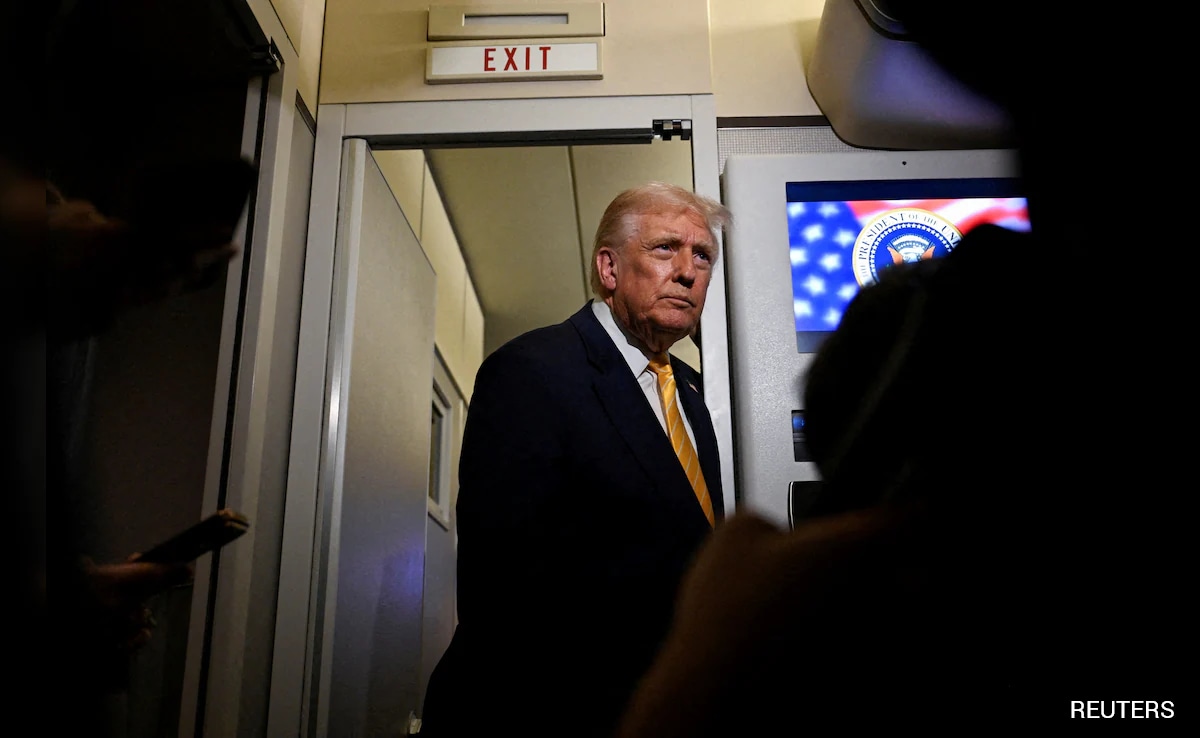
President Trump acknowledged on Sunday evening that certain consumer prices are "a little bit higher" than before.
Washington:
President Donald Trump's aura of political invincibility has begun to show cracks as he encounters difficulties addressing Americans' affordability concerns and fails to suppress a movement by independent-minded Republicans seeking to release additional documents from the Jeffrey Epstein investigation.
These dual challenges emerge shortly after Democratic victories in recent elections and ahead of next year's critical midterm campaigns that will determine congressional control. This represents a sobering reality for a president who has previously enjoyed unchallenged dominance in Washington.
During his second term, Trump has dramatically restructured the federal government, deployed military personnel in various cities across the nation, dismissed concerns about military operations' legality, and initiated renovation projects including a gold-adorned ballroom addition to the White House.
However, Trump's forceful second-term approach cannot eliminate fundamental political realities, including persistent economic dissatisfaction despite inflation rates lower than those during President Biden's administration.
"We had the highest, think of it, the highest inflation in the history of our country," Trump stated Monday at a McDonald's-sponsored summit. "Now we have normal inflation. We're going to get it a little bit lower, frankly, but we have normal, we've normalized it, we have it down to a low level, but we're going to get it a little bit lower. We want perfection."
Additionally, Trump faces the undeniable fact that he is a lame-duck president constitutionally barred from seeking another term, despite his apparent desire to remain in office.
Representative Thomas Massie, a Kentucky Republican who has frequently opposed Trump, reminded his colleagues about this reality on Sunday while advocating for legislation that would compel the Justice Department to release documents regarding Epstein.
"I would remind my Republican colleagues who are deciding how to vote — Donald Trump can protect you in red districts right now by giving you an endorsement," Massie stated on ABC News. "But in 2030, he's not going to be the president, and you will have voted to protect pedophiles if you don't vote to release these files, and the president can't protect you then."
Epstein, who died by suicide several years ago, was a convicted sex offender known for his connections to wealthy and influential individuals, making him a central figure in outrage and conspiracy theories about misconduct among American elites.
Trump initially opposed the Epstein bill in the House, characterizing it as an extension of investigations that have followed him for years, before unexpectedly changing his position on Sunday, declaring "it's time to move on" and announcing his support for the vote.
This reversal acknowledged Trump's rare defeat in the Republican-controlled Congress, where party members have generally been reluctant to restrict his authority.
Even as he attempts to impose his will on Republicans like Representative Marjorie Taylor Greene of Georgia, with whom he disagreed over the weekend, Trump is also working to prevent potential losses in next year's midterms. Should Democrats gain control of Congress, they would be positioned to block his agenda and investigate his administration.
He has been pressuring state leaders to redraw congressional districts to enhance his party's electoral prospects. On Monday, he expressed frustration that Indiana Republicans weren't following his direction, and announced he would endorse primary challengers against any legislator who doesn't support redistricting.
"We must keep the Majority at all costs," Trump wrote on social media. "Republicans must fight back!"
Maintaining control will likely require addressing Americans' economic concerns, which have sometimes been overshadowed by Trump's focus on establishing foreign policy achievements and enhancing immigration enforcement.
Trump admitted Sunday night that some consumer costs are "a little bit higher." Addressing affordability has led Trump to partially reverse course on tariffs, a fundamental component of his economic strategy. His administration reduced import duties on products including coffee, beef, and tropical fruit, implicitly acknowledging that tariffs have increased costs despite the president's assertions to the contrary.
The president has also proposed a $2,000 dividend, funded by tariff revenue, for all Americans except the wealthy. However, there's no guarantee Congress will support this proposal while the federal government continues to struggle with debt, and distributing cash payments could exacerbate the inflation Trump has vowed to eliminate.
Nevertheless, Trump delivered an optimistic assessment of the economy at the McDonald's event.
"We're really doing well as a country," he stated.
Democrats achieved victories in elections across New Jersey, Virginia, and elsewhere this month, indicating dissatisfaction with Trump's economic management.
Neil Newhouse, an experienced Republican pollster, noted that Democratic victories weren't unexpected but "what got our attention was the depth and the breadth of the wins."
He cautioned that his party risks repeating the same mistakes as Democrat Biden, who presided over high inflation while attempting to persuade voters that the problem would be temporary.
"We can tell them prices are going down until we're blue in the face," Newhouse said. "Unless they're seeing it at the grocery stores, it doesn't make a damn bit of difference."
Source: https://www.ndtv.com/world-news/epstein-files-affordability-concerns-threaten-trumps-second-presidency-9653771