
South Korean President Tackles Deadly Industrial Accidents Following His Own Workplace Trauma
- Date & Time:
- |
- Views: 58
- |
- From: India News Bull
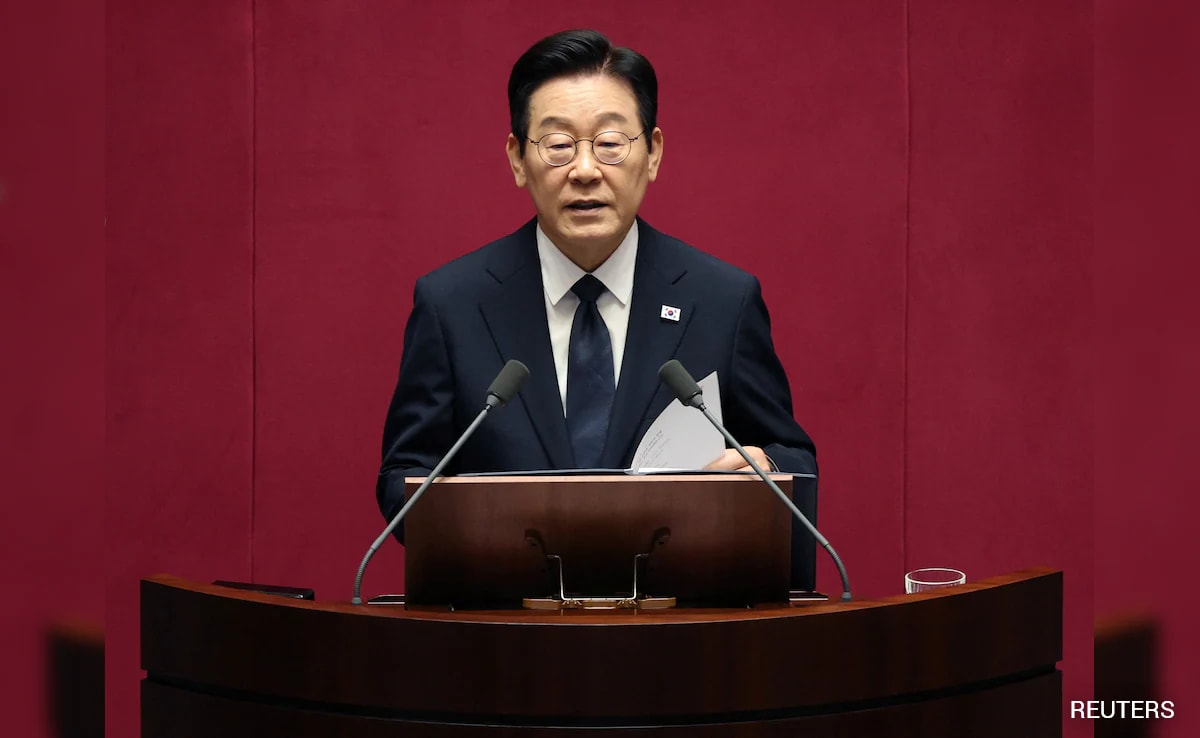
South Korean President Lee Jae Myung, scarred by his own childhood workplace injuries, has made combating industrial accidents a cornerstone of his administration.
Kim Yong-ho, 39, believed he faced certain death when a 200-kilogram industrial press at Hyundai Steel unexpectedly activated during maintenance in 2019, crushing his legs and back. "I was flattened like a squashed frog in a roadkill," Kim recounted. "I couldn't breathe for a few seconds." Only a colleague's quick action saved his life.
President Lee's personal history with workplace injuries—having crushed his finger and arm while making rubber and baseball gloves as a child laborer—has fueled his determination to address South Korea's troubling industrial accident rates. He has repeatedly denounced what he terms "workplaces of death."
The administration has launched multiple initiatives, including company raids, increased prevention funding, and expanded protections for subcontracted workers. Critics argue these measures merely punish companies rather than proactively safeguarding workers, dismissing Lee's approach as populist rhetoric.
The Labour Ministry's $27 billion budget for 2026 allocates increased funding for accident prevention and introduces fines of up to 5% of operating profit for companies recording three or more deaths annually. Lee has personally visited companies to advocate for safety improvements and established a specialized industrial accident investigation team.
Several companies have already responded with significant changes. SPC Group transitioned from 12-hour to 8-hour shifts after Lee visited their bread factory where a worker had died. POSCO E&C dismissed its CEO and temporarily halted 103 construction sites following two worker deaths. Hanwha Ocean suspended operations and issued apologies after losing a supervisor at its shipyard, while approximately 80 DL Construction executives offered resignations after a fatality.
Labour Minister Kim Young-hoon, formerly a train operator and labor activist, emphasized that policy changes alone are insufficient without fundamental shifts in workplace culture. "There has been a perception in South Korea that we should sacrifice some casualties in order to push the country to grow faster," he stated. "If we don't bring a fundamental change to such perceptions, no policy would work."
South Korea's industrial fatality statistics remain concerning. According to 2023 International Labour Organization data, the country experiences 3.9 deaths per 100,000 workers, substantially exceeding the OECD average of 2.6. In construction specifically, South Korea ranks second-highest among OECD nations with 15.9 deaths per 100,000 workers.
A recent tragedy highlighted ongoing challenges when a decommissioned heating structure at an Ulsan power station collapsed, killing seven workers. The incident prompted President Lee to reiterate his commitment: "I used to be a factory worker and I was a victim of an industrial accident too."
Despite the 2024 expansion of South Korea's Serious Accidents Punishment Act to workplaces with five or more employees—potentially imposing prison terms of at least one year for a single death—fatalities have risen by 4.1% to 2,098 in 2024. Implementation remains problematic, with nearly 86% of employers violating the law receiving probation and modest fines averaging 73 million won.
Professor Jung Jin-woo from Seoul National University of Science and Technology argues that South Korea already employs more safety inspectors than many developed countries, suggesting Lee's initiatives create merely an illusion of safety. "If (Lee) keeps pushing companies to meet standards that they can never meet, they may focus on just pretending to do it," Jung warned.
The labour minister counters that the government's approach incorporates preventive measures, including subsidies for safety equipment purchases. "This is not a political show or a temporary thing at all," Kim insisted.
He identified subcontracting chains as a factor exacerbating workplace dangers, with companies using them to evade legal responsibility and reduce costs. The August passage of the Yellow Envelope Act by the liberal Democratic Party aims to extend protections to subcontracted workers.
The Korean Confederation of Trade Unions, representing 1.2 million members, criticized Korea East-West Power—the government-run company operating the site of the recent deadly power plant collapse—for outsourcing high-risk work and maintaining inadequate safety protocols.
Despite these reform efforts, Kim Yong-ho, the injured Hyundai Steel worker who spent a month hospitalized and two years on leave for mental health issues, reports returning to his former position out of financial necessity despite observing no safety improvements. "Nothing has changed after I returned," he lamented.
Source: https://www.ndtv.com/world-news/haunted-by-his-injury-south-koreas-new-president-lee-jae-myung-targets-workplaces-of-death-9647868