
Sheikh Hasina Breaks Silence: Warns of Extremism and Authoritarian Rule in Bangladesh Under Yunus Regime
- Date & Time:
- |
- Views: 57
- |
- From: India News Bull
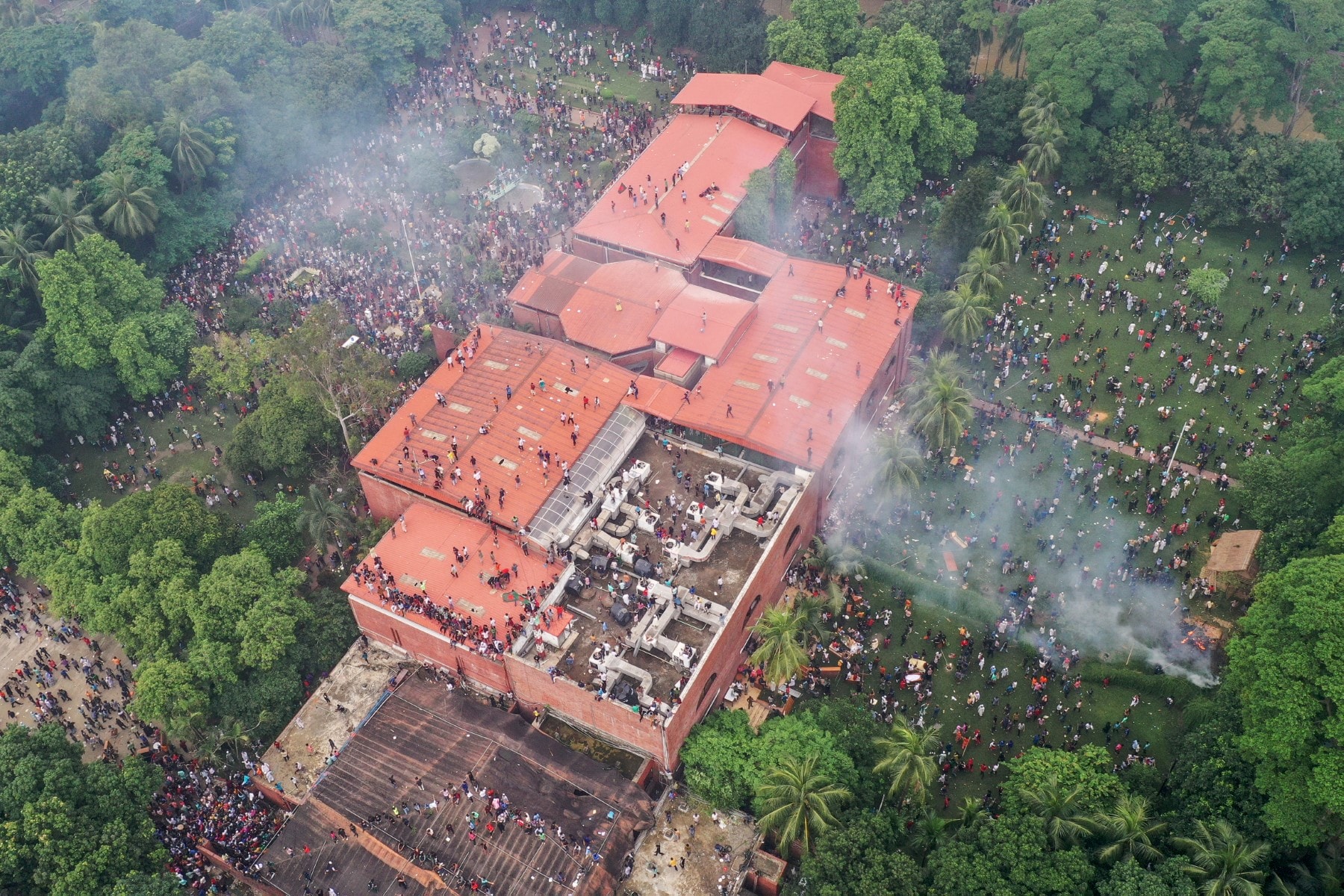
Sheikh Hasina characterized the events of last summer as a "tragic subversion of democracy".
New Delhi:
In her most revealing interview since being forced from power, former Bangladesh Prime Minister Sheikh Hasina has broken her silence from her undisclosed location in New Delhi. Speaking exclusively to NDTV's Aditya Raj Kaul, she delivered a scathing critique of the Muhammad Yunus-led interim government, warning that Bangladesh is descending into authoritarian rule with growing extremist influence and concerning alignments with terror organizations.
Hasina recounted the tumultuous circumstances of her August 5 ouster, the destruction of her family's historic residence, and what she describes as state-sanctioned violence against minorities and democratic institutions. From her exile in India, she articulated her ongoing struggle for political legitimacy and outlined her vision for restoring democratic stability in Bangladesh.
Here is the complete interview:
Q: Since leaving Bangladesh, you've rarely spoken to international media, addressing mostly your supporters and party members. How do you personally reflect on your violent ouster on August 5, 2024? Could you take us through how those events unfolded from your perspective?
A: The events of last summer were a tragic subversion of democracy. What began as legitimate student protests was exploited by anti-democratic forces who conspired to overthrow the elected government through violence and intimidation, resulting in chaos and unnecessary loss of life. It quickly became evident that the security situation had deteriorated so severely that my only option was to leave Dhaka to ensure my family's safety and prevent further violence.
Leaving my homeland was painful. It has been difficult watching our pluralistic culture being attacked and seeing the economic development measures we implemented being thoughtlessly reversed. However, I maintain strong faith in the Bangladeshi people's resilience and their desire for democratic choice.
Q: What was your reaction when mobs - reportedly acting with state sanction - destroyed 32 Dhanmondi, the residence of your father, the Father of the Nation Sheikh Mujibur Rahman, and the last remaining symbols of his legacy? How do you believe the people of Bangladesh should preserve and honor his memory in this new political era?
A: The destruction of my father's historic residence represents a barbaric attempt to erase the legacy of our independence struggle from Bangladesh's history. The current powers seek to eliminate the spirit of our Liberation War. This is a profound insult to those who sacrificed their lives for our future. Nevertheless, I believe the people of Bangladesh will never allow this legacy to be forgotten. This legacy transcends physical locations or objects—it resides in the values my father embodied: democracy, equality, secularism, and economic emancipation. These principles cannot be extinguished from Bangladesh's soul.
Q: Given the current political configuration in Dhaka - with the ruling establishment appearing firmly in control and the opposition largely subdued - what, in your view, explains the prolonged delay in announcing elections? Is this paralysis, fear of losing power, or deliberate consolidation? And under such circumstances, do you believe there is any realistic space for a genuinely fair electoral process in the near future after the recent announcement on elections and referendum?
A: This illegitimate government has deliberately delayed elections out of fear of voter judgment. I am deeply skeptical that the elections scheduled for February, if they occur, will be anything beyond a charade designed to validate the regime's unconstitutional rule. The ban on the Awami League establishes a dangerous precedent that has disenfranchised tens of millions of citizens. The unelected Yunus regime has drafted an unconstitutional charter and proposed numerous reforms that serve only to legitimize authoritarian governance. Any government elected through this sham process cannot be considered democratic.
Also Read: "Will Probably Sentence Her To Death": Sheikh Hasina's Son Ahead Of Verdict
Q: Reports indicate a disturbing pattern of attacks on Hindu and other minority communities - with temples vandalized, homes looted, and forced displacements. From what you hear from your networks, how widespread is this violence? Do you see it as politically motivated rather than purely communal? And do you think the international community is overlooking it for geopolitical convenience?
A: I am deeply distressed by the systematic violence targeting religious minorities since Yunus seized power. Thousands of individuals, homes, businesses, and places of worship have been attacked, forcing many to flee. The state has not only failed to protect them but has actively sanctioned these brutal attacks by denying their existence.
During my 15 years in office, we worked diligently to contain radical and extremist forces while upholding our constitution's secular values. For years, Bangladesh was a model of religious tolerance in our region. Yunus demonstrated his disregard for religious pluralism when he appointed extremists to his cabinet and released convicted criminals with known connections to terror organizations like Hizb-ut Tahrir. These attacks are undoubtedly politically and religiously motivated.
I appreciated the international community's initial condemnation of this violence following last summer's protests, but I fear their outrage has subsided. Equal rights and citizen safety must remain non-negotiable.
Q: A prevailing theory suggests that the United States may have influenced Bangladesh's political transition or even nudged regime change. Do you believe that has substance, or is it exaggerated? How do you interpret Washington's real motives amid the strategic competition between the US, India, and China? Have any American officials or lawmakers communicated with you since your departure that shaped your perception of their role?
A: I have seen no conclusive evidence suggesting foreign powers influenced last summer's events. I know many in American political circles admired Yunus for his economic achievements and mistakenly equated these with political competence. Now that they've witnessed him installing radical extremists in his cabinet, dismantling Bangladesh's democratic institutions, and discriminating against minorities, I imagine his popularity among Western liberals has diminished.
A stable, democratic Bangladesh benefits everyone. I believe any country valuing democracy will support our fight to restore democratic principles.
Q: Your current presence in India - and recent remarks by Muhammad Yunus suggesting that New Delhi might continue to host you - have drawn attention. How would you describe your relationship with India today: refuge, ally, or strategic partner? And how do you view India's role in both your personal circumstances and Bangladesh's political future?
A: I am profoundly grateful to the Indian people for providing me temporary refuge. Our countries share 4,000 kilometers of border, deep family and cultural connections, and critical security interests.
Our partnership is founded on mutual respect and understanding of each other's sovereignty. Bangladesh's future must be determined independently by its own people and leaders. I believe India understands this and would prefer engaging with a mature and authoritative partner in Dhaka, one governing with genuine public consent.
Q: Given Bangladesh's strategic location between India and China, and amid global power rivalries, do you see your country's destiny - and your own political future - being shaped as much by external geopolitics as by internal reform? How do you plan to balance these forces if you return to leadership?
A: Bangladesh has always maintained friendships with all nations. During our 15 years in office, we worked hard to establish ourselves as a reliable diplomatic and economic partner. Our people desire prosperity, not confrontation. This is why I ensured our diplomacy served our long-term economic and strategic interests.
Successful foreign policy requires identifying long-term interests, finding common ground with other nations, and working patiently to advance those interests. In contrast, Yunus' diplomatic approach is erratic and inconsistent, seemingly driven by a desire for endorsements from fair-weather friends to legitimize his unelected administration. Ironically, he appears to have made more enemies than friends. Neither the British prime minister nor the French president would meet him during his recent visits. The American president has publicly expressed dislike for Yunus. And then there's his diplomatic fallout with New Delhi.
Q: Since your ouster, Pakistan and Bangladesh have reportedly strengthened diplomatic and military ties. Do you worry that this new alignment could embolden radical or extremist groups within Bangladesh and risk turning it into a safe haven for terror elements once again?
A: We have always pursued constructive relations with Pakistan, cautiously and with Bangladesh's priorities in mind. Yunus has demonstrated a preference for recklessly pursuing potentially dangerous entanglements for short-term diplomatic advantage rather than allowing experienced leadership to guide these relationships.
The current administration's alignment with radical factions and known terror organizations is deeply concerning. For decades, our government successfully contained foreign and domestic terror elements threatening our secular identity and regional stability. Instead, Yunus has elevated these extremists to positions of power, creating conditions for these factions to flourish.
Source: https://www.ndtv.com/world-news/sheikh-hasina-to-ndtv-on-bangladesh-ouster-painful-to-leave-my-homeland-muhammad-yunus-government-exile-in-india-9647516