
Republican Congresswoman Proposes Bill to Eliminate H-1B Visa Program Despite Trump's Recent Support
- Date & Time:
- |
- Views: 49
- |
- From: India News Bull
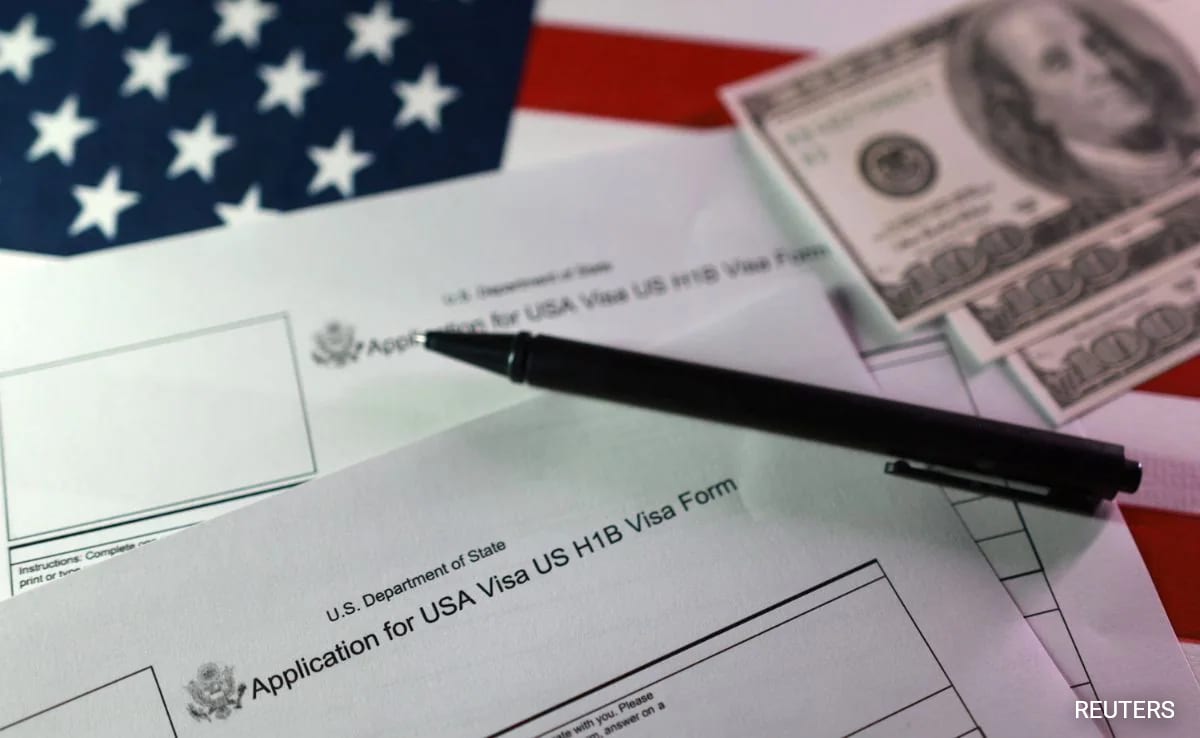
The Trump administration has initiated a significant crackdown on abuses within the H-1B visa program, aiming to reform the system that allows US employers to hire foreign specialists.
Despite President Donald Trump recently defending the H-1B non-immigrant visa program, Republican lawmakers continue their opposition to it. Congresswoman Marjorie Taylor Greene announced her intention to introduce legislation that would "completely eliminate" the H-1B visa program and remove its pathway to citizenship, effectively requiring visa holders to "return home" upon visa expiration.
Currently, the H-1B visa program offers a route to American citizenship through the Green Card process. Employers can apply for permanent residency for H-1B employees, who become eligible for citizenship five years after receiving their green cards.
If Greene's proposed bill passes, it would significantly impact Indian professionals, who constitute over 70 percent of approved H-1B applications in recent years. This high percentage reflects India's substantial pool of STEM field specialists and the strong economic opportunities available in the United States.
In her announcement video posted on X, Greene stated, "My dear fellow Americans, I'm introducing a bill to completely eliminate the H-1B visa program, which has been riddled with fraud and abuse and has been displacing American workers for decades."
The proposed legislation includes one exception: a 10,000 annual visa cap for medical professionals such as doctors and nurses who provide essential healthcare services to Americans. However, Greene noted that even this exception would be "phased out" over a decade to develop a domestic pipeline of American medical professionals.
To support this transition, Greene's bill would prohibit Medicare-funded residency programs from accepting non-citizen medical students. She highlighted that last year, over 9,000 American medical school graduates failed to secure residency placements, while more than 5,000 foreign-born doctors received positions in 2023.
"This is entirely unfair, and it's America last. My bill will help mitigate the shortage of doctors and nurses in our country, the shortage that we face while at the same time serve as an off-ramp from our reliance on foreign workers by allowing us time to fill our residency programs with American doctors," Greene explained.
The lawmaker emphasized that her bill would eliminate the citizenship pathway, requiring visa holders to return to their home countries after their visa terms end. She argued this approach restores the "original intent" of the H-1B visa as a temporary solution.
"These visas were intended to fulfill a specialty occupational need at a given time. People should not be allowed to come and live here forever. We thank them for their expertise, but we also wish them well so they may return to their home country," she said.
Greene described her bill as completely ending "the H-1B visa program and all other sectors in the job force and in the workforce," positioning it as an "America first" approach that prioritizes opportunities for American citizens.
Currently, there is a congressionally mandated cap of 65,000 regular H-1B visas plus 20,000 additional visas for US advanced degree holders issued annually. American businesses utilize the H-1B program to employ foreign workers with specialized skills.
The Trump administration has been actively working to address potential abuses in the H-1B visa program, particularly within technology companies that frequently employ foreign workers in the United States.
In September, President Trump issued a proclamation titled 'Restriction on Entry of Certain Nonimmigrant Workers' as an initial step toward reforming the H-1B program. The proclamation requires certain H-1B petitions filed after September 21, 2025, to include an additional $100,000 payment to qualify for consideration.
Interestingly, Trump has recently moderated his position on aggressive immigration reforms, acknowledging that America needs foreign talent in specific fields. Speaking to Fox News' Laura Ingraham, Trump recognized that long-term unemployed Americans would require extensive training for complex roles in sensitive sectors like defense, and that the US requires skilled foreign nationals to fill such positions.
When asked if his administration planned to deprioritize H-1B visas, Trump responded, "You do have to bring in talent."
Source: https://www.ndtv.com/world-news/bill-to-complete-end-h-1b-visa-programme-soon-us-lawmaker-9634979