
Inside Mali's Crisis: How Al-Qaeda's JNIM Uses $50 Million Ransoms and Kidnappings to Destabilize the Government
- Date & Time:
- |
- Views: 46
- |
- From: India News Bull
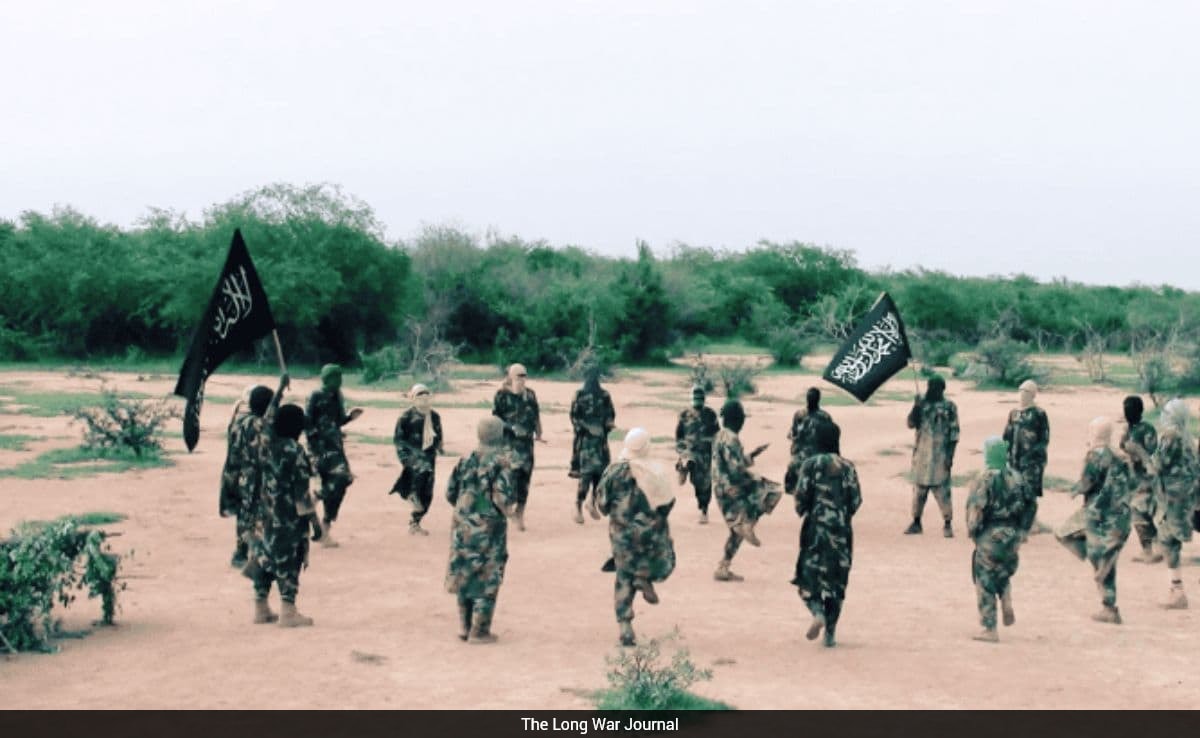
Mali's Al-Qaeda affiliated Group for the Support of Islam and Muslims (JNIM) recently collected an astounding $50 million ransom for the release of an Emirati sheikh, highlighting the group's aggressive "economic jihad" strategy.
The JNIM has established kidnapping wealthy foreigners as a cornerstone tactic alongside implementing crippling fuel blockades. Their ultimate objective is clear: overthrow the struggling Malian junta and institute Islamic law by devastating the country's economy and frightening away international investors.
In June, the jihadist organization publicly threatened to attack any foreign businesses operating in Mali, as well as enterprises collaborating with the Malian government without their explicit "authorization." The group has systematically fulfilled these threats while working to expand their influence toward the Atlantic coast.
Their campaign of terror includes burning fuel tankers traveling to landlocked Mali from Senegal and Ivory Coast, launching assaults on factories and mining operations, and dramatically increasing kidnappings of foreign nationals.
"Between May and October 2025, at least 22 foreign nationals have been abducted—roughly double the previous record of 13 in 2022," reported Heni Nsaibia, Senior West Africa Analyst for the ACLED conflict monitor.
The victims represent diverse nationalities including Chinese, Indians, Egyptians, Emiratis, Iranians, and several Europeans.
The record-breaking $50 million ransom came after JNIM kidnapped a UAE royal family member involved in gold trading near Bamako on September 26. Two business associates—an Iranian and Pakistani—were also taken. Initially, kidnappers demanded over $700,000 as proof-of-life payment before the final ransom secured the trio's release in late October.
According to Nsaibia, this sum "represents the highest known ransom in the region and constitutes a major financial boost for the JNIM." While the source of the payment remains undisclosed, a Malian security source confirmed that the deal also included "the release of around 30 JNIM prisoners" held by Malian intelligence services.
"Malian soldiers were also released during the same exchange. It is an astounding deal in terms of its scale and the elements involved, especially in the current context," the security source added.
Rida Lyammouri, researcher at the Policy Center for the New South, believes this enormous payment will enable JNIM to "maintain its current level of military engagement, including the economic blockade on Bamako, for a prolonged period."
The enormous financial windfall will undoubtedly fuel the group's territorial ambitions. "Such a haul will only serve to boost the JNIM's ambitions to expand and establish a lasting presence in the Sahel and the coastal states of Africa," Lyammouri noted.
Liam Karr, an analyst at the Washington-based American Enterprise Institute, explained that these "funds will help the group procure more weapons, such as commercial drones, explosives, and small arms, as well as pay salaries to fighters."
The security vacuum created by French troop withdrawals following Mali's recent coups has been expertly exploited by jihadists. The military junta's new security partners, including Russia, have failed to effectively counter this growing threat.
JNIM continues to hold several additional hostages, whose eventual ransoms will further strengthen the group's financial position. Most kidnappings occur in western Mali, which produces approximately 80 percent of the country's gold, according to the Soufan Centre.
At least 11 Chinese citizens have been abducted in western Mali during attacks on seven industrial sites, six operated by Chinese companies. Just last week, five Indian electrical workers and one Egyptian were kidnapped in the same region.
"Targeting foreign nationals drives away foreign investment, undermining a key revenue stream for the Malian junta," particularly in the critical mining sector, according to Karr.
As JNIM's control intensifies, the United States and United Kingdom recently announced the withdrawal of all non-essential personnel from Mali, while numerous embassies have urged their citizens to evacuate the country.
Source: https://www.ndtv.com/world-news/royal-ransoms-kidnappings-how-al-qaeda-linked-group-wants-to-rule-mali-9626752