
Antwerp's Shadow Diamond Trade: How Stolen Treasures Like the Louvre Jewels Disappear in Europe's Jewelry Underworld
- Date & Time:
- |
- Views: 47
- |
- From: India News Bull
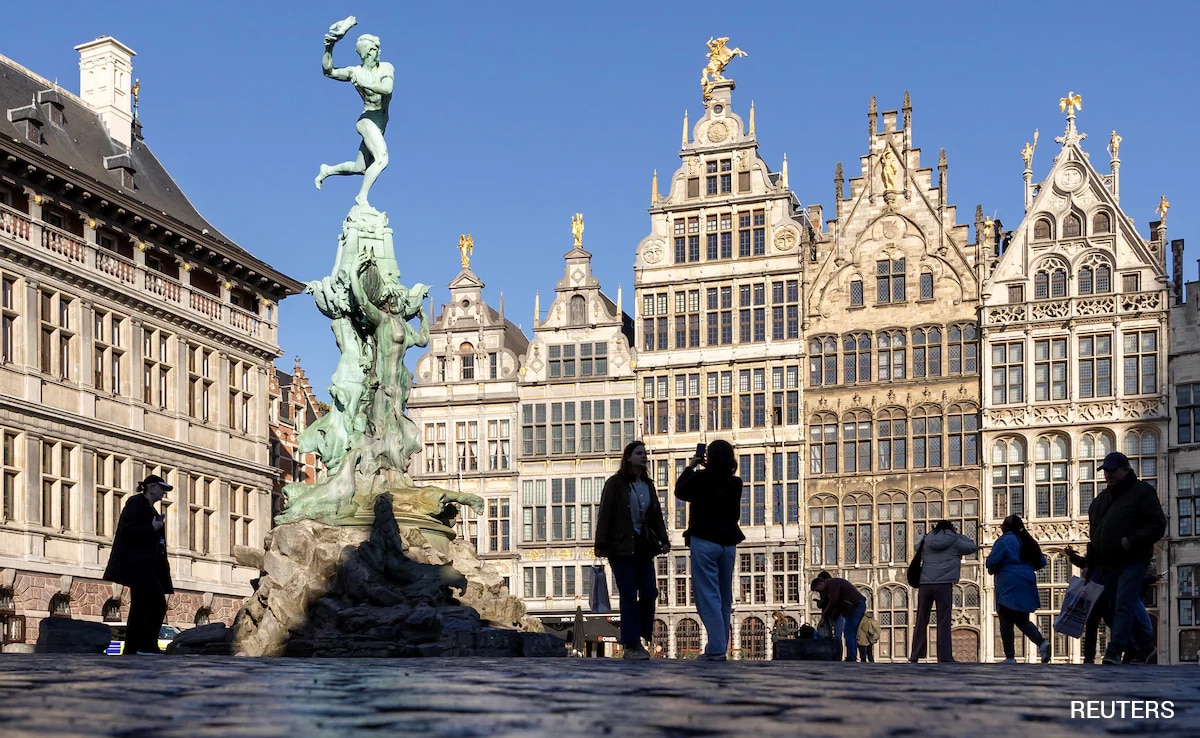
Since the 16th century, Antwerp has been the epicenter of the global diamond trade, with its wholesalers trading nearly $25 billion worth of precious stones in the past year alone.
Following the Louvre heist, Belgian authorities received an urgent notification from their French counterparts through the "Pink Diamond" network, a secure Europol-managed channel connecting investigators specialized in high-value theft cases.
The Belgian port city has faced growing challenges over the past three decades with the emergence of an underground market comprising hundreds of gold and jewelry establishments, predominantly operated by individuals of Georgian descent, according to police reports, prosecutors, court documents, and municipal records from both Belgium and France.
While most of these businesses operate legally, some function as "fences" - establishments where criminals can convert stolen jewelry or gold into cash.
French authorities have placed four individuals under formal investigation regarding the $102 million Louvre jewelry theft, though the stolen items remain unrecovered. When questioned about whether Antwerp was central to their investigation, Paris prosecutors stated only that "all hypotheses are being considered."
Antwerp's police force mobilized immediately upon receiving the "Pink Diamond" alert. Officers reviewed surveillance footage for French license plates and activated informant networks for any information about the stolen treasures. They also warned local jewelers to avoid any involvement with the high-profile stolen goods.
Belgian federal police declined to comment, citing the active French investigation.
Following the Soviet Union's collapse in the 1990s, Georgian traders began establishing themselves in Antwerp. Many brought expertise in metals trading and developed strong connections with the city's Jewish diamond merchants.
Currently, approximately 300 jewelry shops operate just outside Antwerp's diamond district. According to police sources, about a quarter of these establishments are involved in selling stolen merchandise.
The Antwerp World Diamond Centre, representing wholesale diamond traders, acknowledged to Reuters that its reputation "is occasionally put at risk" through association with certain jewelers engaged in "questionable... money laundering practices."
Antwerp's legitimate diamond sector currently faces significant challenges, including the G7 ban on Russian gems and competition from laboratory-grown diamonds, resulting in historically low prices and industry calls for financial assistance.
However, certain jewelers appear to be thriving despite these market conditions. Some suspected fences display considerable wealth, driving luxury vehicles, continuously opening new establishments, and acquiring expensive international real estate.
"You clearly have two worlds here," one officer observed. "Those who work hard, are legal... and are struggling to survive, and those who apparently do good business in the same neighbourhood selling the same products."
Kris Luyckx, an attorney who has represented numerous jewelers of Georgian descent, countered that compliance regulations are robust and that jewelers undergo regular police inspections.
French criminal activity has provided a reliable revenue stream for some Antwerp jewelers, according to law enforcement officials from both countries. After the 2016 Kim Kardashian Paris hotel robbery, the mastermind confessed to selling her melted gold and diamonds in Antwerp for over 25,000 euros. Officials believe Georgian fences purchased these items, though no charges were filed as the goods were never recovered.
Since then, multiple French and Belgian investigations have uncovered a criminal pipeline between the countries: Balkan burglars transfer stolen goods to couriers in France, who then deliver them to buyers in Antwerp. In most cases, these buyers were Georgian, according to Belgian police.
Yakout Boudali, intelligence chief for the French Gendarmerie's Central Office for the Fight Against Itinerant Delinquency, confirmed that in at least two investigations into stolen French goods being transported to Belgium, the Antwerp fences were "of Georgian nationality or held dual nationality." However, she cautioned against "stigmatizing" either Georgians or Antwerp, noting that Romania-based criminal groups are increasingly active in this space.
Antwerp's illicit jewelry trade compounds existing challenges for a city already combating drug organizations using Europe's second-largest port to import massive cocaine shipments. Last month, an anonymous Antwerp judge published an open letter on Belgium's courts website warning that the country risked becoming a narco-state.
In 2021, Antwerp established a specialized police force to oversee the diamond and jewelry sectors. The mayor's office report at that time warned of "a strong link between fraudulent jewellers and the criminal drug environment," noting that jewelers were suspected of "laundering of millions of euros in criminal proceeds."
Antwerp City Hall did not respond to comment requests.
Police sources cite a strong code of silence among many Georgian jewelers and Indian diamond traders, making it difficult for authorities to penetrate these tight-knit communities.
In 2017, then-Mayor Bart De Wever (now Belgium's right-wing prime minister) attempted to improve transparency through a municipal decree requiring security cameras with facial recognition inside jewelry shops, with footage accessible to police. Jewelers initially opposed this measure but eventually agreed with one condition - the cameras could be installed but would remain off.
Luyckx, who represented over 100 jewelers in this case, confirmed this arrangement, arguing that the law was excessively invasive and unfairly targeted the predominantly Jewish community. "It was like profiling an area as a sort of criminal ghetto," he stated.
Luyckx, engaged by local rabbi Yosef Tarab Cohen to represent the jewelers, suggested that some jewelers' reluctance to cooperate with authorities was understandable given the "smell of discrimination and racist profiling." Antwerp revoked the decree in 2020 after a state auditor determined it risked overreach and violated privacy laws.
According to Antwerp police, selling stolen jewelry in the city is a straightforward process. Jewelers examine gold, gemstones, or watches, propose a price, and pay from undeclared cash reserves. Once purchased, items disappear. Gold is quickly transformed into one-kilogram bricks in compact back-room smelters no larger than office printers.
However, one officer suggested that even Antwerp's underground jewelry market might find the Louvre items too recognizable to handle. The stolen pieces were primarily set in silver rather than gold, giving them limited melt value. Their distinctive oversized sapphires and diamonds would be immediately recognizable, making even Antwerp's discreet cutters and polishers reluctant to process them. Additionally, the market for the pearls is extremely limited.
"It's not easy money," concluded the officer.
Source: https://www.ndtv.com/world-news/chasing-the-louvre-loot-inside-antwerps-jewellery-underworld-9625453