
Record Bear Attacks in Japan: Climate Change, Population Growth, and Rural Challenges Converge
- Date & Time:
- |
- Views: 65
- |
- From: India News Bull
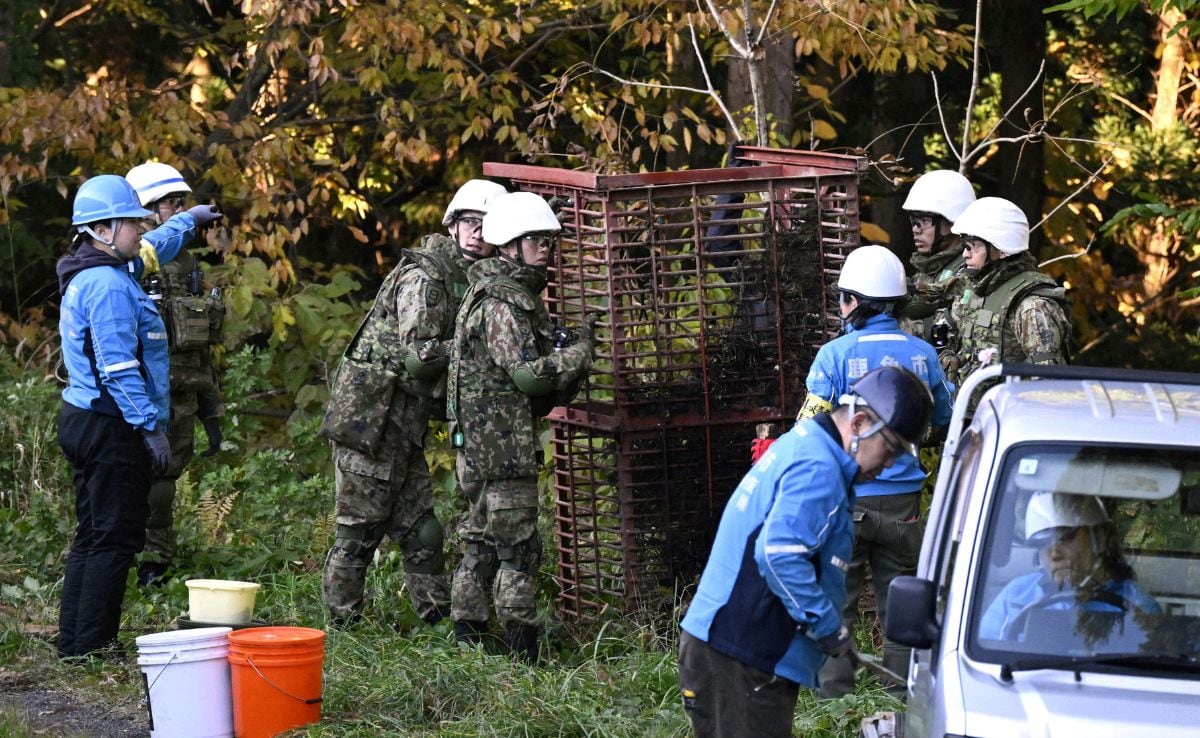
Military personnel have been dispatched to assist with bear trapping and hunting operations.
In northern Japan, fear has become tangible as residents attach bells to their bags, hoping the sound will deter bears, while warning signs are posted throughout communities.
Since April, a record 13 fatalities have been attributed to bear attacks nationwide, with consistent reports of bears entering residences, wandering near educational facilities, and causing chaos in retail establishments.
"Bear attack news reaches us almost daily," said Kakeru Matsuhashi, a 28-year-old traditional "Matagi" hunter, while navigating through woodland with his knife. "It's becoming personal and genuinely terrifying," he added from Akita prefecture, a region experiencing numerous incidents.
This year's death toll already doubles the previous record set in 2023-24, with five months remaining in the fiscal period.
While comprehensive data from all regions is incomplete, Japan has recently experienced some of the highest rates of fatal bear attacks globally.
Akita resident Keiji Minatoya understands this danger firsthand—in 2023, a bear emerged from his garage, forced him to the ground, and bit his face.
"I thought: 'This is how I die,'" recalled the 68-year-old, who managed to escape and seek shelter inside his home.
The government is urgently addressing the surge in attacks, which scientists attribute to rapidly increasing bear populations combined with this year's poor acorn harvest, resulting in "overcrowded" mountains filled with hungry bears.
Military forces have been deployed to provide logistical support for bear trapping and hunting initiatives, while riot police have been authorized to use rifles against the animals, which can weigh up to half a ton and outrun humans.
Among the victims was a 67-year-old man in Iwate, adjacent to Akita, whose body was discovered outside his residence bearing animal bite marks. Hunters responded to the scene and shot a bear near the property.
Also in Iwate, authorities believe a 60-year-old man was attacked while maintaining an outdoor bath at a secluded hot spring resort. His remains were found in nearby woodland.
Official statistics indicate that injuries are also approaching record levels, with over 100 people wounded in the six months ending September.
A significant factor is the expanding bear population, which is growing rapidly due to abundant food sources—including acorns, deer, and boars—influenced by warming climate conditions, according to experts.
Japan's brown bear population has doubled over three decades, now reaching approximately 12,000, while Asian black bears on the main island of Honshu have increased to 42,000, according to recent government findings.
Some mountain areas have become "overcrowded," according to Naoki Ohnishi, researcher at the Forestry and Forest Products Research Institute.
"Simply put, the bear population has exceeded the mountains' capacity," he explained.
Although rising temperatures have led to more frequent abundant acorn harvests, these nuts still experience natural cycles of good and poor yields every two to five years.
This year, as in 2023 when Minatoya was attacked, acorn supplies are insufficient.
While most bears remain in mountainous areas, recent poor harvests have driven some—along with their cubs—into towns searching for food, explained Shinsuke Koike, professor at Tokyo University of Agriculture and Technology.
With increased human contact, cubs particularly become less fearful and develop preferences for agricultural produce and common fruits like persimmon, Koike added.
Ongoing rural depopulation due to low birth rates and urban migration has also reduced human presence at forest and mountain boundaries, blurring traditional divides between human and bear territories.
"Bear habitats moved closer to human settlements in 2023," Ohnishi noted. "This year, they're advancing further because they're starting from where they previously ended."
Hajime Nakae, professor of emergency and critical medicine at Akita University Hospital, said frequent bear sightings made him feel as if he were "living inside a bear safari park."
The physician, who has treated bear-inflicted injuries for three decades, noted that wound patterns are changing as bears become less afraid of humans.
In past encounters, a startled bear might strike a person's face before fleeing, but now "they charge from about 10 meters and leap at you."
Without meaningful intervention, he anticipates bear injuries will increase and spread to other regions, adding: "We are witnessing a disaster."
"Thorough culling" to reduce bear numbers is the only effective method to decrease risk for local communities, researcher Ohnishi stated.
Last year, the government added bears to the population control list, reversing protections that had helped bear populations thrive.
However, rural resources are limited and hunter numbers have declined by more than half since 1980.
As of 2020, the most recent data available, approximately 220,000 hunters remain, mostly in their 60s or older.
Japan culled over 9,000 bears in 2023-2024, and more than 4,200 between April and September this year.
Akita alone has culled over 1,000 thus far.
In the immediate future, Japan's concerns should temporarily subside.
Experts Koike and Ohnishi indicated that hibernation patterns remain unchanged, and bears will soon enter winter dormancy.
Source: https://www.ndtv.com/world-news/almost-every-day-japan-battles-spike-in-bear-attacks-9618953