
AI and Journalism: MIT Researcher Neil Thompson on Trust, Integrity and the Future of Media
- Date & Time:
- |
- Views: 59
- |
- From: India News Bull
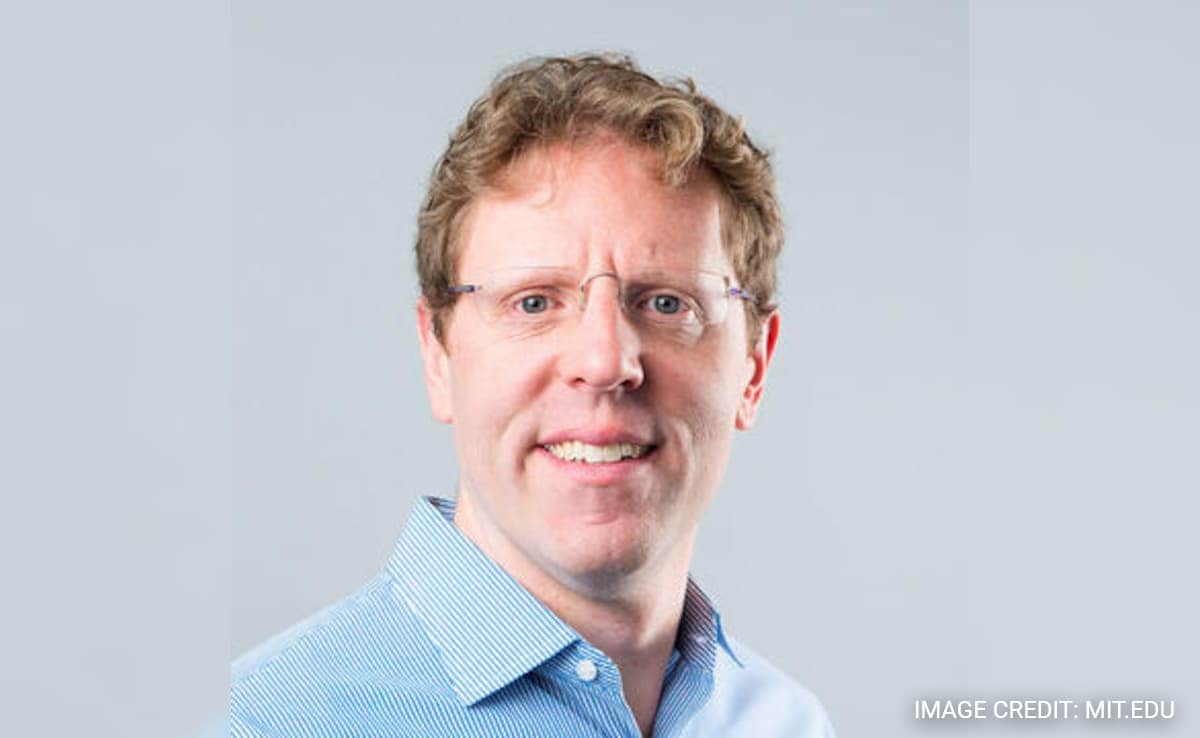
Professor Neil Thompson, Director of FutureTech research project at MIT's Computer Science and AI Lab, offers a balanced perspective on artificial intelligence and journalism's future that neither exaggerates the threat nor dismisses the disruption.
In an age where newsrooms constantly debate whether AI will eliminate jobs or fundamentally alter the nature of journalism, Professor Thompson presents a nuanced view that acknowledges technology's transformative power while affirming the enduring value of human journalistic integrity.
Speaking extensively about India, media ecosystems, and AI's evolving influence, Thompson outlines a future landscape where professional methods will transform, competition will intensify, yet truth, integrity, and verification will become increasingly valuable assets.
"I think journalism will get hit by AI, and like many other technologies, as we empower people, the people who are good and are going to do things are going to become more capable of doing things," Professor Thompson explains.
He adds a thoughtful caution: "That means you're going to have more competition for the kind of stuff journalists are doing," emphasizing that the profession must increasingly center around what machines cannot replicate, outsource, or generate autonomously.
"The real crucial part here is that idea of veracity; like, how do we know that something is trusted, and that's going to become even more important," he notes, recognizing that while AI will simplify certain tasks, it will simultaneously flood the information ecosystem with content of varying quality and reliability.
The solution, Thompson suggests, lies in reputation built on methodical rigor. "Maybe the specific tasks that journalists do may get easier and there's bound to be more competition in that; but the idea of having a lot of integrity in your work, searching for truth in a really deep way, developing a reputation for that. I think it is still going to be very valuable."
Professor Thompson elaborates that "as more and more people can easily write articles of dubious quality, the value of that type of journalism will fall. But in such a world, there will still be a premium for true, trustworthy reporting. The trick for reporters over the coming years will be how to harness the positive productivity-improving aspects of AI while keeping the bedrock of trust intact."
While newsrooms contemplate their futures, the message becomes clear: AI may target routine content production, not authentic truth-seekers. Journalism isn't dying but transforming, with AI as a catalyst in this evolution.
The conversation then broadens to examine India's broader labor landscape, questioning whether the world's most populous nation should anticipate disruption or opportunity. Professor Thompson provides a candid assessment of the inevitable trade-offs.
"We are definitely going to get some impact on jobs here in India and the rest of the world; some of those are going to be very precious tasks and very precious jobs, and it's going to be painful for some people," he acknowledges.
Yet he simultaneously recognizes the potential benefits of automation that liberates humans from unfulfilling tasks. "We're also going to see some things that will get automated and we say we're pretty happy to let that go; it's very nice to have some things that you don't enjoy doing get automated."
The productivity narrative, consistently associated with technological advancement, remains relevant, Thompson argues: "We know that AI is going to make the pie bigger as we become more productive, and this offers the possibility of more jobs coming in." With characteristic caution, however, he avoids making definitive predictions about long-term outcomes. "In the longer run, of course, as these systems become more capable, it becomes a bigger question mark; I think we don't know quite the answer to exactly how jobs may be affected in the long run yet."
When asked whether we're experiencing another historical cycle of technological anxiety followed by adaptation, Professor Thompson acknowledges familiar patterns while identifying distinctive current challenges: "I think people are right to say, as these capabilities develop, there actually is going to be some risk to jobs; I think that is true."
He highlights the crucial variable in human terms: "The question is—we lost our job and we start to retrain, and by the time we get to the next job, AI is doing that as well; that's the real question here." If adaptation can't keep pace with technological advancement, the resulting gap becomes not merely economic but social. Nevertheless, he offers measured reassurance: "We think actually that many of the tasks that humans do are going to stick around for a very long time; so that sort of gives me some comfort."
Regarding practical implementation, Thompson shares his personal AI preferences with research-informed pragmatism. "I sort of split my time between using GPT-5 and using Claude," he reveals. "Right now I'm probably enjoying GPT-5 more... but maybe the next one comes out, I'll switch back to Claude."
When discussing Chinese AI developments like DeepSeek, his tone shifts toward cautious assessment without alarmism. "I am not as scared as most people are about the Chinese AI model DeepSeek; they've done impressive things, but other people are doing impressive things as well, and I think we still have a very vibrant competition."
He later clarifies, "It's less about whether the model is Chinese or not, but how people are going to use it afterwards; these systems are so powerful that if people misuse them, it's going to be a real problem."
Balancing potential benefits against possible risks, Professor Thompson methodically evaluates AI's implications: "When we look at previous technologies, the benefits that we get—and, you know, for AI, they're going to be a lot," he states.
He elaborates, "We automate some tasks that we don't want to do; we make scientific discoveries; we do some data science at a level that we haven't been able to do before," while acknowledging the low-probability, high-impact scenarios concerning ethicists and policymakers.
"There is this long tail of unlikely things that could be very, very bad, where maybe there's a conflict between two groups of people, and one of those people says, 'I'm going to take the safety switches off'; then we could go down really bad roads," Thompson cautions.
For India specifically, he identifies a distinctive challenge: linguistic diversity and inclusion. "Sadly, we see that the number of models that cover many of India's multitude of languages is not nearly as great as English or even Chinese."
Thompson advocates for foundational work developing comprehensive language resources. "If you want to have the widespread benefits to lots of people in India, it is going to be important to develop those corpuses of digital language and to train models that are really good in those things."
When asked whether he considers himself an AI evangelist or skeptic, Thompson's response reflects his balanced approach: "I often think that I play an interesting middle ground. If you talk with the people who are most excited about AI, I think they think I'm a little gloomy... but I talk to some economists who say things are going to stay very much the same, and to them, I'm the real techno-optimist; I like to think I'm somewhere in the middle."
While journalism will certainly undergo transformation as AI integrates into newsrooms, workflows, and audience expectations, the core essence of the profession—truth pursued with integrity and methodical verification—will become increasingly valuable amid machine-generated content lacking context, verification, and accountability.
In this evolving landscape, as Professor Thompson reminds us, practitioners committed to rigorous verification won't become obsolete but increasingly essential. AI may facilitate journalism's next developmental phase, but it cannot replace the fundamental human judgment that defines editorial integrity.
Source: https://www.ndtv.com/world-news/will-ai-replace-journalists-or-test-their-integrity-what-mit-researcher-neil-thompson-said-9607332