
Tropical Forests Forever Facility: World Leaders Secure $5 Billion to Combat Deforestation
- Date & Time:
- |
- Views: 69
- |
- From: India News Bull
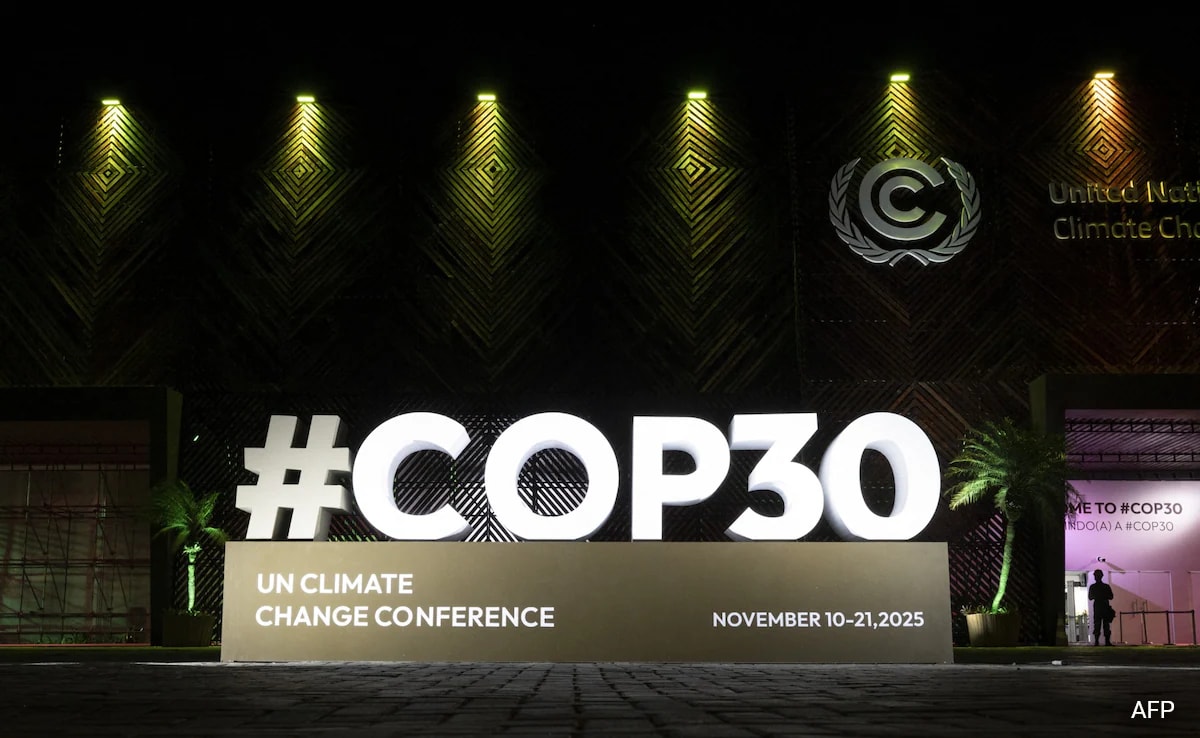
At a climate summit in Brazil, world leaders inaugurated a fund dedicated to forest preservation, successfully securing over $5 billion in initial commitments to incentivize tropical countries for forest conservation efforts.
While the government pledges fall short of the target needed to attract significant private investment, Brazilian President Luiz Inacio Lula da Silva characterized the Tropical Forests Forever Facility (TFFF) as groundbreaking.
Brazil, as the fund's political champion, aims to establish a $125 billion facility that would distribute a portion of profits to developing nations for each hectare of forest they preserve. Private investors would also benefit from returns generated primarily through emerging market bonds.
"Such a fund, which will help us, comes at the right time," stated Abe Assamoi, an Ivory Coast representative, speaking to AFP in Belem, a city bordering the Amazon rainforest. "We have certainly lost a lot of forests, but we have implemented a comprehensive strategy to reforest our country... We have ambitious goals," though these require financial support, he explained.
The fund was officially launched in Belem on Thursday as heads of state and government convened prior to the annual UN climate negotiations scheduled to begin the following week.
The fund designers initially envisioned raising $10 billion in government contributions within a year—a figure that was revised downward following an initially tepid response.
The $10 billion is expected to grow to $25 billion over time—seed capital intended to attract additional private investments totaling another $100 billion.
Brazil envisions the fund creating a sustainable, long-term revenue stream, providing tropical countries with an economic alternative to deforestation.
Forests are often referred to as Earth's lungs, releasing oxygen and absorbing planet-warming carbon while supporting a diverse array of plant and animal species.
Brazil contributed the first $1 billion pledge to the fund, matched by Indonesia, another forest-rich nation.
The UK declined to contribute, while Finland's government informed AFP that finding new resources would be "difficult" in the current economic climate.
"Things can change, this is a long-term project," Brazil's chief climate negotiator Mauricio Lyrio told AFP regarding countries that have yet to join the initiative.
Brazil's Finance Minister Fernando Haddad remained optimistic, stating "we have already surpassed fifty percent of what we envisioned" to raise by the next climate conference in 2026.
France pledged a conditional 500 million euros, Portugal contributed a more modest $1 million, and Germany made an unspecified commitment.
Norway pledged 30 billion kroner ($3 billion) for loans, albeit with conditions attached.
"It is vital to stop deforestation to reduce the impacts of climate change and limit biodiversity loss," the Norwegian government emphasized in a statement.
Several countries and observer groups have expressed concerns about the fund's design and oversight mechanisms.
Greenpeace has "cautiously" welcomed the TFFF, with its Brazilian executive director Carolina Pasquali telling AFP that "weaknesses remain."
"For example, where the money will be invested, what industries are out. We think it's a good step forward, but it needs work," she explained Wednesday aboard the organization's Rainbow Warrior flagship, docked in Belem.
Brazil has identified more than 70 developing countries potentially eligible for annual payments from the fund.
If Brazil, Indonesia, and the Democratic Republic of Congo were to completely eliminate deforestation, each could earn hundreds of millions of dollars annually.
Mauricio Bianco, vice president of Conservation International Brazil, emphasized that forest conservation addresses two planetary crises simultaneously: climate change and biodiversity loss.
"These are threats that demand financial commitments commensurate with their scale," he stated, adding that implementing the fund as quickly as possible was imperative.
For Lula, "forests are worth more standing than cut down."
"In a few years, we will see the fruits of this fund. We will be proud to remember that it was in the heart of the Amazon rainforest that we took this step together," he told summit delegates.
Source: https://www.ndtv.com/world-news/un-climate-summit-world-leaders-launch-fund-to-save-forests-get-first-5-billion-9590357