
Tesla CEO Elon Musk's Trillion-Dollar Compensation Package Faces Shareholder Vote Amid Controversy
- Date & Time:
- |
- Views: 46
- |
- From: India News Bull
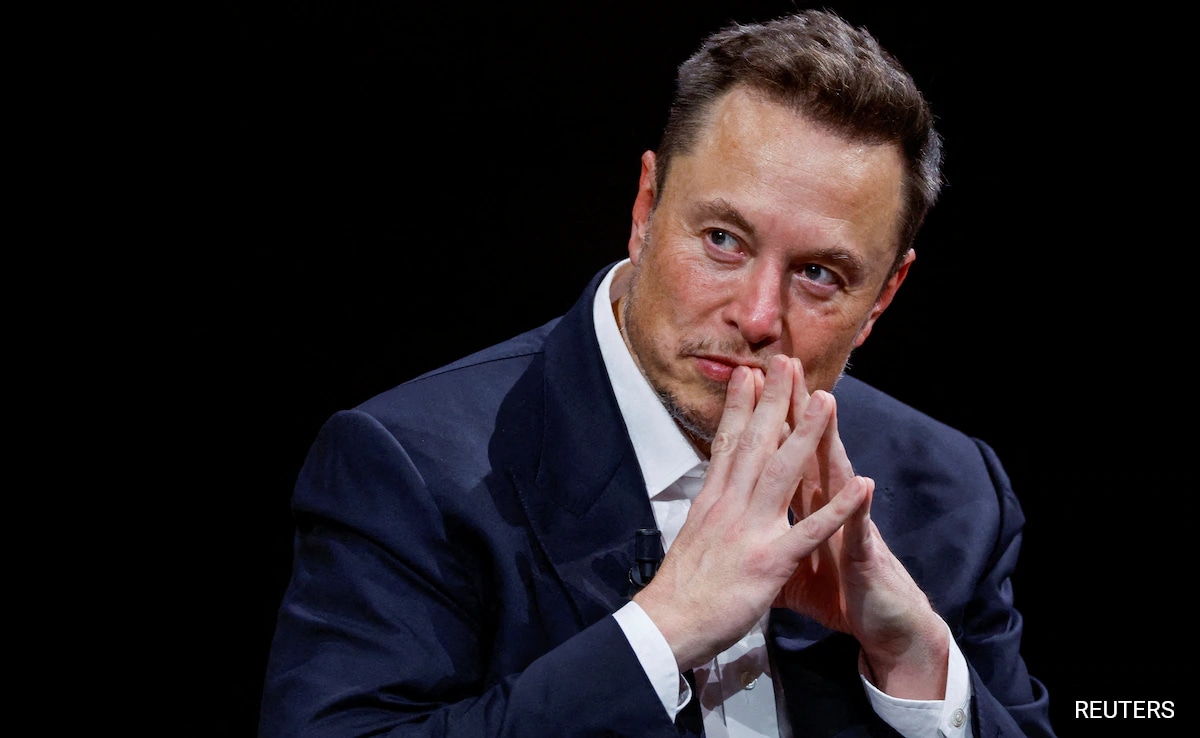
Elon Musk currently stands as the world's wealthiest individual with a Forbes-estimated net worth of $493 billion, yet he seeks substantially more compensation from Tesla.
New York:
Despite Elon Musk's political activities negatively impacting Tesla's sales figures, the company's stock has experienced remarkable growth. Now, Musk is pursuing an unprecedented compensation package from the electric vehicle manufacturer.
Tesla shareholders convening Thursday at the annual meeting in Austin, Texas, will vote on whether to grant their CEO—already the planet's richest person—a stock package potentially making him history's first trillionaire.
This vote has ignited passionate debate across financial circles, even drawing commentary from the Pope as an illustration of widening wealth disparities.
Several major pension funds have voiced opposition to the package, contending that Tesla's board demonstrates excessive loyalty to Musk, that his recent behavior appears increasingly erratic, and that the proposed compensation is simply excessive.
Proponents argue Musk's visionary genius uniquely positions him to create a future dominated by Tesla's self-driving vehicles—many without steering wheels—and humanoid robots performing household and industrial tasks. They maintain such substantial compensation is necessary to motivate him and secure his continued focus.
Musk has explicitly threatened to depart from Tesla without this package and has characterized some critics as "corporate terrorists."
For approval, the package requires support from a majority of voting shareholders. Significantly enhancing his prospects, Musk can vote his own 15% stake in the company.
The compensation proposal was initially revealed to shareholders in September through a detailed 200-page regulatory filing. This document also includes proposals regarding Tesla's potential investment in Musk's xAI venture and future board composition.
The compensation package isn't guaranteed—Musk must achieve specific operational and financial targets to receive the benefits.
To obtain full compensation, Musk must deliver 20 million Tesla vehicles over a decade, more than doubling his total production from the past twelve years. Additional requirements include substantially increasing Tesla's market valuation and operating profits, plus producing one million robots from the current zero.
Even partial achievement of these ambitious goals could yield substantial rewards for Musk.
For instance, Musk would receive $50 billion in additional Tesla shares by increasing company market value by 80%—a feat he accomplished just last year—while simultaneously doubling vehicle sales and tripling operating earnings, or achieving any two from a dozen operational targets.
Musk's current $493 billion net worth already significantly surpasses historical wealth figures such as Andrew Carnegie's inflation-adjusted $300 billion.
Though still trailing John D. Rockefeller's inflation-adjusted peak wealth of $630 billion from 1913, Musk is rapidly closing this gap.
Musk maintains his primary motivation isn't financial gain but securing greater control of Tesla by doubling his ownership stake to nearly 30%. He specifically cites concerns about controlling the company's developing "robot army," referencing the Optimus humanoid workers he doesn't trust others to manage.
Numerous investors support the package, including Baron Capital Management, whose founder Ron Baron described Musk as indispensable, stating: "Without his relentless drive and uncompromising standards, there would be no Tesla."
Critics include major institutions like Calpers (America's largest public pension fund) and Norway's sovereign wealth fund (the world's largest). They argue the compensation is excessive, with Norwegian representatives specifically questioning the independence of Tesla's board, which includes Musk's brother. Their concerns echo a Delaware court's ruling nearly two years ago that criticized the "deeply flawed" approval process for Musk's previous compensation due to his "extensive ties" with directors.
Even Vatican leadership has criticized the proposal, condemning growing wealth inequality and specifically denouncing the trillion-dollar compensation package.
Judging solely by stock performance, Musk's leadership has been remarkably successful, with Tesla now valued at nearly $1.5 trillion.
However, much of this valuation reflects investor expectations that Musk will deliver on challenging promises, and his recent management record raises questions. He has broken numerous commitments, and his unfiltered communication style has sometimes damaged Tesla's interests.
This year alone, Musk pledged to launch driverless taxis in multiple cities, obtain European regulatory approval for self-driving software, and increase sales by 20-30%.
Instead, his "driverless" vehicles in Austin and San Francisco still require human safety monitors, European regulators haven't approved his autonomous driving software, and Tesla sales continue declining—recently showing a dramatic 50% drop in Germany.
Nevertheless, Musk has previously overcome seemingly impossible challenges. Several years ago, production difficulties led many to predict Tesla's bankruptcy, yet he ultimately succeeded and the company's stock soared.
As Tesla owner and investment manager Nancy Tengler observed: "He frequently teeters on the edge of disaster and then pulls back just in the nick of time."
Source: https://www.ndtv.com/world-news/elon-musk-a-trillionaire-debate-over-tesla-ceos-pay-package-rages-9583166