
Iran's Taftan Volcano Shows Signs of Awakening After 700,000 Years of Dormancy: New Research Raises Concerns
- Date & Time:
- |
- Views: 61
- |
- From: India News Bull
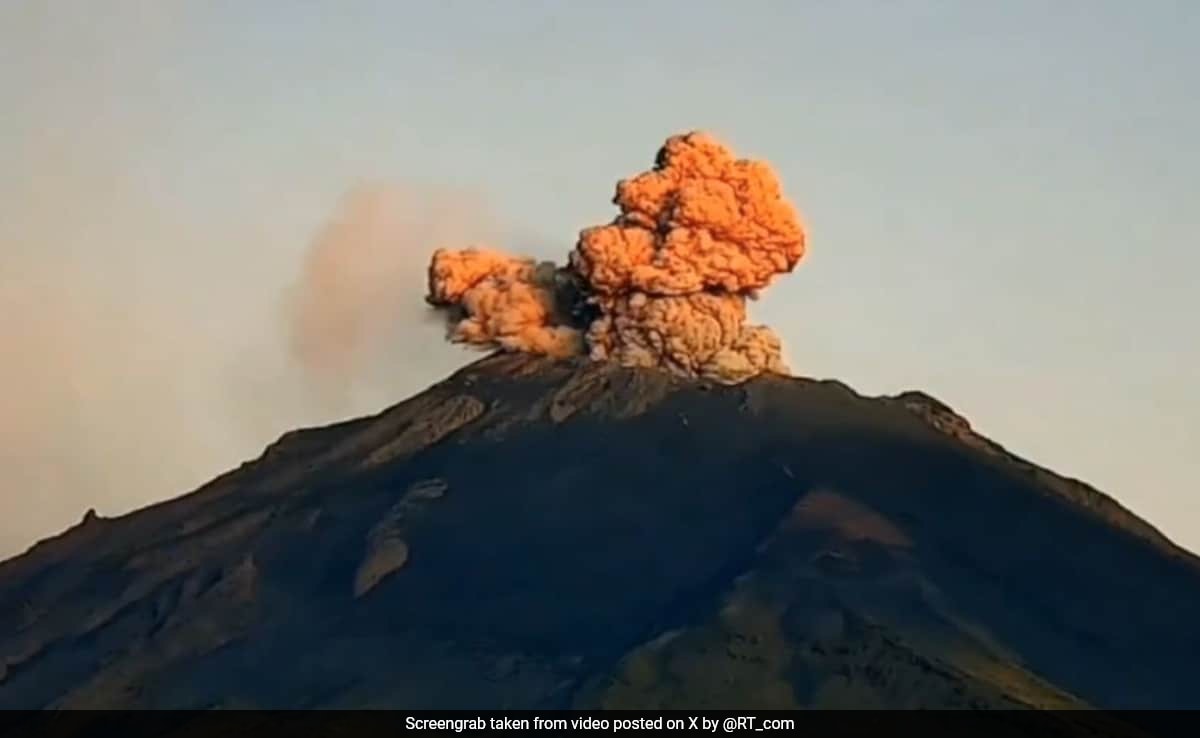
The Taftan volcano, towering at 12,927 feet (3,940 metres) in southeastern Iran, may be awakening after a prolonged dormancy period of approximately 700,000 years.
Recent research published in Geophysical Research Letters on October 7 has identified concerning signs of activity. Scientists observed that the area near the volcano's summit increased in height by 3.5 inches (9 cm) during a ten-month period from July 2023 to May 2024.
The study, headed by volcanologist Pablo Gonzalez from the Institute of Natural Products and Agrobiology (IPNA-CSIC) in Spain, indicates that Taftan could potentially pose a significant risk to populations in the vicinity.
Good morning — Popocatepetl Volcano wakes up in orange ash clouds pic.twitter.com/migSxAHveF
— RT (@RT_com) November 5, 2025
According to traditional classification methods, volcanoes are considered extinct if they haven't erupted during the Holocene epoch, which began 11,700 years ago.
However, Gonzalez suggests that based on its recent geological activity, Taftan should now be reclassified as dormant rather than extinct.
"It has to release somehow in the future, either violently or more quietly," Gonzalez explained to Live Science. "This study doesn't aim to produce panic in the people. It's a wake-up call to the authorities in the region in Iran to designate some resources to look at this," he further clarified.
Located in southeastern Iran, the massive Taftan volcano is surrounded by smaller mountains and vents formed by the Arabian ocean crust.
Due to the remote location, researchers lack GPS tracking systems for completely accurate measurements. Nevertheless, satellite imagery analyzed by doctoral student Mohammadhossein Mohammadnia, who collaborated with Gonzalez, revealed evidence of ground elevation.
In their journal publication, researchers "unambiguously" assert instability at the volcano, with data indicating that the southeastern summit ground expanded by approximately 9 centimetres (3.5 inches) over a 10-month period.
"Our findings reveal that Taftan is more active than previously recognised. This highlights the urgent need for a revision of the current volcano risk of the Makran subduction volcanic arc, that is, establishing volcano monitoring networks, creating and/or updating geological hazard maps and other measures aiming to reduce volcanic risks," the authors stated in the study.
The research remains ongoing, with Gonzalez noting plans for future collaboration with experts who monitor volcanic gas emissions.
Source: https://www.ndtv.com/world-news/video-extinct-iranian-volcano-shows-signs-of-life-after-700-000-years-9579622