
Abigail Spanberger Makes History as Virginia's First Woman Governor in Decisive Democratic Victory
- Date & Time:
- |
- Views: 57
- |
- From: India News Bull
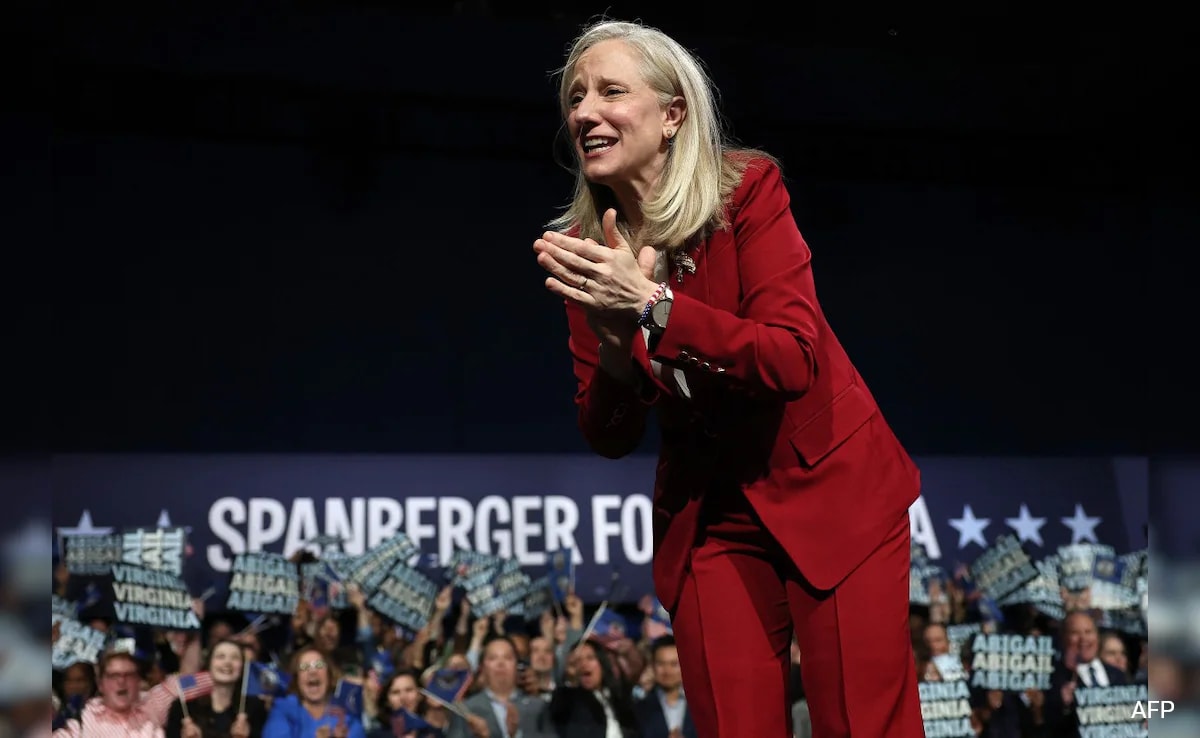
Democrat Abigail Spanberger claimed victory in Virginia's gubernatorial race on Tuesday, defeating Republican Lt. Gov. Winsome Earle-Sears to become the first woman governor in the commonwealth's history. Her win represents a significant shift in partisan control as she prepares to succeed outgoing Republican Gov. Glenn Youngkin.
In her victory speech to jubilant supporters in Richmond, Spanberger declared, "We sent a message to every corner of the commonwealth, a message to our neighbors and our fellow Americans across the country. We sent a message to the whole word that in 2025, Virginia chose pragmatism over partisanship. We chose our commonwealth over chaos."
The election also saw Democrat Ghazala F. Hashmi win the lieutenant governor's race, making history as the first Muslim woman to secure a statewide office in the United States.
Spanberger, 46, leveraged her background as a former congresswoman and CIA case officer throughout her campaign, which focused heavily on economic issues. Her strategy, which may serve as a template for Democrats in next year's elections, balanced carefully crafted economic arguments against Trump's policies while investing substantially in advertisements linking Earle-Sears to the president.
While campaigning across the state, including in traditionally Republican-leaning areas, Spanberger emphasized her support for abortion rights in the last Southern state without new restrictions on the procedure. She also criticized Trump's Department of Government Efficiency, the federal government shutdown, and their negative impact on Virginia's hundreds of thousands of federal employees.
This balanced approach helped Spanberger secure core Democratic supporters while attracting swing voters who had previously supported Youngkin. Her victory continues Virginia's historical trend of electing governors from the party opposite to that of first-term presidents.
For Republicans, the loss presents another battleground defeat by a conservative closely aligned with the president's party. Trump never campaigned for Earle-Sears, though he did offer tepid support, raising questions about the ideal Republican nominee profile for contested general elections.
Earle-Sears, 61, would have made history as the first Black woman elected governor in the United States had she won.
Spanberger ran on promises to protect Virginia's economy from what she characterized as aggressive tactics from Trump's second administration, including civil service reductions, tariff impositions, and healthcare system changes.
Voters like Sherry Kohan, a 56-year-old accountant who cast her ballot in Arlington, cited opposition to Trump as motivation for supporting Spanberger. Similarly, Stephanie Uhl, 38, mentioned concerns about the federal government shutdown affecting many Virginia residents when explaining her vote for Spanberger.
Spanberger's background as a former CIA case officer enhanced her credibility on national security. She also emphasized her role as a mother with children in Virginia's public schools and her record as a Capitol Hill representative who worked across partisan lines in a swing district.
This positioning helped her withstand Earle-Sears' attacks on cultural issues, particularly claims that Spanberger held extreme positions on civil rights and transgender healthcare. Spanberger consistently advocated for local school district authority regarding transgender students in competitive sports, portraying her opponent as out of step with mainstream Virginia voters.
Her approach mirrored strategies Democrats employed to flip U.S. House control during the 2018 midterms. Spanberger was among several prominent women who brought national security credentials to battleground campaigns.
In Washington, Spanberger established herself by focusing on practical issues like rural broadband expansion, combating drug trafficking, and veterans' services, while building a reputation for cross-party collaboration.
As governor, she will face economic challenges including tightening projections, rising utility costs, and growing unemployment, partly resulting from federal workforce contractions under the Trump administration. However, she may benefit from a Democratic-controlled Legislature if the party maintains its House of Delegates majority. With Democrats potentially controlling all branches of Virginia government, they could advance policy priorities previously vetoed by Youngkin.
Spanberger secured victory despite late campaign turbulence when news reports revealed that Jay Jones, the Democratic attorney general nominee, had sent texts in 2022 suggesting violence against a former Republican House speaker. While Spanberger condemned the messages, she stopped short of asking Jones to withdraw from the race.
"I have denounced political violence, political rhetoric," Spanberger stated during her debate with Earle-Sears, "no matter who is leading the charge."
Source: https://www.ndtv.com/world-news/abigail-spanberger-scripts-history-as-virginias-first-female-governor-9577320