
Trump Revives Controversial Working Group Strategy with China to Combat Fentanyl Crisis
- Date & Time:
- |
- Views: 44
- |
- From: India News Bull
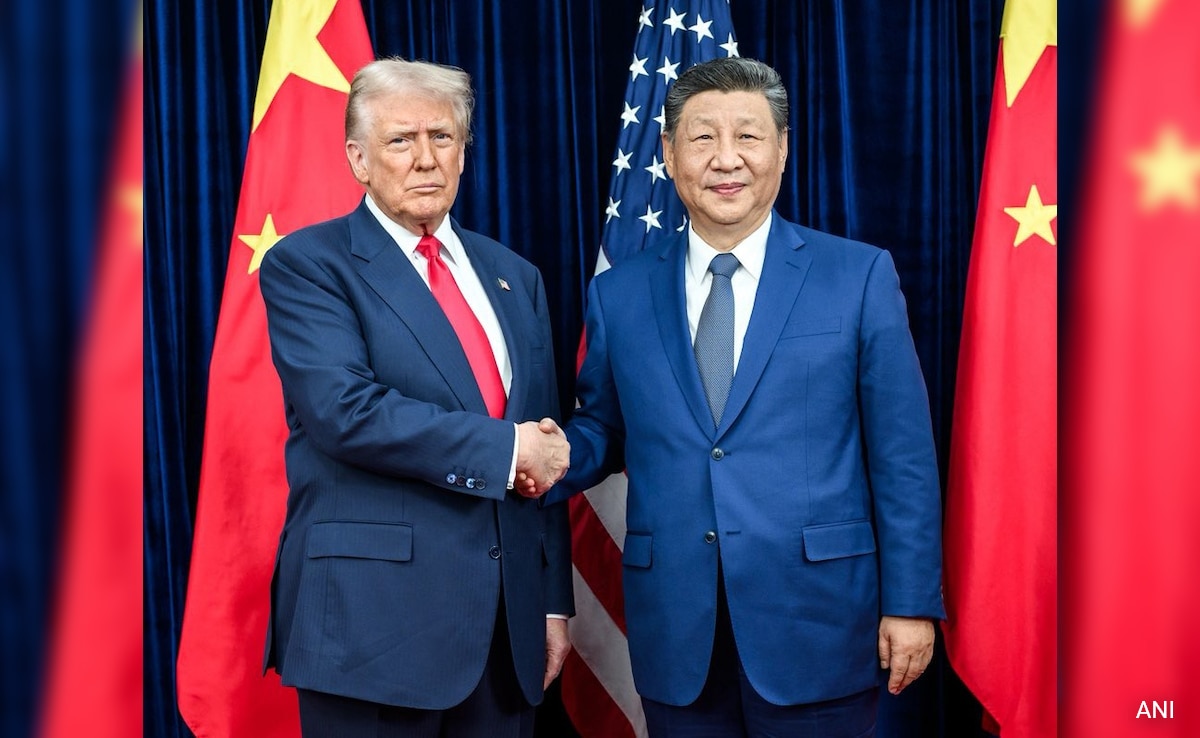
US President Donald Trump met Chinese President Xi Jinping in South Korea last week.
Washington:
US President Donald Trump began his second term by imposing 20% tariffs on Chinese goods after deeming talks to stop deadly fentanyl flows ineffective. This measure aimed to pressure Beijing into addressing the trafficking of this synthetic opioid.
Following his meeting with Chinese President Xi Jinping in South Korea last week, Trump agreed to reduce his fentanyl-related tariffs by half. In exchange, a new "consensus" on addressing the drug crisis would be developed through a bilateral working group, according to US Treasury Secretary Scott Bessent.
This arrangement revives a communication channel that China has embraced but Republican lawmakers have long criticized. Many argue that Beijing offers such working groups as concessions during high-level discussions only to entangle the US in lengthy negotiations without substantive action.
This decision marks a notable shift for Trump officials who had previously insisted that punitive measures would remain until Beijing demonstrated concrete efforts to dismantle its fentanyl supply chains.
"The administration has made significant compromises in its own position on China and counternarcotics by now accepting a commitment to launch a working group," said Henrietta Levin, former director for China on President Joe Biden's National Security Council and current senior fellow at the Center for Strategic and International Studies.
Levin acknowledged that such a working group could potentially yield results but noted that China has successfully offered counternarcotics cooperation to the US at least three times in the past decade under both Trump and Biden administrations.
"You start to wonder how many times they can sell us exactly the same half-hearted commitment," she remarked.
Trump administration officials maintain that this iteration of the mechanism will focus on results rather than serving merely as a forum for dialogue on fentanyl.
'Force His Hand'
Chinese officials strongly defend their record on fentanyl, which remains a leading cause of US overdose deaths. They assert they have already implemented extensive measures to regulate certain precursor chemicals used in manufacturing the drug, and they accuse Washington of using the issue as "blackmail."
China has provided minimal details regarding the fentanyl accord. Their Foreign Ministry's readout of the Trump-Xi meeting made no reference to fentanyl, while their Commerce Ministry statement merely indicated that both sides had "reached consensus" on fentanyl counternarcotics cooperation.
"The US needs to take concrete actions to create necessary conditions for the cooperation," China's embassy in Washington told Reuters without mentioning the working group. The embassy added that China "remains open to continuing the cooperation."
The Biden-era US-China counternarcotics working group quickly collapsed when Trump implemented tariffs earlier this year. That working group had been heavily criticized by Republicans.
In 2023, then-Senator JD Vance – now Trump's vice president – joined other Republican lawmakers in criticizing the Biden administration for lifting sanctions on China to encourage fentanyl discussions.
"President Xi will only respond to strength. We must force his hand and make it clear that sanctions will only be lifted after the CCP (Chinese Communist Party) stops the deadly production of fentanyl precursor chemicals," Vance and colleagues wrote to the Biden administration.
Biden officials maintained that China took incremental steps under the working group but emphasized that much more action was needed.
The White House did not respond to Reuters' request for comment on the new working group but issued a statement Saturday saying China "will stop the shipment of certain designated chemicals to North America and strictly control exports of certain other chemicals to all destinations in the world."
US Trade Representative Jamieson Greer told Fox Business News that the US still maintained 10% tariffs on China over fentanyl.
"We still have leverage on this point to make sure the Chinese follow through on their obligations," Greer stated.
Nevertheless, reimposing tariffs could jeopardize the broader, fragile trade truce reached by Trump and Xi, potentially threatening Trump's possible visit to China in April if trade tensions resurface.
Michael Froman, president of the Council on Foreign Relations and former US Trade Representative, noted in a newsletter that Trump's tariffs functioned effectively as leverage, provided China "actually adheres to the agreement this time."
"If not, I imagine those tariffs might go back up," he concluded.
(This story has not been edited by NDTV staff and is auto-generated from a syndicated feed.)
Source: https://www.ndtv.com/world-news/trump-tries-old-tactic-with-china-on-fentanyl-a-new-working-group-9571482