
Behind the Scenes: How CBS Edited Trump's 73-Minute Interview Down to 28 Minutes for Broadcast
- Date & Time:
- |
- Views: 54
- |
- From: India News Bull
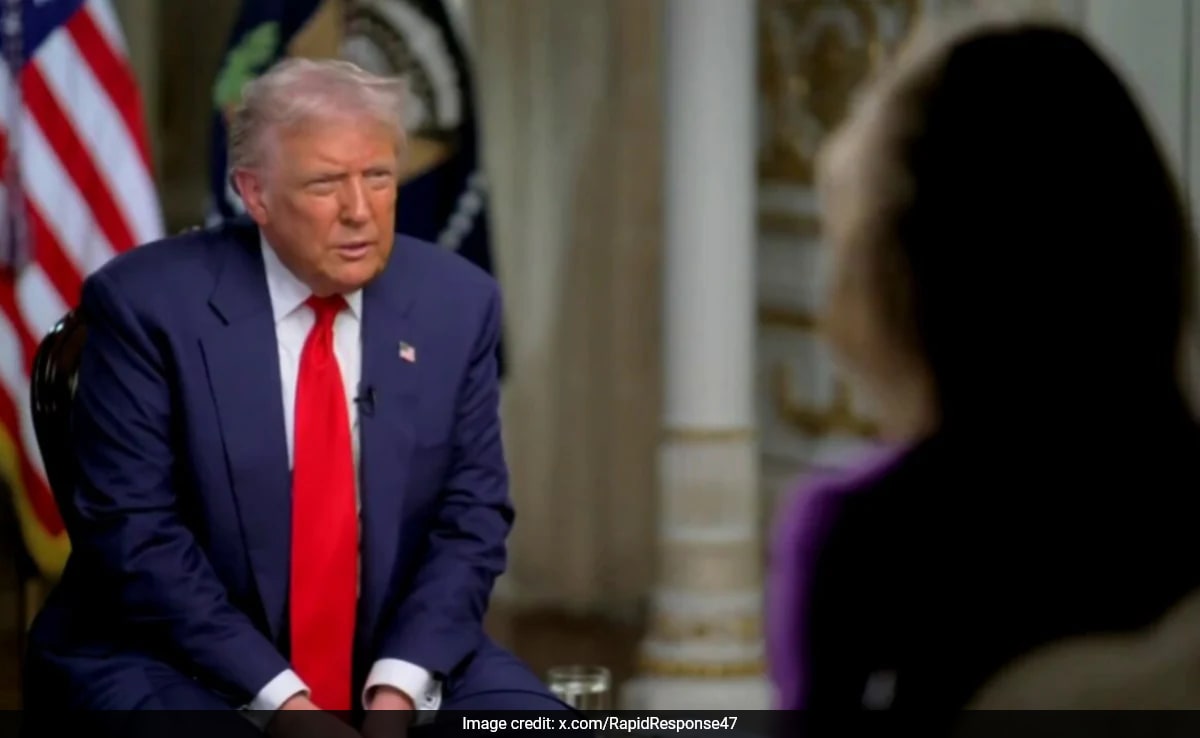
President Donald Trump's recent "60 Minutes" appearance revealed a stark contrast between what viewers saw on television and the complete interview. The broadcast featured only 28 minutes of material from a 73-minute conversation with interviewer Norah O'Donnell, conducted days earlier.
In an unusual move, CBS released the entire unedited interview online, allowing audiences to compare the televised segment with the complete discussion. This transparency provided a rare glimpse into journalistic editing decisions that typically remain behind the scenes.
The full interview contained numerous segments that didn't make the final cut, including Trump calling Senate Democratic leader Chuck Schumer a "kamikaze," complaints about investigators searching his wife's closet, and a moment where Trump questioned O'Donnell about safety in Washington, DC following his deployment of the National Guard.
CBS News posted the complete transcript and video online alongside the broadcast version. This decision contrasted sharply with how the network handled Kamala Harris's interview last year, which became the subject of litigation when Trump sued CBS claiming deceptive editing.
The Harris interview transcript wasn't released for four months and only after pressure from the Trump-controlled Federal Communications Commission. Typically, "60 Minutes" and most news organizations don't publish their raw footage or transcripts.
Former "60 Minutes" producer Tom Bettag, now teaching journalism at the University of Maryland, expressed concerns about this transparency trend. "There's a very good reason not to allow people to do that, in order to avoid the arguments of 'you should have done this' or 'you should have done that,'" Bettag noted, adding that audiences traditionally trust journalists' editorial judgment.
The editing choices revealed clear priorities. While the broadcast began with discussion of the government shutdown, the actual interview started with questions about Trump's meeting with Chinese President Xi Jinping. The decisions exemplify how journalists routinely select material based on newsworthiness and audience interest.
As CNN's Brian Stelter observed, "The newsiest portions made the broadcast, which is why programs edit in the first place."
Multiple partisan attacks and repetitive content were trimmed from the final version. Trump's claim that Chuck Schumer "would rather see the country fail than have Trump and the Republicans do well" was omitted, as was his statement that O'Donnell "should be ashamed" for asking about political retribution.
Journalist Rick Ellis, who meticulously compared the two versions for All Your Screens, noted that the broadcast largely removed "rant-filled and often confusing" segments. Trump referenced President Biden over 40 times in the complete interview, but only six instances appeared in the broadcast version.
CBS incorporated several fact-checks into the aired segment, particularly refuting Trump's claim about China and Russia testing nuclear weapons. However, some opportunities for correction were missed, such as when Trump claimed he overcame all legal "nonsense" directed at him.
Notably absent from the broadcast was Trump discussing CBS parent company Paramount's management changes following his $16 million lawsuit settlement regarding the Harris interview. "They paid me a lot of money for that," Trump said in the unedited version. "You can't have fake news. You've gotta have legit news."
This particular edit drew criticism from Trump critic Tim Miller at the Bulwark website, who sarcastically threatened to sue over the omission of Trump "extorting the network."
Interestingly, Trump supporters seemed less concerned about the edits. The White House's "rapid response" account on X posted both versions without complaint, while conservative media watchdog Newsbusters noted that O'Donnell's interview represented an improvement over Trump's contentious 2020 interaction with Lesley Stahl.
This transparent approach to editing provides audiences unprecedented access to journalistic decision-making that shapes the news they consume, highlighting the numerous judgments on clarity and significance that inform every published story across media platforms.
Source: https://www.ndtv.com/world-news/how-cbs-60-minutes-invited-audience-into-editing-process-with-donald-trump-interview-9570559