
Rape, Torture, Silence: LGBTQ Survivors Expose Horror In Turkmenistan
Two men who escaped one of the world's most secretive and repressive states have told AFP how they were tortured, beaten and raped in Turkmenistan for the "crime" of being gay.
- Date & Time:
- |
- Views: 54
- |
- From: India News Bull
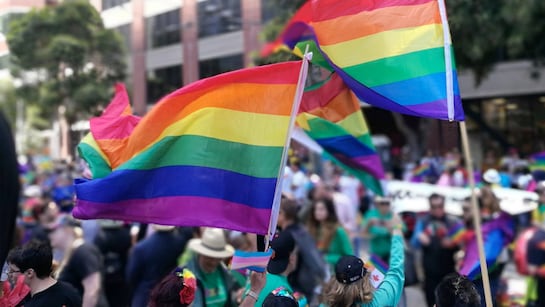
Turkmen legislation permits authorities to incarcerate HIV-positive individuals for "sodomy"
Two individuals who fled one of the world's most isolated and oppressive regimes have shared with AFP their experiences of being tortured, beaten and sexually assaulted in Turkmenistan for the "offense" of homosexuality.
When this oil and natural gas-rich Central Asian nation makes news, it's typically regarding the peculiarities of its "National Leader" and "Hero Protector" Gurbanguly Berdymukhamedov.
The dentist-turned-dictator who composes poetry about his horse – and whose soccer team maintains an undefeated record in the local league – is obsessed with health. So much that his son Serdar, the current president, intends to "eliminate smoking" nationwide by year's end.
Yet behind the grand monuments and the marble metropolis of Arkadag constructed to honor Berdymukhamedov, dissidents and minorities face ruthless persecution, according to Amnesty and Human Rights Watch, with LGBTQ individuals suffering particularly harsh treatment, often imprisoned or confined to psychiatric facilities.
Arslan, currently hiding overseas, recounted to AFP how he endured rape five times while incarcerated – where HIV-positive inmates are condemned to gradual death from lack of medical care – while David was physically assaulted and raped by his interrogators, who wore gloves "to avoid contact with my blood".
These uncommon testimonies, supported by official documentation and verified by NGOs, expose a concealed aspect of the secretive regime, which permits no independent media or human rights organizations.
Government officials refuse to address such allegations. However, at the UN last year, they maintained that "all discrimination" was prohibited in Turkmenistan.
They stated homosexual relations are criminalized because they contradict the "traditional values" of Turkmen society.
Arslan's narrative Arslan – whose name AFP has altered for protection – was raised in poverty in Turkmenabat, the country's second-largest city near the Uzbek border. "We lacked both bread and basic clothing," said the 29-year-old from the Uzbek minority.
When he relocated to the capital Ashgabat at 18, he was struck by the grandeur of white marble structures built by the country's first post-Soviet president Saparmurat Niyazov and Berdymukhamedov, who assumed power in 2006.
He also discovered a small gay community and entered a clandestine relationship with another man. But three years later, he was arrested alongside approximately 10 other "suspected homosexuals."
He believes his partner was coerced into denouncing him.
Arslan was beaten by police and sentenced to two years for sodomy in a closed-door hearing in January 2018. He spent nine months in a penal colony before receiving a pardon.
Of the 72 men in his barracks, about 40 were there due to their sexual orientation. One day, the barracks leader, a murderer – "who had sexual relations with many inmates" – targeted him, repeatedly raping him after administering sedatives.
"It was horrific," said Arslan, who attempted suicide by consuming "a handful of pills." When he informed the prison director about the rapes from the hospital, "he laughed, saying I was there for that purpose."
Following his release, Arslan found employment and tried to reconstruct his life, but the stigma was overwhelming. People identified him and threatened him, "shouting at me on the street."
He was twice committed to psychiatric institutions after subsequent arrests in 2021 and 2022. "They wanted to treat me because in their view, I have a disorder."
He decided to leave Turkmenistan, but with authorities attempting to prevent mass emigration of citizens escaping hardship and repression, he was denied a passport.
Eventually, after circumventing strict internet restrictions, he received assistance from the NGO EQUAL PostOst, which supports LGBTQ individuals in former communist countries, and managed to purchase a passport.
"Everything operates through corruption" in Turkmenistan, he explained. Transparency International has ranked the country among the 15 most corrupt globally.
Finally, he managed to escape to one of the few nations allowing Turkmens entry without visas.
Unheard screams David Omarov, 29, has lived with HIV since adolescence, with education about the virus and preventive measures virtually nonexistent in Turkmenistan.
From a middle-class family in the capital, his life was devastated in 2019 when security services summoned him during one of the frequent crackdowns on LGBTQ individuals. He was detained for several days and tortured to reveal other men's names.
"They were aware of my HIV-positive status," he told AFP. "So they struck me wearing gloves and kicked me to avoid blood contact. But I began bleeding heavily. Perhaps that saved me."
"The worst part is that nobody hears your screams," he added, revealing he was raped by his tormentors but cannot yet fully disclose what they did to him. "Those are wounds that remain unhealed," he said.
Omarov said Turkmenistan justifies the persecution as defending its "traditional values."
"They're cultural fascists," he stated.
While predominantly Muslim, Turkmenistan's government is secular, emphasizing veneration of Turkic folklore and traditions.
Gurbanguly Berdymukhamedov, 68, and his son, Serdar, 43, are portrayed as guardians of this steppe heritage with personality cults similar to Stalin's or North Korea's Kim dynasty.
They've also elevated the Turkmen Akhal-Teke horse and Alabai dog as national symbols, erecting statues of these animals throughout the country.
Vanished father The sheer "brutality" of the Turkmen regime distinguishes it from other authoritarian Central Asian states, argues Omarov, who has received asylum in Poland.
The only Turkmen LGBTQ activist speaking publicly, Omarov has received online death threats.
He said his family is being punished in his place, with his father having disappeared and his brother stabbed.
The persecution is so severe that he avoids contacting them fearing additional reprisals.
Having secretly established the support group The Invisible Rainbow of Turkmenistan while still in the country, he continues his activism from exile with limited resources, funding his advocacy by working at a Polish supermarket.
"You are not your nation's disgrace," he tries to tell LGBTQ people in Turkmenistan. "You deserve love and you are not a mistake."
The dilemma Emir first developed feelings for another boy around age 12. He believed he was the "only one like that" until later learning about gay people from Russian television before satellite dishes were prohibited in Turkmenistan.
Growing up in an impoverished family in Turkmenabat, he preferred wearing pink clothing and soon became a target of homophobic abuse.
His fear and paranoia intensified. "I thought police could read my thoughts," he said. But in 2018 he departed after securing a student visa for Russia.
Despite hostile legislation, Russia long served as an initial refuge for LGBTQ individuals fleeing former Soviet republics – until the full-scale Ukraine invasion in 2022.
In 2019 Emir relocated to a small disputed territory in Europe that AFP cannot name for his protection.
However, he discovered his HIV-positive status in April last year, and his new life collapsed. He lost employment and faced deportation back to Turkmenistan, where he's certain "they will mistreat me and let me die because of my condition".
To escape this fate, he needs to renew his expired passport, but that would require returning to Turkmenistan and risking imprisonment.
Imprisoned for HIV status Turkmenistan's law allows authorities to imprison HIV-positive individuals for "sodomy" or for "exposing others" to the virus.
"When gay men seek HIV treatment, they risk being reported to police," said Anne Sunder-Plassmann of the International Partnership for Human Rights.
While the government continuously promotes healthy living, it provides no statistics on HIV infections and "refuses to acknowledge the crisis, with doctors often concealing