
Afghanistan's Earthquake Vulnerability: Causes, History, and Prevention Strategies
- Date & Time:
- |
- Views: 58
- |
- From: India News Bull
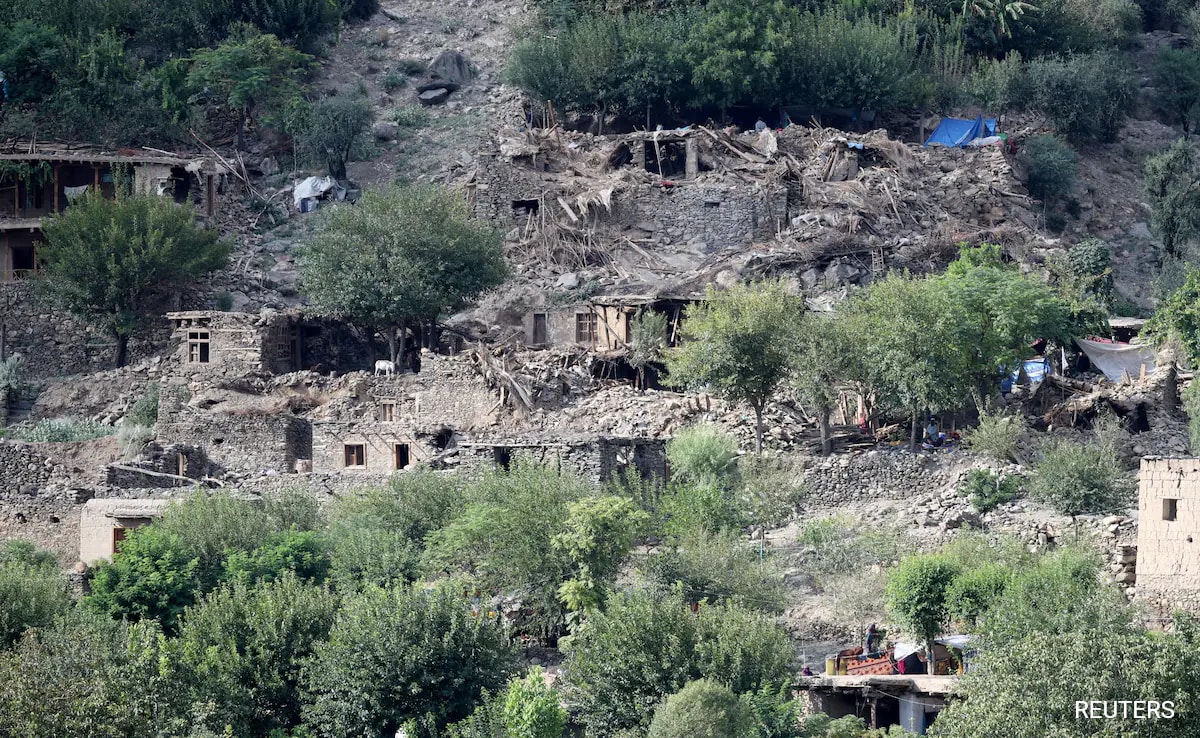
Afghanistan sits on the boundary of the Eurasian tectonic plate, making it highly susceptible to seismic activity.
A powerful 6.3-magnitude earthquake struck near Mazar-e Sharif in northern Afghanistan on Monday, resulting in at least seven fatalities and approximately 150 injuries. This disaster follows just months after another earthquake and its aftershocks claimed more than 2,200 lives in late August.
Let's examine why this South Asian nation experiences frequent seismic events and possible ways to mitigate their devastating effects:
Afghanistan regularly faces earthquakes, with these natural disasters causing the highest number of casualties among all natural hazards in the country. On average, earthquakes claim approximately 560 lives annually and generate estimated damages of $80 million per year.
Research has documented at least 355 earthquakes with magnitudes exceeding 5.0 in Afghanistan since 1990.
The country's vulnerability to earthquakes stems from its position at the edge of the Eurasian tectonic plate, which interfaces with the Indian plate in a transgression zone - meaning these massive geological structures either converge or slide past each other. Additionally, the Arabian plate's influence from the south creates one of the world's most seismically active regions.
Typically, Afghanistan's numerous earthquakes result from the Indian plate's northward movement and its collision with the Eurasian plate.
Eastern and northeastern Afghanistan regions, particularly those bordering Uzbekistan, Tajikistan, and Pakistan, demonstrate the highest earthquake susceptibility.
The densely populated capital city of Kabul faces the highest average estimated earthquake damage, approximately $17 million annually according to research findings.
In mountainous regions of Afghanistan, earthquakes pose additional dangers as they can trigger landslides, further increasing casualties and property destruction.
Since 1900, Afghanistan has experienced approximately 100 "damaging" earthquakes.
Among recent devastating seismic events was a magnitude 6 earthquake in 2022 that killed 1,000 people. In 2023, multiple earthquakes within a single month collectively claimed 1,000 lives and obliterated entire villages.
One of Afghanistan's most powerful recorded earthquakes occurred in 2015, measuring 7.5 in magnitude and causing 399 deaths across Afghanistan, Pakistan, and India.
The country witnessed some of its worst earthquake devastation in 1998 when two separate seismic events struck within three months - the first killing 2,300 people and the second claiming 4,700 lives.
To enhance resilience against future earthquakes, studies recommend constructing new buildings with earthquake-resistant designs and retrofitting existing structures to reduce collapse risks.
Experts also advocate for improved monitoring systems and early warning mechanisms to provide more timely alerts. Additionally, mapping fault lines using geospatial technology and remote sensing could enable the relocation of populations from highly vulnerable areas.
Source: https://www.ndtv.com/world-news/explained-why-is-afghanistan-prone-to-earthquakes-9564115