
Deadly Rio Police Raids Spark Massive Protests as Human Rights Concerns Mount in Brazil
- Date & Time:
- |
- Views: 59
- |
- From: India News Bull
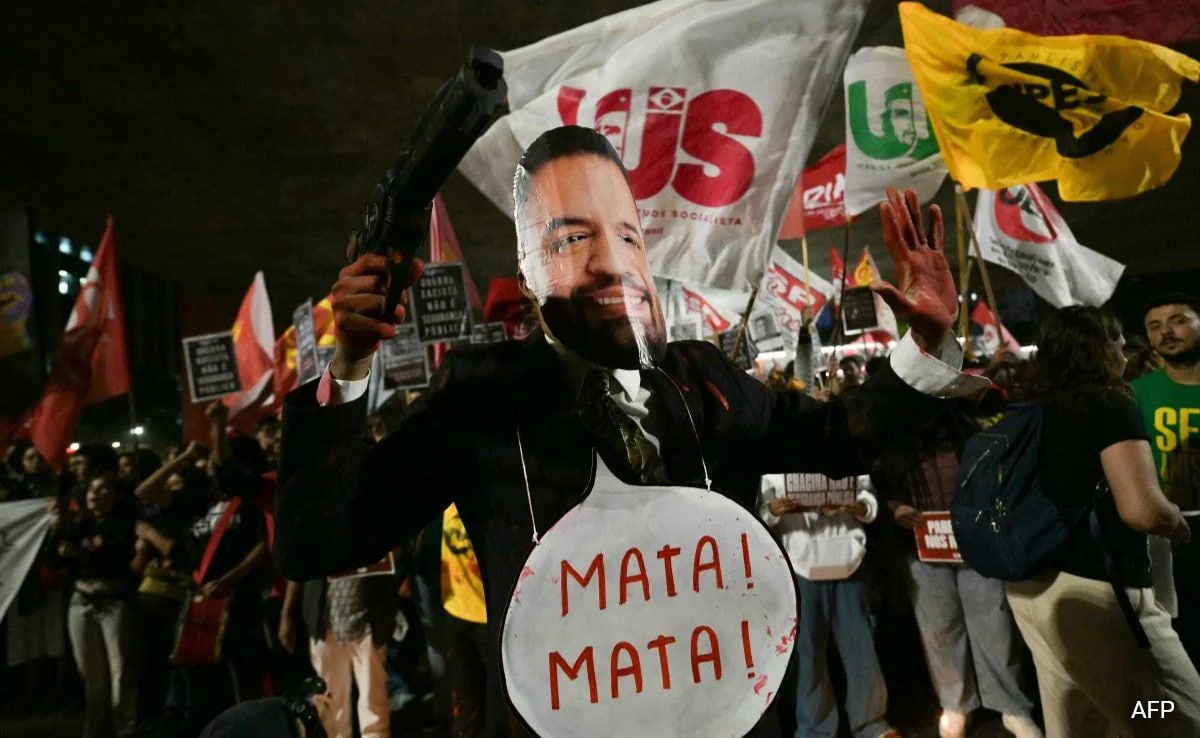
"Out with Castro, stop the massacres!" protesters chanted, directing their anger toward Rio Governor Claudio Castro.
In a Rio de Janeiro favela, a young child wore a T-shirt stained with red paint symbolizing the bloodshed from Brazil's deadliest police operation to date.
The boy held a sign stating: "Children should be able to play, the favela wants to live in peace."
He was among hundreds who participated in Friday's march through Vila Cruzeiro, one of the Rio favelas where police raids had claimed more than 120 lives just three days earlier.
Favelas are densely populated low-income neighborhoods frequently constructed on steep hillsides throughout Brazil.
"Tuesday was the day of horror. What we saw here was a massacre," stated Ana Maria Pereira, 18, a resident of this predominantly Black and mixed-race community characterized by narrow alleyways covered with tangled electrical wiring.
The demonstration began at the football field where Adriano, former Inter Milan and Brazilian national team star, first played as a youth.
Protesters vocally denounced Rio's right-wing Governor Claudio Castro, who had labeled the deadly operation a "success" against "narcoterrorists."
"120 lives lost is not a success," proclaimed one sign, while another declared, "Castro has blood on his hands."
Dozens of motorcycle taxis, a common transportation method through the favela's steep, winding streets, joined the procession with engines roaring.
"During the operation, police prevented us from moving, shot at us and deployed tear gas," motorcycle taxi driver Lucas Azevedo, 32, told AFP.
Residents from more affluent neighborhoods also participated in the march, including Miguel Rabelo, a 30-year-old musician.
"It's important for me to come here, listen to people, share this moment with them, look them in the eyes," he expressed.
The police operation, reportedly targeting Rio's Comando Vermelho (Red Command) drug organization, has faced strong criticism from human rights groups, with the United Nations calling for an investigation.
Family members of victims have alleged summary executions occurred. An AFP journalist on location witnessed a decapitated body.
"There is a lot of pain, indignation, but we are gathered here to ensure that this never happens again," said Monica Benicio, widow of Marielle Franco, a Rio councilor assassinated in 2018 in a crime that shocked Brazil and the world.
"The most terrifying thing is seeing that part of society applauds, saying that the only good criminal is a dead criminal," lamented the 39-year-old, now a city councilor herself.
In a Friday statement, Human Rights Watch (HRW) condemned police actions following the raid, stating "police did not preserve crime scenes for analysis" or establish a proper chain of custody for evidence.
"The families of the people killed in the October 28 raid, including those of police officers, deserve to know the circumstances of their loved ones' deaths," said Cesar Munoz, Brazil director for HRW.
Despite widespread international outrage, recent opinion polls indicate a majority of Brazilians approve of the bloody operation.
"A national mobilization is needed to combat this organization, which is no longer just a criminal organization but a terrorist organization...employing guerrilla tactics and oppressing community residents," Felipe Curi, head of Rio's Civil Police force, told reporters Friday.
He stated that police had identified the bodies of 99 "criminals" among the deceased – 42 with outstanding arrest warrants and 78 with extensive criminal records.
Amid criticism that his administration is too lenient on crime, leftist President Luiz Inacio Lula da Silva announced on X that he had submitted legislation proposing minimum 30-year sentences for gang members.
Source: https://www.ndtv.com/world-news/massive-anger-on-brazils-blood-ridden-streets-following-deadly-rio-raids-9556080