
India Rejects UN Report Claims: Traditional Cultural Expressions Thriving, Not Under Threat
- Date & Time:
- |
- Views: 54
- |
- From: India News Bull
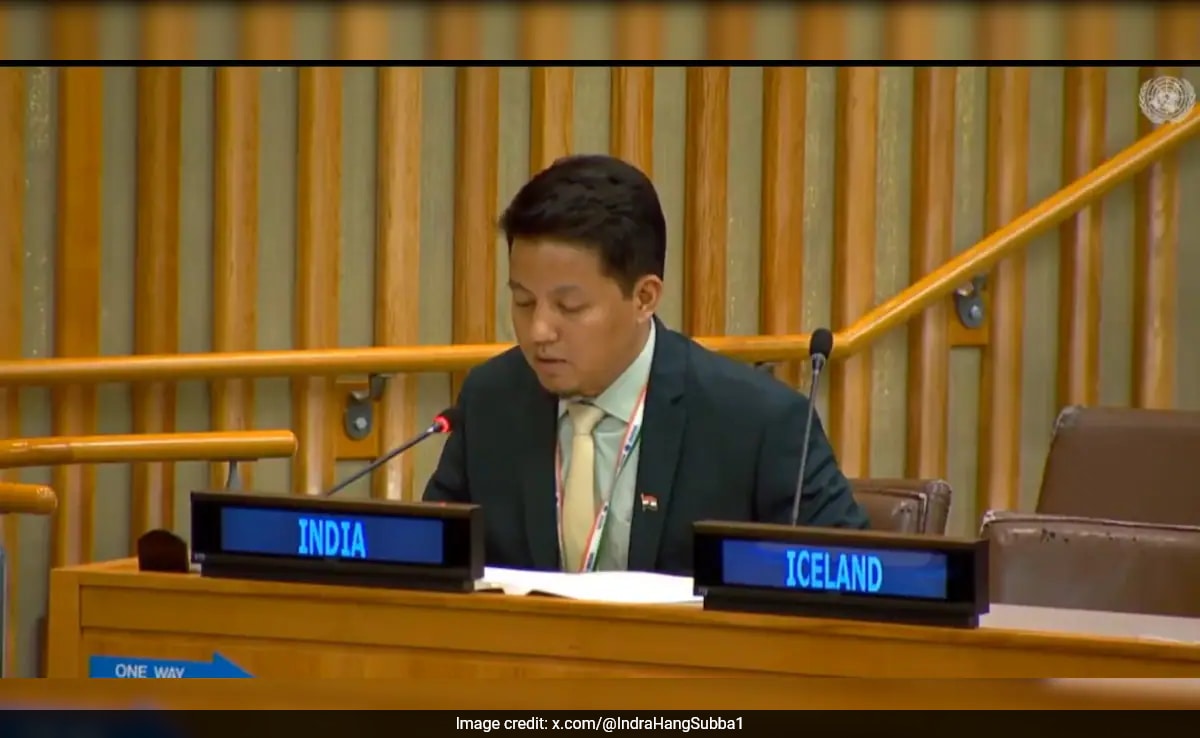
Lok Sabha member Indra Hang Subba has firmly rejected a UN report's assertions that India's traditional cultural expressions are under threat, describing the claims as "inaccurate." The parliamentarian emphasized that India's traditional arts, crafts, and performances continue to flourish nationwide.
Speaking on Friday, Subba highlighted that "India possesses a rich and diverse cultural heritage of artistic, literary, musical, and craft traditions spanning millennia... they continue to flourish across the country." The Sikkim Krantikari Morcha MP further stressed that India's "cultural economy, including traditional arts, crafts, and performances, continues to thrive with robust popular and government support."
Subba categorically stated, "We find no empirical data that substantiates the claim of declining demand for India's traditional cultural expressions." He was responding to assertions made by Alexandra Xanthaki, the UN's Special Rapporteur for Cultural Rights, during discussions at the General Assembly's Third Committee.
The Indian representative underscored that "Recognising the immense value of this heritage, India has established comprehensive legal and institutional frameworks to protect and promote traditional knowledge and cultural expressions and the geographical indications of goods."
Xanthaki, a professor at Britain's Brunel University, had claimed in her report that Indian "cultural expressions" faced decreasing demand and were threatened by middlemen and copyright laws. She also made the controversial assertion that the Indian Copyright Act was of a "communal nature" and therefore inadequate for protecting "traditional knowledge and art."
Refuting these allegations, Subba declared, "The characterisation of protection under India's copyright law as superficial is inaccurate and unwarranted." He explained that the Copyright Act and Information Technology Act "provide robust mechanisms to regulate intermediaries, and protect creators' rights, including provisions for licensing, royalty collection and enforcement against infringement."
Notably, footnotes in Xanthaki's report indicate her observations were based on submissions from the Centre for Advanced Studies in Cyber Law and Artificial Intelligence at Rajiv Gandhi National University of Law in Punjab.
The UN Special Rapporteur had also claimed that AI-generated art was "exacerbating" threats to traditional art by imitating it without proper credit or compensation. Countering this perspective, Subba asserted that "technology and new digital platforms have further enhanced the outreach of and the demand for traditional cultural expressions."
Xanthaki's report also mentioned a case brought before the Delhi High Court by major publishers against OpenAI for allegedly using their content without authorization to train ChatGPT. She criticized AI's inadequacies in recreating Indian classical music's "microtonal variations known as shruti and raga," claiming it cannot "capture the emotional essence and depth of what artists are trying to convey through the art form."
She similarly noted that Tamil Nadu's "widely popular dance form" with its "codified gestures and rhythmic sequences" poses challenges for AI reproduction and "robs the dance form of its emotional expression."
Source: https://www.ndtv.com/world-news/india-slams-un-report-claiming-threat-to-culture-calls-it-inaccurate-9555730