
Gaza's Cash Crisis: Palestinians Face Empty Banks Despite Ceasefire and Reopened Financial Institutions
- Date & Time:
- |
- Views: 54
- |
- From: India News Bull
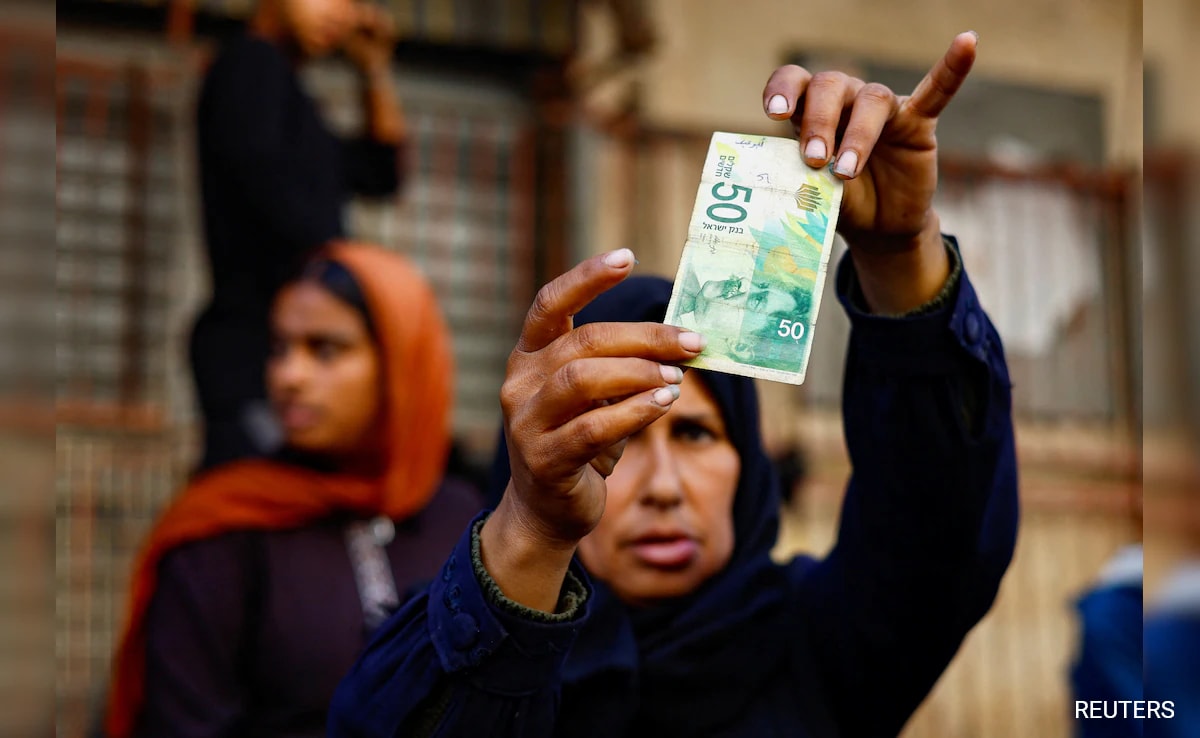
Palestinians in Gaza are experiencing a severe cash shortage despite the recent ceasefire and reopening of banks. For a limited few, this financial crisis has created a small opportunity to make a living.
While the ceasefire has alleviated the immediate trauma of Israel's airstrikes and blockade, most Gazans cannot access their money, leaving them vulnerable to wartime profiteers.
Banks began resuming operations on October 16, six days after the ceasefire announcement. However, many banking facilities were damaged or completely destroyed during the two-year conflict, alongside homes, schools, and other essential institutions across Gaza.
Wael Abu Fares, a 61-year-old father of six, expressed his frustration while standing outside the Bank of Palestine: "There is no money, liquidity at the bank. You just come and do paperwork transactions and leave."
Cash remains essential for most daily transactions in Gaza, from purchasing food at markets to paying utility bills. Israel blocked the transfer of banknotes and most other goods following the Hamas-led attack and hostage crisis in October 2023.
Gaza economist Mohammad Abu Jayyab told Reuters: "Banks are open, air conditioning is on, but they are mostly doing electronic business, no deposits, no withdrawals of cash. People go to some greedy merchants to cash their salaries and they give them cash for a huge fee, which ranges between 20% and sometimes goes to 40%."
Iman al-Ja'bari, a mother of seven, reminisces about times when bank transactions took less than an hour. "You need two or three days to go back and forth, spending your whole life standing there," she lamented. "And in the end, you only get 400 or 500 shekels ($123 or $153). What can this amount buy with the incredibly high prices today that we can't afford?"
For some Palestinians, the cash crisis has created minimal earning opportunities. Manal al-Saidi, 40, repairs damaged banknotes to cover basic necessities. "I work and I make 20, 30 shekels ($6, $9), and I leave with a loaf of bread, beans for dinner, falafel, anything, something simple," she explained while cleaning notes. "Not that I can afford vegetables or anything, no, just enough to get by."
Some residents have resorted to electronic transfers through banking apps even for small purchases like eggs or sugar, though sellers typically impose additional fees for these transactions.
The issue of cash supplies into Gaza was not addressed in U.S. President Donald Trump's 20-point peace plan, which also left reconstruction and security details undetermined.
COGAT, the Israeli military division overseeing aid flows into Gaza, did not immediately respond to inquiries about whether or when banknotes might be permitted to reenter the territory.
The currency shortage has exacerbated the crisis for Gazans who have already lost family members, employment, and homes. Many have depleted their savings and sold possessions to purchase food, shelter, and medicine. Some have even turned to bartering to survive.
Palestinian merchant Samir Namrouti, 53, has adapted to handling banknotes that are barely recognizable due to extensive use. "What matters to me is its serial number. As long as its serial number is there, that's it, I treat it as money," he said.
Source: https://www.ndtv.com/world-news/as-guns-fall-silent-gazans-find-no-cash-in-newly-opened-banks-9550409