
Sudan's Civil War: The Foreign Powers Behind Warring Generals and Their Global Proxy Battle
- Date & Time:
- |
- Views: 59
- |
- From: India News Bull
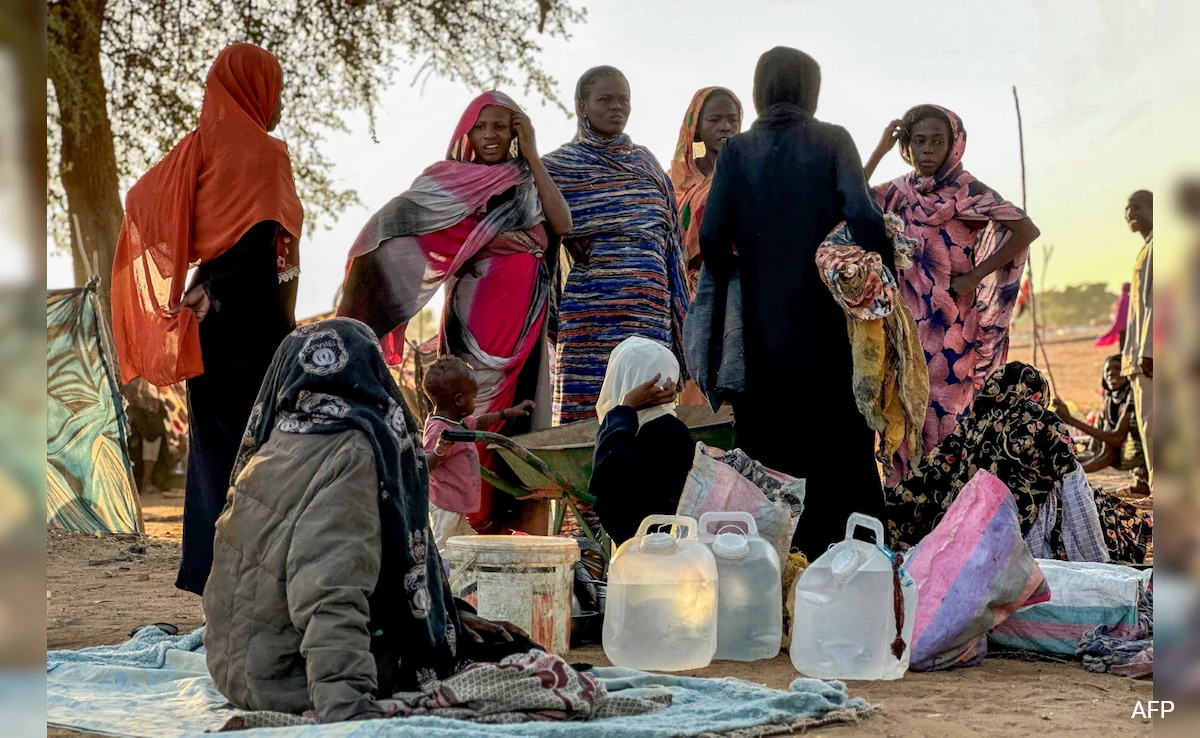
Displaced Sudanese who fled El-Fasher after the city fell to RSF, rest near in Sudan's Darfur
Since April 2023, the Sudanese army and the paramilitary Rapid Support Forces (RSF) have been engaged in a power struggle, with each side accusing the other of receiving foreign support.
Despite repeated calls from the United Nations urging member states to "refrain from any external interference," these pleas have gone unheeded throughout the conflict.
Sudan's military leadership is divided between General Abdel Fattah al-Burhan, who commands the army, and Mohamed Hamdan Daglo, who leads the RSF.
In October 2021, these two generals collaborated to overthrow the civilian-led transitional government that had been established following the 2019 removal of longtime president Omar al-Bashir.
Growing tensions between Burhan and Daglo eventually erupted into violent conflict by mid-April 2023. The resulting war has claimed tens of thousands of lives, displaced nearly 12 million people, and triggered a severe humanitarian crisis across the country.
The RSF has its origins in the Janjaweed militias, Arab fighters on camel and horseback who human rights organizations have accused of atrocities during the 2003 Darfur conflict.
Currently, the army governs Sudan from Port Sudan on the Red Sea coast, with former UN official Kamil Idris serving as prime minister since May 2025.
Meanwhile, the RSF has established a rival parallel administration in Nyala, the capital of South Darfur.
Egypt, Sudan's northern neighbor, has positioned itself as a key supporter of the Sudanese army, recognizing Burhan as Sudan's legitimate ruler and regularly hosting him in Cairo.
The RSF has previously accused Egypt of providing direct military assistance to Burhan's forces, allegations that Cairo consistently denies.
Analysts believe Egypt has benefited from Saudi Arabian support in this conflict.
The Sudanese army has accused the United Arab Emirates of supporting the RSF with weapons and mercenaries, including Colombians, allegedly transported through Chad, Libya, Kenya, or Somalia by land and air.
In May, the army-aligned government severed diplomatic relations with the UAE, specifically accusing it of supplying drones to the RSF.
Despite evidence presented in UN reports and open-source investigations, Abu Dhabi consistently denies any interference in the conflict.
In June, the Sudanese army accused forces loyal to eastern Libyan strongman Khalifa Haftar of supporting the RSF's successful offensive in a strategic border zone between Egypt and Libya.
Haftar has repeatedly been accused of supplying weapons and fuel to the RSF on behalf of the UAE, allegations he denies.
The Sudanese army has accused Chadian President Mahamat Idriss Deby Itno's regime of serving as a crucial supply route for the RSF on Abu Dhabi's behalf. This alleged alliance, which Deby consistently denies, has caused divisions within his clan and military.
Turkey, a major rival of the UAE, expressed support for the Sudanese army from the beginning of the war and, according to several media outlets including The Washington Post, has provided drones used to strike RSF positions.
Khartoum and Tehran restored diplomatic relations in October 2023 after a years-long rift. Since then, the RSF has accused Iran of supplying drones to the Sudanese army—reports that have previously raised concerns in the United States.
Under Bashir's three-decade rule, Sudan relied militarily on Russia and negotiated to establish a Russian naval base on the Red Sea—an agreement publicly announced by Moscow in 2020.
In 2021, Sudan's military stated the deal was "under review," but according to some Russian media, the issue has recently featured in high-level discussions between the countries.
The two nations have recently signed several bilateral military and economic cooperation agreements.
In June, the army-aligned government based in Port Sudan claimed to have discovered weapons and ammunition labeled "Made in Kenya" in RSF caches in Khartoum.
It accused Nairobi of "promoting division" in Sudan by acting as a transit point for military equipment supplied by the UAE via Chad. In February, Nairobi hosted the founding meeting of the RSF's political branch.
Source: https://www.ndtv.com/world-news/global-proxy-war-which-foreign-powers-are-backing-sudans-warring-generals-9550320