
Trump's Call for Nuclear Testing Renewal Ignites Security Concerns and Global Tension
- Date & Time:
- |
- Views: 66
- |
- From: India News Bull
US President Donald Trump
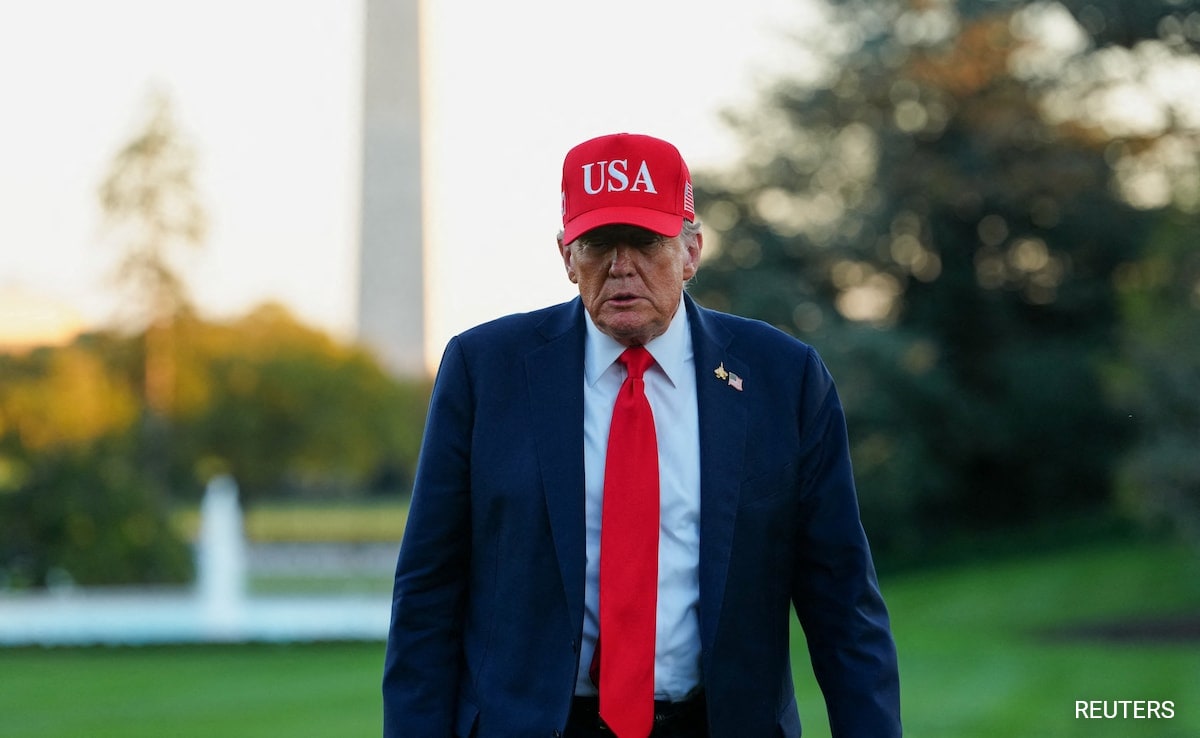
US President Donald Trump's unexpected announcement regarding nuclear testing sent shockwaves through Washington, creating immediate concern among military officials and lawmakers.
Vice Admiral Richard Correll's confirmation hearing to lead America's nuclear forces was dramatically complicated when Trump declared on social media that he had instructed the military to "start testing our Nuclear Weapons," citing concerns about falling behind Russia and China.
During his Senate Armed Services Committee hearing, Correll faced persistent questioning about Trump's surprising declaration, reflecting the widespread confusion that rippled across Washington's political landscape.
Senator Jack Reed, the committee's top Democrat, pressed Correll on whether resuming nuclear explosive testing would destabilize global security and potentially trigger a nuclear arms race.
Correll responded carefully, stating, "If confirmed as the commander of STRATCOM, my role would be to provide military advice on any discussions on the way ahead with respect to testing."
Throughout the 90-minute session, the vice admiral, nominated by Trump in September to lead the US Strategic Command (STRATCOM), maintained measured responses to increasingly pointed questions.
Senator Angus King questioned whether Trump might have been referring to testing delivery systems rather than actual nuclear explosions, to which Correll acknowledged, "I don't have insight into the President's intent. I agree that could be an interpretation."
US officials provided no clarification on whether Trump was suggesting testing nuclear weapon delivery systems or ending the 33-year moratorium on nuclear explosion tests, which experts warned could provoke escalation from rival nations and revive Cold War anxieties.
Vice President JD Vance suggested that testing was essential for ensuring the proper functioning of America's nuclear arsenal.
Nuclear powers globally have long abandoned detonating actual nuclear warheads, instead relying on sophisticated computer simulations to maintain their arsenals' readiness.
Tara Drozdenko, director of the global security program at Union of Concerned Scientists, warned, "There is no good reason for the United States to resume explosive nuclear testing - it would actually make everyone in the US less safe."
Many analysts believe Trump's announcement, which emphasized projecting strength as a negotiation tactic, was primarily intended to send a message to Moscow and Beijing.
In his social media statement preceding his meeting with Chinese President Xi Jinping in South Korea, Trump directed the Pentagon to begin testing "on an equal basis," adding that "That process will start immediately."
North Korea remains the only nation to have conducted a nuclear test explosion in the 21st century, with its last test occurring in 2017.
While Russia has recently tested two nuclear-powered weapons and been accused by Washington of conducting low-yield tests with limited transparency, it has not executed a full-scale nuclear explosion.
Russian President Vladimir Putin cautioned that Moscow would respond in kind if any nation conducted nuclear tests, according to a Kremlin spokesperson.
China has consistently rejected discussions on nuclear arms across multiple US administrations. Despite Beijing's efforts to substantially increase its nuclear arsenal, it shows little interest in negotiations with Russia and the US, arguing these nations maintain considerably larger nuclear forces.
James Acton, co-director of Carnegie Endowment for International Peace's nuclear policy program, expressed skepticism about Trump's strategy: "If the goal is to generate leverage to force China to negotiate, I think that's unlikely to work."
China's foreign ministry urged the US to honor its commitment to the nuclear testing moratorium and obligations under the test ban treaty.
The Ploughshares Foundation, focused on reducing nuclear threats, warned that abandoning the US nuclear test moratorium could ultimately benefit America's nuclear rivals by creating opportunities for them to conduct additional tests.
The United States has historically conducted the majority of all nuclear test explosions, amassing data from 1,030 tests since 1945.
STRATCOM, where Correll currently serves as second-in-command, had certified the US military's nuclear arsenal as recently as January.
"A return to testing will benefit US adversaries by allowing them to catch up in nuclear research and weapons development," Ploughshares stated.
An anonymous Department of Energy source indicated that any potential test would be conducted deep underground at a Nevada site, which is maintained to be test-ready within 36 months.
Senator Jacky Rosen, representing Nevada, reminded the committee that her state had suffered from being the site of US nuclear explosive tests from 1951 to 1992, and firmly declared: "I'm going to be crystal clear: I will not let this happen. Not on my watch."
Source: https://www.ndtv.com/world-news/how-president-donald-trumps-comments-on-nuclear-testing-sparked-fears-confusion-in-us-9548815