
Climate Change Quadruples Hurricane Melissa's Likelihood: Scientific Study Reveals Impact on Jamaica's Historic Storm
- Date & Time:
- |
- Views: 49
- |
- From: India News Bull
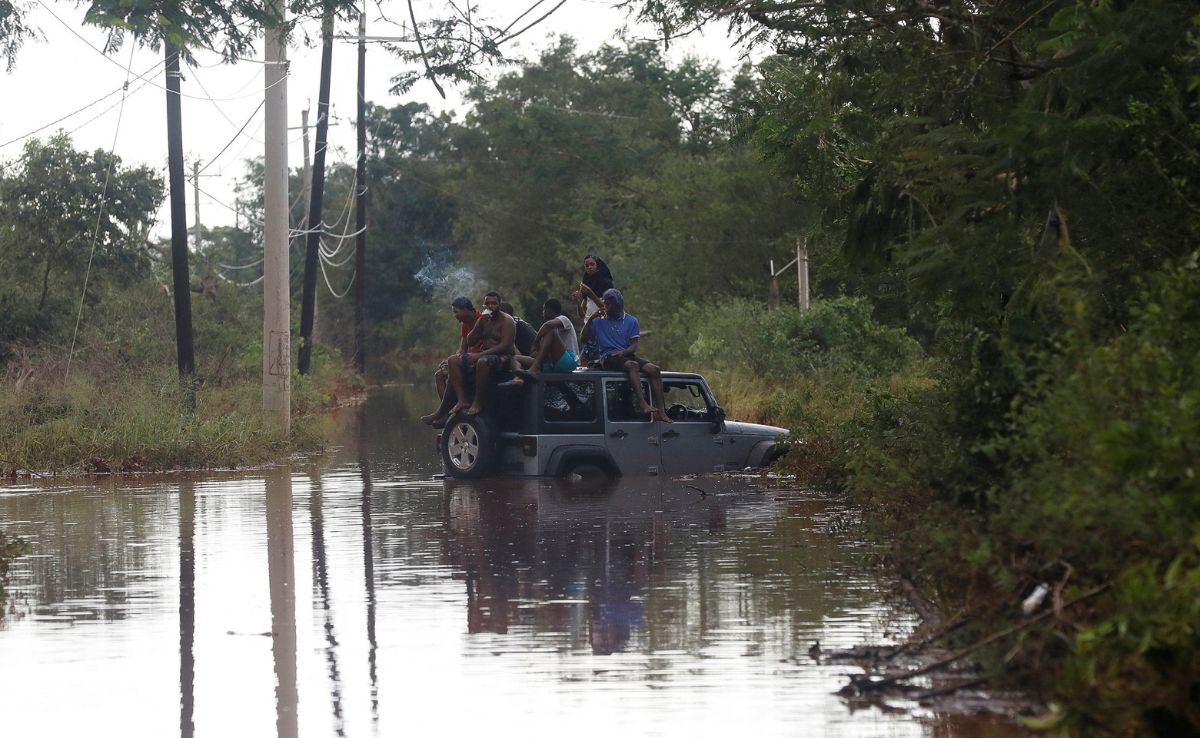
Hurricane Melissa, Jamaica's strongest storm in 174 years, has been directly linked to climate change according to new scientific analysis.
A groundbreaking study from Imperial College London reveals that human-induced climate change made Hurricane Melissa four times more likely to occur. This Category 5 hurricane, which devastated Jamaica, represents one of the most powerful storms ever documented in the region.
Scientists determined that global warming, primarily caused by fossil fuel consumption, significantly increased both the probability and strength of this catastrophic weather event.
"While Jamaica had adequate time and experience to prepare for this storm, there are inherent limitations to how countries can prepare and adapt," explained Ralf Toumi, director of Imperial College's Grantham Institute, which conducted the research.
"Adaptation to climate change is essential but insufficient as a response to global warming. The emission of greenhouse gases must cease," Toumi emphasized.
The research team utilized a peer-reviewed model that simulates millions of theoretical storm trajectories under various climate scenarios. Their findings indicate that in a pre-industrial climate, a hurricane of Melissa's magnitude would strike Jamaica approximately once every 8,100 years. However, in our current climate reality, this frequency has increased dramatically to once every 1,700 years.
Global temperatures have risen approximately 1.3C (2.3F) compared to pre-industrial levels—dangerously approaching the 1.5C threshold that scientists warn must not be exceeded to prevent the most severe effects of climate destabilization.
The analysis further demonstrated that even if such an extreme storm had somehow occurred without global warming, it would have been less intense. Current warming of 1.3C has increased wind speeds by 19 kilometers (12 miles) per hour, representing a seven percent increase. In a world 2C warmer, wind speeds would increase by 26 kph.
Hurricane Melissa battered Jamaica with rainfall reaching 76 centimeters (30 inches) and sustained winds of 295 kph (185 mph).
"Man-made climate change clearly made Hurricane Melissa stronger and more destructive," stated Toumi. "These storms will become even more devastating in the future if we continue overheating the planet by burning fossil fuels."
The researchers noted that the devastation across Jamaica was so comprehensive that more intense conditions would likely have caused only limited additional damage. Unfortunately, they were unable to analyze climate change's impact on rainfall patterns because the US government shutdown prevented access to relevant satellite data.
Initial damage assessments by Enki Research estimate direct infrastructure damage at approximately $7.7 billion, representing around 40 percent of Jamaica's GDP. According to their analysis, "recovery will take at least a decade."
These estimates exclude broader economic losses including impacts on tourism, shipping operations, and commercial supply chains, which could amount to billions more in damages.
Source: https://www.ndtv.com/world-news/climate-change-made-hurricane-melissa-four-times-more-likely-study-9541688