
Catastrophic Category 5 Hurricane Melissa Devastates Jamaica with Record-Breaking Winds and Flooding
- Date & Time:
- |
- Views: 55
- |
- From: India News Bull
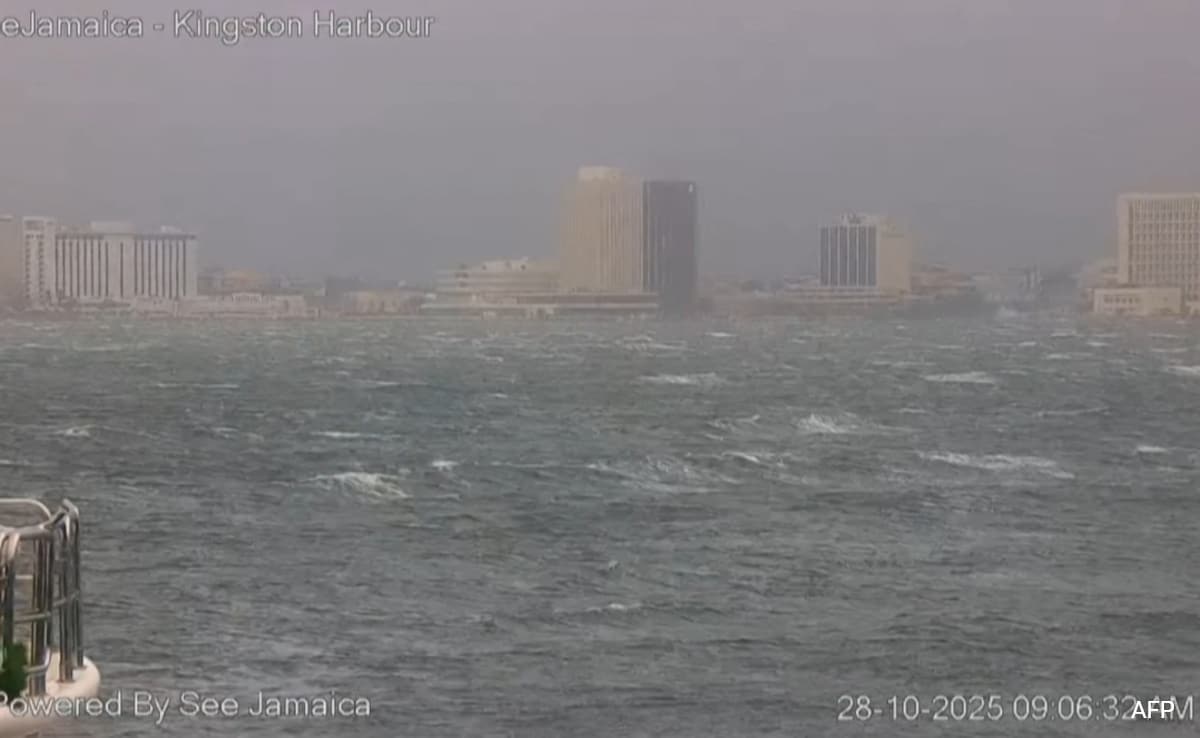
Hurricane Melissa slammed into southwestern Jamaica as a catastrophic Category 5 storm, generating severe flooding, tearing roofs off buildings, and causing landslides across the island.
The powerful hurricane made landfall near New Hope with extraordinary 185 mph (295 kph) winds, establishing itself as one of the strongest Atlantic hurricanes in recorded history.
Prime Minister Andrew Holness acknowledged the severity of the situation, stating, "There is no infrastructure in the region that can withstand a Category 5. The question now is the speed of recovery. That's the challenge."
In Black River, western Jamaica, floodwaters trapped at least three families in their homes, with rescue crews unable to reach them due to dangerous conditions. Desmond McKenzie, deputy chairman of Jamaica's Disaster Risk Management Council, reported, "Roofs were flying off. We are hoping and praying that the situation will ease so that some attempt can be made to get to those persons."
The southwestern parish of St. Elizabeth was particularly devastated, with McKenzie describing it as "underwater." While no deaths were confirmed at the time, officials emphasized it was too early to assess the full extent of damage as the hurricane—the strongest to hit Jamaica in 174 years of recordkeeping—continued to batter the country.
Rohan Brown from Jamaica's Meteorological Service warned that as Melissa moved offshore, its counterclockwise rotation would bring heavy storm surge to northern Jamaica throughout the night. The hurricane was subsequently heading toward Cuba, where it was forecast to make landfall as a major hurricane early Wednesday.
Nearly 15,000 Jamaicans sought refuge in shelters, while approximately 77% of customers—some 540,000 homes and businesses—lost power during the storm.
Colin Bogle, a Mercy Corps adviser sheltering with his grandmother in Portmore, described how everything went dark after a loud explosion. "The noise is relentless," he said. "People are anxious and just trying to hold on until the storm passes."
By Tuesday night, Melissa maintained sustained winds of 125 mph (205 kph) and was moving north-northeast at 8 mph (13 kph) as it entered the Caribbean Sea. The U.S. National Hurricane Center in Miami reported the hurricane was centered about 50 miles east-northeast of Montego Bay, Jamaica, and approximately 160 miles southwest of Guantánamo, Cuba.
Hurricane scientists Phil Klotzbach of Colorado State University and Brian McNoldy of the University of Miami noted that Melissa's initial 185 mph winds and 892 millibars of central pressure tied two records for the strongest Atlantic storm at landfall, matching the 1935 Labor Day hurricane in Florida and 2019's Hurricane Dorian. "It's been a remarkable, just a beast of a storm," Klotzbach told The Associated Press.
With life-threatening storm surges up to 13 feet expected, officials expressed serious concern about coastal hospitals. Four main medical facilities sustained damage, with one losing power completely, forcing the evacuation of 75 patients.
One dramatic incident involved a radio caller urgently seeking help for a woman in western Jamaica who had gone into labor during the storm. The radio host appealed to listeners for information about the nearest safe hospital before an obstetrician called in to provide emergency delivery instructions.
Kingston officials warned residents to be vigilant for crocodiles potentially displaced from their habitats by the flooding. McKenzie assured that the government had prepared rescue resources including "boats, helicopters, you name it" for immediate deployment once the storm passed.
The hurricane had already claimed seven lives across the Caribbean before reaching Jamaica, including three in Jamaica itself, three in Haiti, and one in the Dominican Republic, where another person remained missing.
Government officials worked to coordinate debris clearance and emergency supply distribution plans to avoid bottlenecks at ports. They expressed hope to reopen Jamaica's airports by Thursday.
United Nations agencies and numerous nonprofits had positioned essential supplies including food and medicine for rapid distribution after the storm.
Melissa was expected to strike eastern Cuba early Wednesday, with forecasts predicting up to 20 inches of rain and significant coastal storm surge.
Cuban President Miguel Díaz-Canel addressed his nation Tuesday, urging citizens not to underestimate "the strongest ever to hit national territory."
In Santiago de Cuba province, residents like 83-year-old Eduviges Figueroa opened their homes to those fleeing remote areas. "We're helping as best we can," she said while cooking for the evacuees who arrived by bus, truck, and even horse-drawn carts.
Santiago de Cuba, the country's second-largest city with over one million inhabitants, was largely deserted as residents prepared for the oncoming storm. Diamon Mendoza, 36, expressed her concern: "May God have mercy on us, because it's coming with a lot of strength. Anything can happen."
Authorities in eastern Holguín province prepared to evacuate more than 200,000 people Tuesday, after already evacuating similar numbers from the town of Banes. Social media and state television showed buses transporting evacuees to shelter, with families clutching babies and belongings while elderly people steadied themselves with canes as they disembarked.
Source: https://www.ndtv.com/world-news/category-5-hurricane-melissa-brings-flooding-catastrophic-winds-to-jamaica-9534431