
Constitutional Barriers: Can Donald Trump Legally Serve a Third Presidential Term?
- Date & Time:
- |
- Views: 78
- |
- From: India News Bull
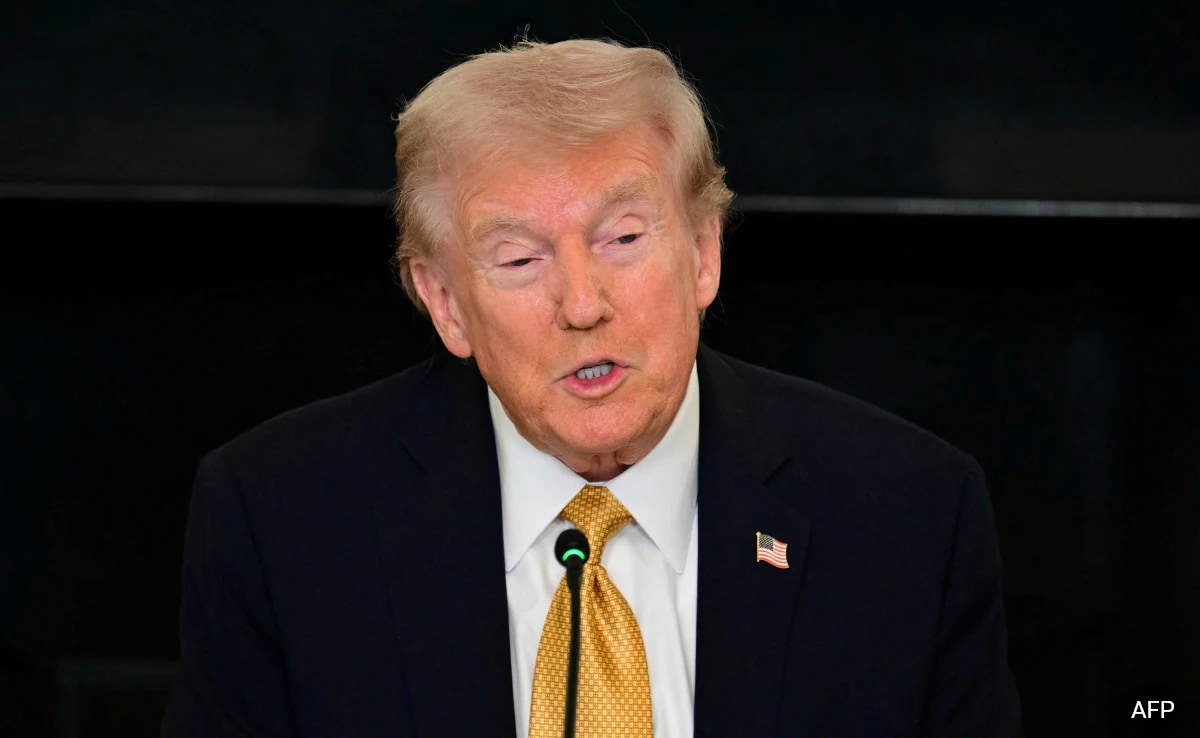
Donald Trump on Monday rejected the suggestion that he could serve as vice president amid speculation about a potential third term.
President Donald Trump declined to dismiss rumors about seeking a third presidential term and revealed he hasn't considered challenging the constitutional two-term limit through legal action.
Let's examine the constitutional barriers Trump would face in such a scenario.
The 22nd Amendment clearly states: "No person shall be elected to the office of the President more than twice." This amendment was ratified in 1951 following President Franklin D. Roosevelt's break from the tradition of two-term presidencies established since George Washington.
Roosevelt, a Democrat who led the country through the Great Depression and World War Two, served three terms and passed away shortly into his fourth term in 1945.
Wayne Unger, constitutional law professor at Quinnipiac University, emphasized that the Constitution explicitly limits presidents to two four-year terms. While this restriction hasn't been judicially tested, Unger predicted any challenge by Trump would likely fail.
"I would predict the Supreme Court to say nope, it's clear, two terms of four years each, Donald Trump, you cannot run for a third," Unger stated.
Could Trump's supporters amend the Constitution? Technically yes, but it's highly improbable in today's politically polarized environment between Democrats and Republicans.
Constitutional amendments require two-thirds support in both the House and Senate or a convention called by two-thirds of states, plus ratification by 38 state legislatures.
Republicans currently hold a narrow 219-213 majority in the House and a 53-47 majority in the Senate, while controlling 28 state legislatures.
Representative Andy Ogles, a Republican from Tennessee and strong Trump supporter, proposed in January amending the 22nd Amendment to permit three non-consecutive presidential terms.
Since Trump's terms beginning in 2017 and 2025 are non-consecutive, such an amendment would enable him to pursue a third term starting in 2029.
When asked about potentially running as vice president and assuming the presidency if the elected president resigned, Trump dismissed the idea.
"I'd be allowed to do that," Trump remarked while speaking to reporters aboard Air Force One en route to Tokyo from Malaysia.
However, he added: "I think the people wouldn't like that. It's too cute."
Constitutional experts note that Trump is actually barred from serving as vice president because he's ineligible to be president. The 12th Amendment states: "No person constitutionally ineligible to the office of President shall be eligible to that of Vice-President of the United States."
Source: https://www.ndtv.com/world-news/can-donald-trump-serve-a-third-term-as-us-president-9529600