
Trump's Asia Tour: Securing Critical Minerals and Trade Deals with Southeast Asian Nations
- Date & Time:
- |
- Views: 60
- |
- From: India News Bull
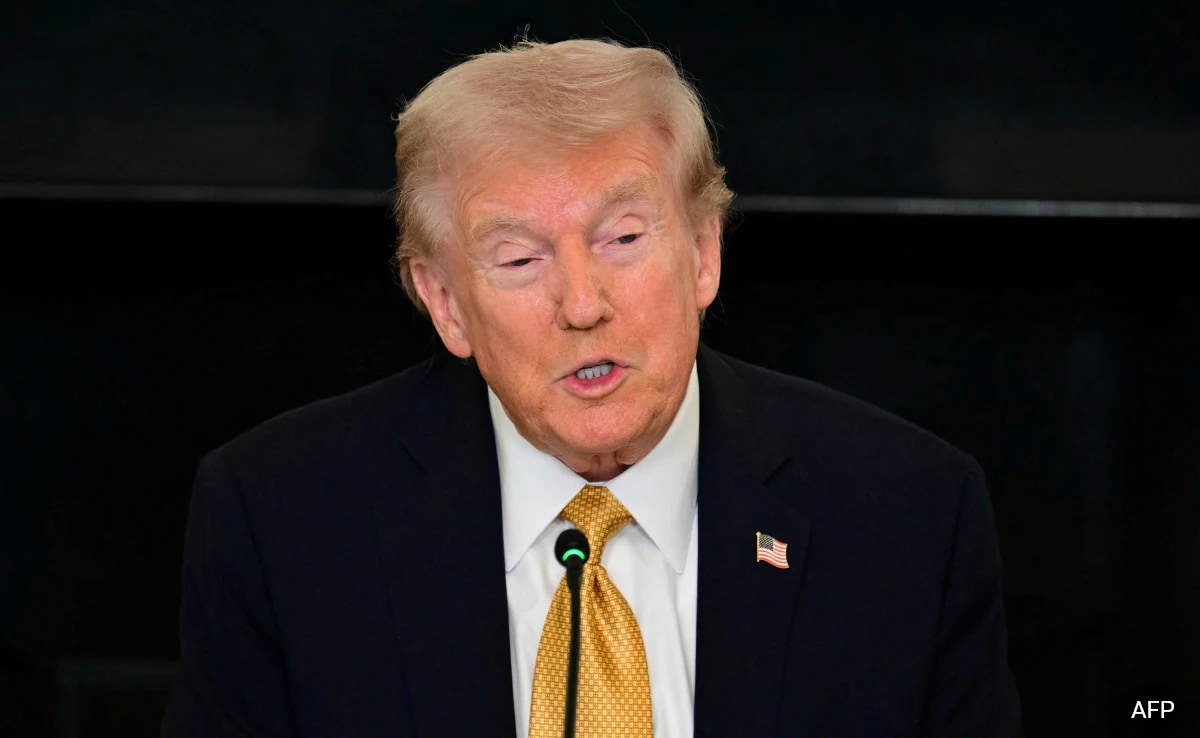
Donald Trump signed a framework trade agreement with Thailand during his Asia tour. (File)
US President Donald Trump finalized multiple trade agreements and framework deals with Southeast Asian governments on Sunday as he commenced his regional tour at a summit in Malaysia.
Trump's initial Asian visit since returning to the White House in January has seemingly eased some concerns in a region previously affected by the trade war triggered by his extensive tariffs.
He also obtained commitments for enhanced collaboration on rare earths, a critical issue as Washington seeks to reduce China's dominance over materials essential for various modern technologies.
The US president signed memoranda of understanding with Malaysia and Thailand aimed at strengthening cooperation on critical minerals. These agreements, though lacking specific details, come as the United States confronts export restrictions on rare earths imposed by China, the world's leading producer of minerals vital to automotive, electronics, and defense industries.
A separate trade agreement with Malaysia indicates that Kuala Lumpur has consented to increase US access to rare minerals in the country and to the "expedient development" of the industry "in partnership with US companies."
Another deal with Cambodia provides the United States with access to the kingdom's rare earths industry.
Lynn Kuok, a Southeast Asia expert at Brookings Institution, noted that Trump's regional visit "could help place the relationship on a more positive course, for example, by giving momentum to working-level cooperation on mutually beneficial projects such as critical minerals."
However, for governments maintaining ties with Beijing, "what is at stake is preserving room to manoeuvre and strategic autonomy," she added.
The agreement Trump signed with Malaysia's Prime Minister Anwar Ibrahim maintains Washington's 19 percent tariffs but grants several exemptions, particularly for agricultural products.
In return, Malaysia will "provide significant preferential market access for US industrial goods," including automobiles and agricultural exports.
Anwar's government has also committed to ordering 30 aircraft from US manufacturer Boeing—with "a purchase option" for 30 more—and to buying semiconductors, aerospace components, and data center equipment valued at $150 billion.
Malaysia will additionally invest $70 billion in the United States over the next decade and increase purchases of American gas, according to the agreement.
The semiconductor export issue remains unresolved, with Trump considering imposing additional tariffs on imported chips.
This could significantly impact Malaysia, the world's sixth-largest semiconductor producer, with these components accounting for approximately 40 percent of its exports.
Analyst Michael Wan from financial group MUFG observed that "Malaysia's trade deal does not include any agreement on semiconductor and electronics tariffs"—a key question that "will continue to cloud the picture for Asia's exports."
An agreement with Cambodia, similar to the Malaysian deal, maintains US tariffs at 19 percent but offers exemptions.
Under this agreement, Cambodia will maintain zero tariffs on US exports and "allow and facilitate US investment" for exploration, extraction, and processing of critical minerals and energy resources.
Vietnam agreed with Washington in July to reduce US tariffs on its exports to 20 percent, avoiding a 46 percent rate.
A framework agreement signed on Sunday maintains the 20 percent rate but offers zero tariffs on certain goods yet to be determined.
Vietnam has agreed to "provide preferential market access" for US exports and reduce regulatory barriers.
Flag carrier Vietnam Airlines will purchase 50 Boeing aircraft, estimated at $8 billion.
Other companies have agreed to buy "US agricultural commodities, with a total estimated value of over $2.9 billion," according to a joint statement.
The details will be finalized "in the coming weeks," it stated.
A key unresolved issue concerns US tariffs on goods manufactured in one country but exported to the United States from elsewhere—a policy primarily targeting China.
Under the July agreement, goods deemed "transshipped" face an additional 40 percent duty.
However, many Vietnamese industries use components imported from China, and there is no clear definition of what Washington considers "transshipped" goods or what percentage of parts must be locally produced to avoid higher taxes.
Tariffs on furniture—representing 10 percent of Vietnam's exports to the United States—also remain uncertain after Trump introduced additional industry-specific duties.
Trump signed a framework trade agreement with Thailand, to be finalized "in the coming weeks," according to a joint statement.
The deal provides exemptions from the 19 percent tariff rate on Thai goods in exchange for eliminating nearly all duties on US goods sent to Thailand.
The agreement also includes the purchase of 80 US aircraft valued at $18.8 billion, along with additional agriculture and energy deals.
Source: https://www.ndtv.com/world-news/from-trade-to-rare-earth-a-look-at-trumps-deals-on-first-leg-of-asia-tour-9527274