
The Japanese Imperial System: Key Facts as President Trump Meets Emperor Naruhito in Tokyo
- Date & Time:
- |
- Views: 84
- |
- From: India News Bull
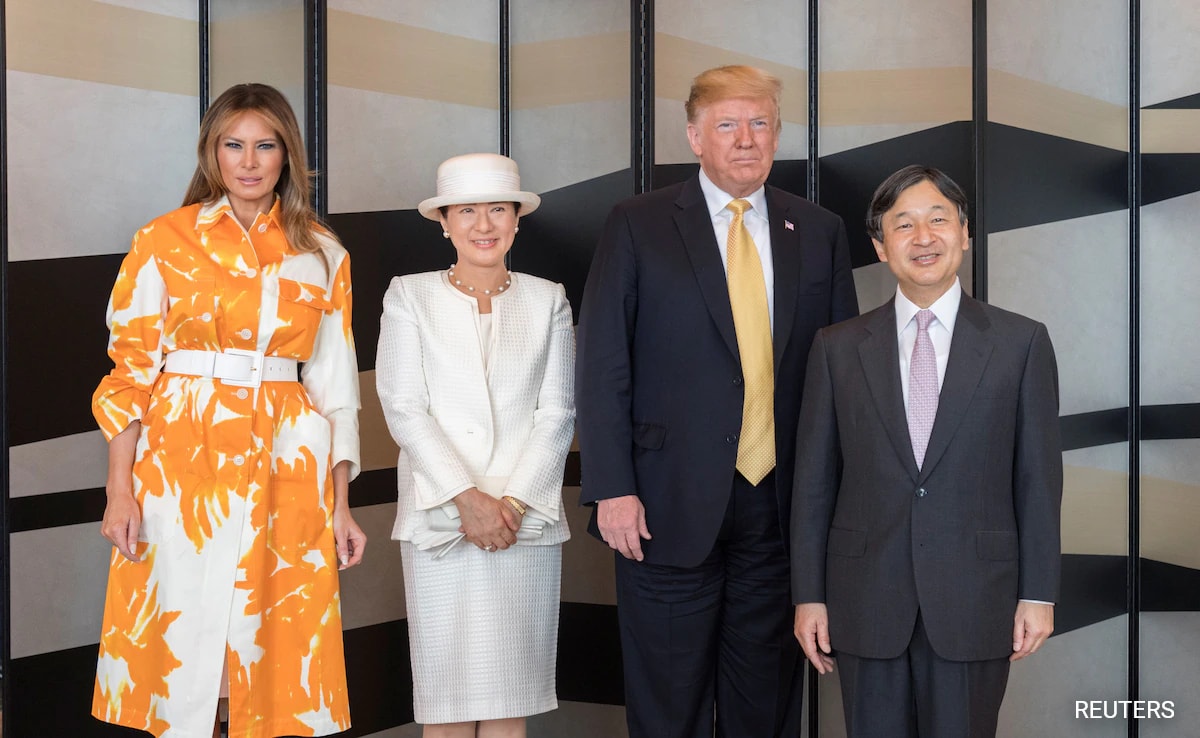
Trump and first lady Melania Trump are photographed with Japan's Emperor Naruhito and Empress Masako during their diplomatic visit to Tokyo.
US President Donald Trump is scheduled to meet with Japanese Emperor Naruhito at the Imperial Palace in Tokyo, marking their second encounter following their previous meeting during Trump's first presidential term six years ago.
Here are essential facts regarding Japan's imperial monarchy.
Emperor Naruhito began his reign in 2019, following his father Akihito's abdication due to concerns about his ability to fulfill imperial duties as he aged. This represented the first imperial abdication in Japan since Emperor Kokaku stepped down in 1817. Emperor Naruhito, 65, and Empress Masako, 61, both received education at Oxford University and participated in British Queen Elizabeth's funeral ceremonies in 2022.
Emperor Emeritus Akihito, born in 1933, devoted his reign to fostering reconciliation between Japan and its former Asian colonies while promoting Japan's image as a peace-oriented nation. Together with Empress Emerita Michiko, he modernized the imperial family, creating a closer connection with ordinary Japanese citizens.
Naruhito's grandfather, Emperor Hirohito (posthumously known as Emperor Showa), was revered as divine until renouncing this status following Japan's defeat in World War II in 1945. Under the post-war constitution drafted by American occupation authorities, the emperor's role was redefined as the "symbol of the state and the unity of the people."
Women are prohibited from ascending to the Japanese throne, though historically female members have served as temporary monarchs who could not transmit succession rights to their children. Emperor Naruhito has a daughter, 23-year-old Princess Aiko. Upon Naruhito's death, the imperial succession will pass to his younger brother, Prince Akishino, and subsequently to Akishino's 19-year-old son, Prince Hisahito. Prince Hitachi, Akihito's 83-year-old brother, follows in the line of succession.
Prince Akishino's daughter, formerly Princess Mako, relinquished her royal status when she married her college sweetheart, Kei Komuro, a commoner, in 2019. The couple, both 34, now reside in New York City, where Komuro practices corporate law with Lowenstein Sandler.
Traditional Japanese scholars consider Japan's imperial institution the world's oldest hereditary monarchy. According to eighth-century chronicles, the sun goddess Amaterasu Omikami bestowed a mirror, jewels, and a sword to her grandson, who then presented these sacred treasures to Emperor Jimmu, the first emperor. These records date Emperor Jimmu's reign to 660-585 BC, though historians question his historical existence.
Throughout most of its history, the imperial institution functioned primarily as a symbolic and religious entity with limited direct political authority. With the promulgation of the Meiji constitution in 1889, the emperor became both a constitutional monarch and a divine sovereign who commanded the loyalty of Japanese subjects.
During World War II, Japanese military leaders utilized state Shinto religious ideology to mobilize citizens to fight in the emperor's divine name. Japan's post-war constitution subsequently established separation of religion and state, abolishing state Shinto. The emperor now performs approximately 20 Shinto rituals annually as private ceremonies distinct from his official duties.
Source: https://www.ndtv.com/world-news/factbox-key-facts-about-japans-imperial-system-as-trump-meets-emperor-9521756