
The Historic Legacy of the White House East Wing: A Century of First Ladies' Contributions Now Demolished
- Date & Time:
- |
- Views: 44
- |
- From: India News Bull
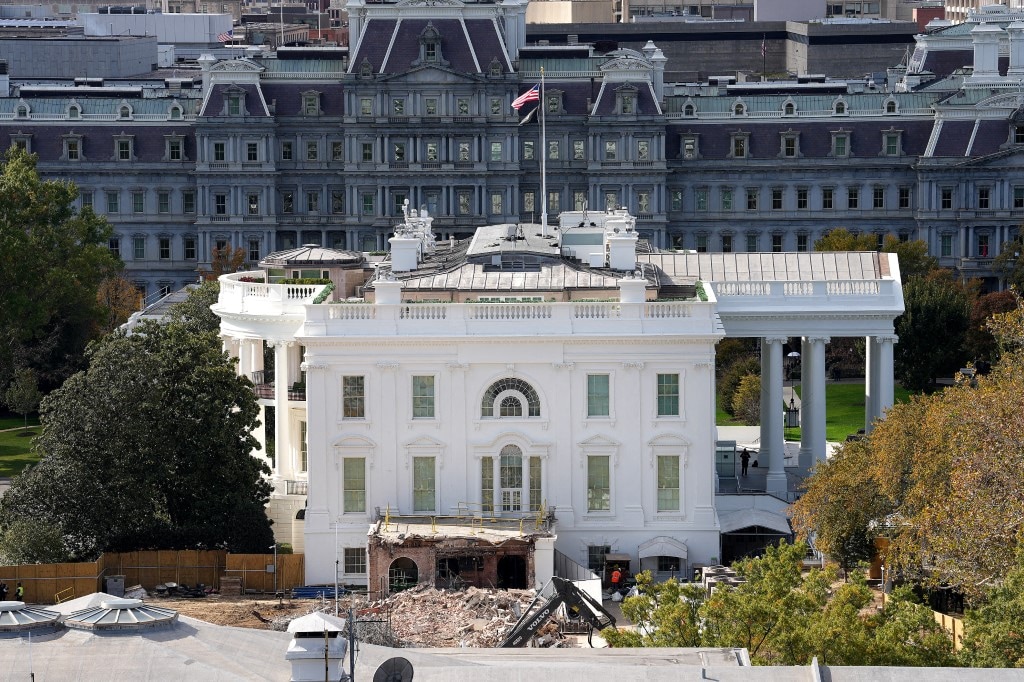
President Trump initiated the demolition of the East Wing without prior announcement on Monday.
Washington:
Betty Ford once remarked that if the White House West Wing represents the nation's "mind," then the East Wing - traditionally the domain of first ladies - serves as its "heart."
For over a century, that "heart" pulsed vibrantly as first ladies and their teams operated from East Wing offices, addressing issues ranging from substance abuse prevention and literacy promotion to White House preservation and beautification. This historic space hosted the planning of state dinners and the creation of elaborate holiday celebrations that became American traditions.
This significant chapter concluded when demolition crews dismantled the wing's two floors of offices and reception areas last week. The historic movie theater and the iconic covered walkway to the White House, captured in countless photographs, are now gone. Even Jacqueline Kennedy's dedicated East Wing garden was removed, as evidenced by recent photographs.
Republican President Donald Trump ordered the demolition as part of his proposed $300 million ballroom project, which still awaits official approval.
The former real estate mogul has long expressed interest in constructing a grand White House ballroom. In 2010, he contacted a senior adviser to President Barack Obama with an offer to build one, having repeatedly criticized the practice of hosting elegant state dinners under South Lawn tents. The proposal wasn't pursued further at that time.
Now in his second term, Trump is advancing rapidly to realize what he describes as a "great legacy project." He has defended the East Wing removal and ballroom plans by pointing out that previous presidents have also made additions to the White House complex.
First ladies and their staff members witnessed significant historical moments in the East Wing, a "place of purpose and service," according to Anita McBride, who served as chief of staff to First Lady Laura Bush.
"Tearing down those walls doesn't diminish the significance of the work we accomplished there," McBride told The Associated Press.
McBride supports the ballroom addition, noting that the "large and expensive tent option" used when guest lists exceeded indoor capacity was impractical. These temporary structures damaged the lawn and required additional infrastructure like portable restrooms and transportation systems, particularly during inclement weather.
Others hold contrasting views.
Krish O'Mara Vignarajah, Michelle Obama's former policy director, described the demolition as a "symbolic blow" to the East Wing's legacy as a place where women made history.
"The East Wing was this physical space that had seen the role of the first lady evolve from a social hostess into a powerful advocate on a range of issues," she stated in an interview.
Below are highlights of the East Wing's history and the first ladies who worked there:
Rosalynn Carter pioneered having a dedicated office in the East Wing. Most previous first ladies operated from the private quarters on the second or third floor of the residence. Carter sought a space that allowed separation between work and home.
"I always need a place to go that is private, where I don't have to dress and don't have to put on makeup," she wrote in her memoir. "The offices of the staff of the first lady were always in the East Wing, and it seemed a perfect place for my office too."
In her memoirs, Carter described her preferred winter route to her office. She would walk through the basement, passing laundry facilities, workshops, and the presidential bomb shelter. The residence above was kept cool due to President Jimmy Carter's energy conservation initiatives, making the East Wing so cold that she resorted to wearing thermal underwear.
A service staff member showed her a subterranean passage that offered relief. "With Jimmy's energy conservation program, it was the only really warm place in the White House, with large steam pipes running overhead," she recalled.
Images from the early 1980s show Nancy Reagan meeting with staff, including press secretary Sheila Tate. For many Americans, Reagan's legacy is inseparable from her "Just Say No" anti-drug campaign that defined her White House years.
Reagan once explained that the initiative began during a 1982 visit to a school in Oakland, California. "A little girl raised her hand and said, 'Mrs. Reagan, what do you do if somebody offers you drugs?' And I said, 'Well, you just say no.' And there it was born."
Hillary Clinton broke tradition by insisting her office be located in the West Wing rather than the East Wing. In her memoir, she explained wanting her staff "integrated physically" with the president's team. The first lady's office temporarily moved to what is now the Eisenhower Executive Office Building while Clinton was assigned a second-floor West Wing office.
"This was another unprecedented event in White House history and quickly became fodder for late-night comedians and political pundits," Clinton later wrote.
Laura Bush recounted in her memoir the atmosphere at the White House following September 11, 2001. Most of her staff, primarily young women in their twenties, "kicked off their high heels and fled from the East Wing" after being told to "run for their lives" when intelligence suggested the White House was a potential target.
"Now they were being asked to come back to work in a building that everyone considered a target and for a presidency and a country that would be at war," she wrote.
Michelle Obama made history as the first Black first lady, becoming a global role model and style icon who championed improved child nutrition through her "Let's Move" initiative. She and her East Wing staff also focused on supporting military families and advancing educational opportunities for girls in developing nations.
Photos from her tenure show Obama using a laptop during an online discussion about school nutrition and the White House garden she established.
Melania Trump redefined first lady traditions by initially remaining in New York during the beginning of Donald Trump's first term. She stayed with their school-age son Barron to avoid disrupting his education mid-year. Upon relocating to the White House, she and her East Wing team launched the "Be Best" initiative focusing on child welfare, opioid abuse prevention, and online safety.
Jill Biden broke new ground as the first first lady to maintain a professional career outside the White House. The veteran community college English professor continued teaching twice weekly while serving as first lady. Her East Wing work focused on advocating for military families, reflecting her family's service through her late father and son Beau. Biden also championed cancer research and secured significant federal funding for women's health research.
Source: https://www.ndtv.com/world-news/where-first-ladies-made-history-legacy-of-white-house-east-wing-trump-razed-9520833