
Egypt Says 3,000-Year-Old Gold Bracelet Missing From Museum
A 3,000-year-old gold bracelet has gone missing from a restoration laboratory of Cairo's Egyptian Museum, the country's antiquities ministry said.
- Date & Time:
- |
- Views: 66
- |
- From: India News Bull
Egypt:
Egyptian officials have announced that a 3,000-year-old gold bracelet has disappeared from a restoration laboratory within Cairo's Egyptian Museum, according to the country's antiquities ministry.
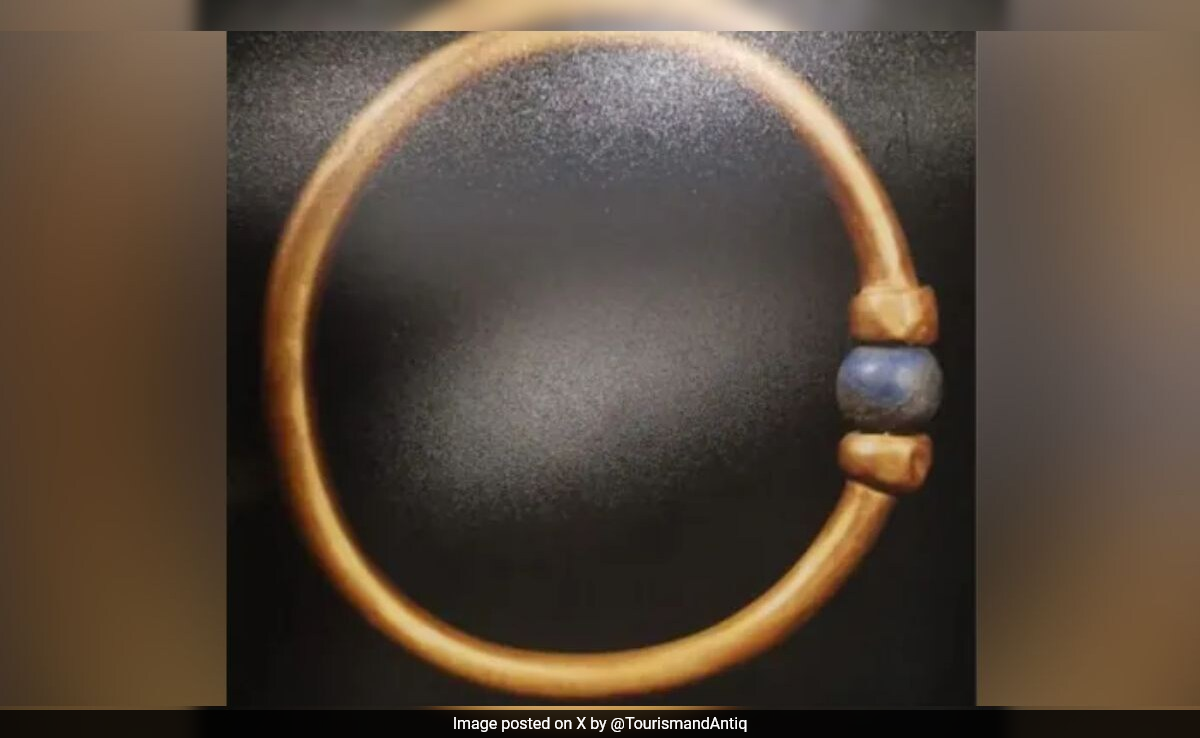
The missing artifact is described as a golden band decorated with "spherical lapis lazuli beads" and dates back to the reign of Pharaoh Amenemope of Egypt's 21st Dynasty (1070-945 BC).
In a statement released late Tuesday, the ministry did not indicate when the artifact was last seen in the facility.
According to reports in Egyptian media, the disappearance was discovered during a recent inventory assessment conducted in preparation for the upcoming "Treasures of the Pharaohs" exhibition scheduled to open in Rome in late October.
The ministry has launched an internal investigation and alerted antiquities units at all Egyptian airports, seaports, and land border crossings throughout the country.
Officials stated that the incident was not immediately disclosed to allow investigations to proceed effectively, and a comprehensive inventory of all laboratory contents is currently underway.
The ministry has not responded to AFP's request for additional comment on the matter.
Egyptologist Jean Guillaume Olette-Pelletier explained that the bracelet was originally discovered in Tanis, located in the eastern Nile delta, during archaeological excavations of King Psusennes I's tomb, where Pharaoh Amenemope had been reinterred following the looting of his original burial site.
"While not the most aesthetically remarkable, it is scientifically one of the most significant" artifacts, noted the expert, who has conducted research at Tanis, in comments to AFP.
He described the bracelet as having a relatively simple design but crafted from a specialized gold alloy engineered to resist deformation. Olette-Pelletier explained that gold symbolized the "flesh of the gods" in ancient Egyptian culture, while lapis lazuli, imported from present-day Afghanistan, represented their hair.
The Egyptian Museum in Tahrir Square houses an extensive collection of over 170,000 artifacts, including the renowned gold funerary mask of King Amenemope.
This disappearance occurs just weeks before the highly anticipated November 1 inauguration of the Grand Egyptian Museum.
One of the new museum's most celebrated collections – the treasures from King Tutankhamun's tomb – is currently being prepared for relocation ahead of the opening, which is positioned as a major cultural achievement under President Abdel Fattah al-Sisi's administration.
In 2021, Egypt organized a prominent parade transferring 22 royal mummies, including Ramses II and Queen Hatshepsut, to the National Museum of Egyptian Civilisation in Old Cairo – part of a broader initiative to enhance Egypt's museum infrastructure and appeal to tourism.