
Queen Mother Sirikit of Thailand: Legacy of Royal Service, Environmental Protection and Cultural Preservation
- Date & Time:
- |
- Views: 45
- |
- From: India News Bull
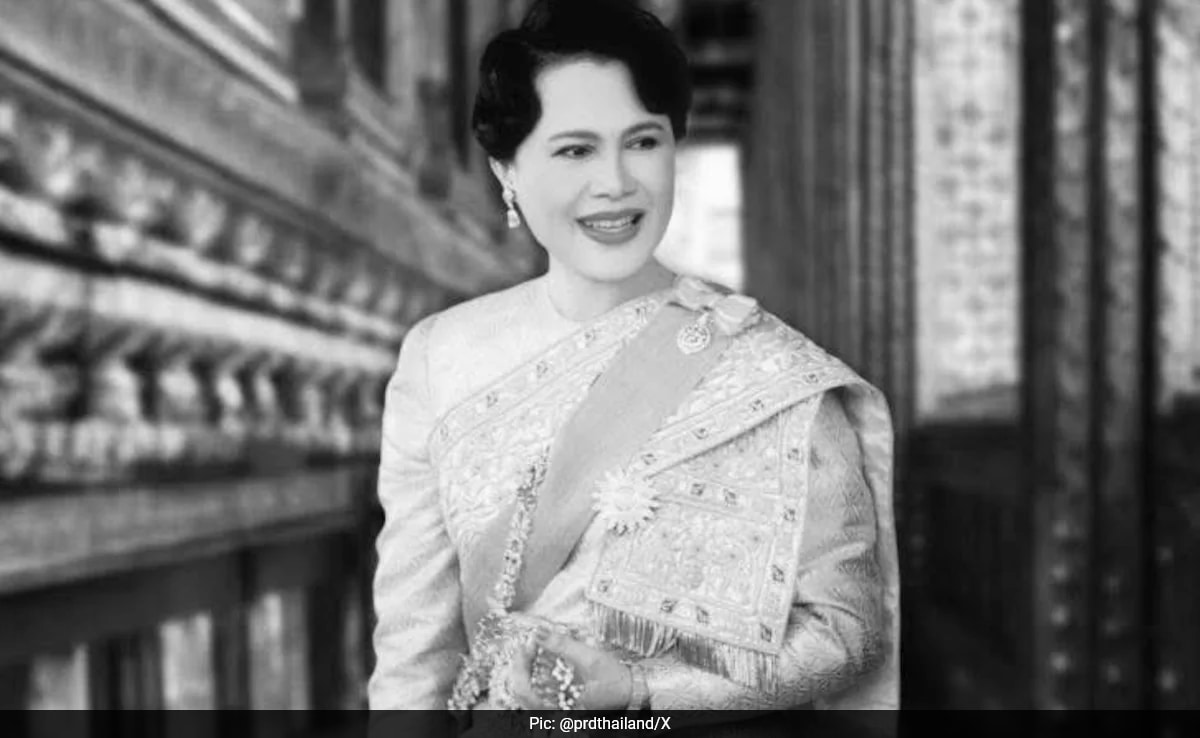
The Royal Household Bureau announced Queen Mother Sirikit passed away in a Bangkok hospital.
Thailand's Queen Mother Sirikit, renowned for her royal projects supporting rural communities, traditional crafts preservation, and environmental protection, died on Friday at the age of 93.
According to the Royal Household Bureau, she passed away in a Bangkok hospital. She had been battling a blood infection since October 17, but despite comprehensive medical care, her condition deteriorated. In recent years, she had largely withdrawn from public appearances due to health issues. Her husband, King Bhumibol Adulyadej, preceded her in death in October 2016.
Palace-released photographs from her 88th birthday showed her son, King Maha Vajiralongkorn, and other royal family members visiting the queen mother at Chulalongkorn Hospital, where she had been receiving extended medical care.
Though living somewhat in the shadow of her late husband and son, Sirikit was deeply beloved and influential in her own capacity. Her portrait adorned homes, offices, and public spaces throughout Thailand, and her August 12 birthday was nationally celebrated as Mother's Day. Her humanitarian efforts spanned from aiding Cambodian refugees to conserving Thailand's diminishing forest resources.
However, as Thailand experienced political turbulence in recent decades, scrutiny of the monarchy extended to the queen's influence. Reports circulated about her behind-the-scenes role during periods of unrest marked by military coups and violent street demonstrations. Her public attendance at the funeral of a protester killed during police confrontations was widely interpreted as taking a position in Thailand's political divide.
Born into an aristocratic Bangkok family on August 12, 1932—the same year Thailand transitioned from absolute to constitutional monarchy—Sirikit Kitiyakara came from lineage connected to previous Chakri dynasty kings.
She attended school in wartime Bangkok despite Allied bombing campaigns, and after World War II relocated to France with her diplomat father who served as ambassador there.
At 16, she encountered Thailand's newly crowned king in Paris while studying music and languages. Their relationship developed after Bhumibol suffered a severe car accident, prompting her move to Switzerland to assist in his recovery. The king courted her with poetry and composed "I Dream of You," a waltz in her honor.
They married in 1950, and during their coronation ceremony that same year, both pledged to "reign with righteousness for the benefit and happiness of the Siamese (Thai) people."
The royal couple had four children: current King Maha Vajiralongkorn and princesses Ubolratana, Sirindhorn, and Chulabhorn.
In their early married years, the Thai royals traveled extensively as goodwill ambassadors, establishing personal connections with global leaders.
By the early 1970s, the king and queen redirected their focus to Thailand's domestic challenges, including rural poverty, hill tribe opium addiction, and communist insurgency.
Annually, they toured the countryside while presiding over more than 500 royal, religious, and state functions.
The queen, known for her impeccable style and shopping enthusiasm, also embraced hiking through hills and visiting impoverished villages where elder women affectionately called her "daughter."
Thousands brought their concerns to her, from domestic disputes to serious medical conditions, with the queen and her staff personally addressing many cases.
While Bangkok elite occasionally gossiped about her involvement in palace politics and luxurious lifestyle, her popularity remained steadfast in rural areas.
"Misunderstandings arise between people in rural areas and the rich, so-called civilized people in Bangkok. People in rural Thailand say they are neglected, and we try to fill that gap by staying with them in remote areas," she explained in a 1979 interview with The Associated Press.
Royal development initiatives were established throughout Thailand, with several created and directly overseen by the queen.
To boost rural family incomes and preserve traditional craftsmanship, the queen established SUPPORT in 1976, a foundation that has trained thousands in silk-weaving, jewelry-making, painting, ceramics, and other traditional arts.
Often called the "Green Queen," she also created wildlife breeding centers, "open zoos," and hatcheries to protect endangered sea turtles. Her environmental projects "Forest Loves Water" and "Little House in the Forest" demonstrated the economic benefits of preserving forests and water resources.
While royalty in other nations held primarily ceremonial roles, Queen Sirikit believed the monarchy remained an essential institution in Thailand.
"There are some in the universities who think the monarchy is obsolete. But I think Thailand needs an understanding monarch," she stated in her 1979 interview. "At the call, 'The king is coming,' thousands will gather."
"The mere word king has something magic in it. It is wonderful."
Source: https://www.ndtv.com/world-news/thailands-queen-mother-sirikit-has-died-at-age-93-9512888