
EU Proposes Curbing Israel Trade Ties, Sanctioning Ministers Over Gaza
The European Union on Wednesday proposed curbing trade ties with Israel and sanctioning ministers in its strongest action over the war in Gaza, though reluctance from key member states risks blocking the measures' adoption.
- Date & Time:
- |
- Views: 100
- |
- From: India News Bull
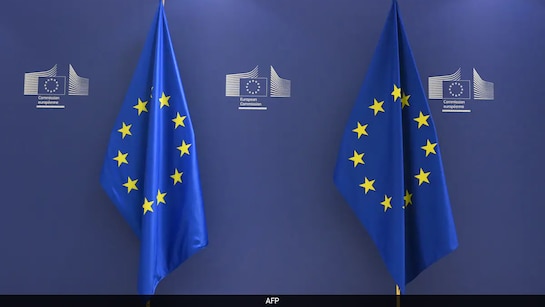
Belgium:
The European Union proposed on Wednesday its strongest measures yet regarding the Gaza conflict, including trade restrictions with Israel and sanctions against ministers, though significant opposition from key member states may impede implementation.
Additionally, the EU's executive body announced immediate independent action to freeze approximately 20 million euros ($23.7 million) in bilateral support to Israel.
This initiative from the European Commission comes amid increasing pressure on the 27-nation bloc to respond to Israel's devastating military campaign in Gaza, which has continued for nearly two years.
"The daily horrific events occurring in Gaza must end," stated EU President Ursula von der Leyen.
"We need an immediate ceasefire, unrestricted humanitarian aid access, and the release of all hostages held by Hamas," she added.
Brussels' new proposals include suspending portions of a cooperation agreement with Israel that currently provides reduced tariffs on Israeli imports.
Officials indicate this would impact over one-third of Israel's exports to the EU, valued at approximately six billion euros, including significant agricultural products such as dates and nuts.
The commission also recommended asset freezes and travel bans on far-right Israeli ministers Itamar Ben Gvir and Bezalel Smotrich, whose "extremist" statements are accused of exacerbating violence.
These measures—initially mentioned by von der Leyen during a major speech last week—represent the most determined effort by the EU leader to pressure Israel.
"Today marks a critical turning point in holding Israel accountable," declared Irish foreign minister Simon Harris.
However, opposition from influential member states, particularly von der Leyen's native Germany and Italy, means these proposals face significant hurdles to secure sufficient EU support.
Such resistance has already delayed a less severe proposal to reduce funding for Israeli technology startups, frustrating numerous EU countries demanding action.
Von der Leyen's commission can, however, independently decide to freeze bilateral support.
This freeze will exclude funding for civil society groups and Israel's Yad Vashem Holocaust memorial.
'Will Not Work'
Israel has already urged Brussels against proceeding with these proposals.
"Pressure through sanctions will not work," Israeli Foreign Minister Gideon Saar wrote to von der Leyen.
EU foreign policy chief Kaja Kallas emphasized that "the aim is not to punish Israel," but rather to improve Gaza's humanitarian situation.
The EU's push for action coincides with Israel facing renewed international condemnation for launching a major ground offensive against Gaza City.
The Israeli military initiated a massive bombardment of Gaza City before dawn on Tuesday and advanced its troops deeper into Gaza Strip's largest urban center.
This offensive occurred as a United Nations investigation accused Israel of committing genocide in the Palestinian territory, stating that Prime Minister Benjamin Netanyahu and other senior officials had incited the crime.
The conflict began following Palestinian Islamist group Hamas's October 2023 attack on southern Israel, which resulted in 1,219 deaths, mostly civilians, according to an AFP compilation of official figures.
Israel's retaliatory campaign has killed at least 64,964 people, also predominantly civilians, according to figures from Gaza's health ministry that the United Nations considers reliable.
The Israeli military estimates 2,000 to 3,000 Hamas militants remain in central Gaza City, and approximately 40 percent of residents have evacuated.