
Breaking the Glass Ceiling: The Challenges of Women in Japanese Politics After First Female Prime Minister
- Date & Time:
- |
- Views: 54
- |
- From: India News Bull
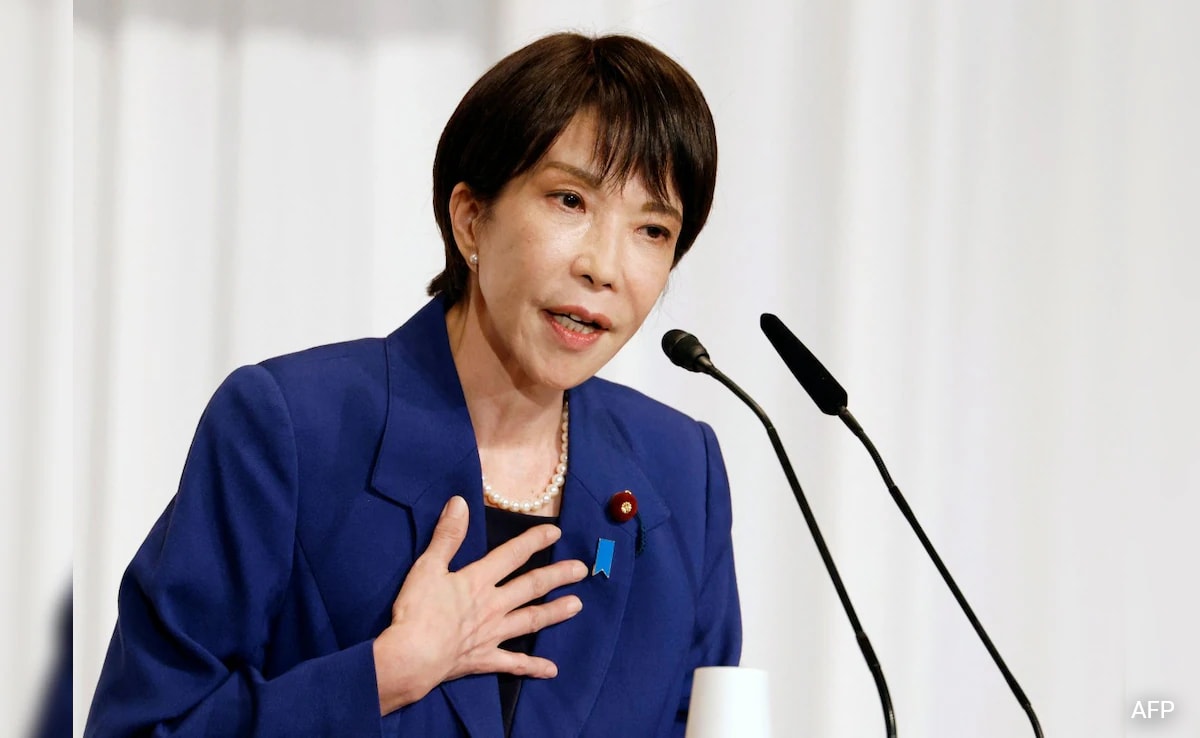
Takaichi wants Japan's imperial family to maintain its male-only succession tradition, according to a councillor.
Japan:
Following Sanae Takaichi's appointment as Japan's first female prime minister, AFP interviewed several younger female politicians who described her achievement as symbolically significant.
The three local councillors believe Takaichi's victory will have minimal impact on shifting the male-dominated political landscape or changing deeply rooted expectations that women should prioritize family over professional ambitions.
'Get married'
Makoto Sasaki returned to her northern hometown of Miyako after time away, hoping to transform local politics.
Upon arrival, she was immediately advised by community members to focus on starting a family instead.
"They told me, 'You won't be able to get married if you work so hard,'" Sasaki shared with AFP.
They also claimed I "wouldn't be considered a proper adult without giving birth," she recounted.
"It was shocking."
In Japanese society, gender roles remain rigid, with women typically expected to manage household and family responsibilities, even while pursuing careers.
Consequently, women are severely underrepresented across all political levels, as well as in business and media sectors.
Last year, at age 27, Sasaki successfully ran for election and became one of 22 local councillors.
"Unless we begin addressing these broader societal structures—like the gender gap, gendered division of household responsibilities, or care work—(the number of women politicians) won't increase," she explained to AFP.
Takaichi, who admires Margaret Thatcher, had promised to form a cabinet with "Nordic" levels of female representation, but on Tuesday appointed only two women, equal to her predecessor Shigeru Ishiba's cabinet.
"My region, Iwate, has never had a female political leader, whether for governor or mayor," Sasaki noted, highlighting the magnitude of gender inequality in Japan, which ranked 118th out of 148 countries in this year's World Economic Forum's Global Gender Gap Report.
In Sasaki's council in Miyako, approximately half the members are men over 70, with only three women serving.
Juggling domestic responsibilities
In the coastal city of Toba, Chihiro Igarashi "worries constantly" about balancing her councillor duties with caring for her two children, ages two and three.
"The belief that mothers must be available when children need them in emergencies remains deeply ingrained," said 37-year-old Igarashi, emphasizing that her husband and in-laws fully support her career.
For Japanese couples with children under six, women spend on average seven hours and 28 minutes daily on housework, caregiving, childcare and shopping, while men contribute only one hour and 54 minutes, according to 2021 government statistics, the most recent available.
Igarashi initially opposed Takaichi becoming prime minister because of her conservative positions, including opposition to same-sex marriage and support for a 19th-century law requiring married couples to share the same surname.
Takaichi also advocates for maintaining the imperial family's male-only succession rules.
Nevertheless, "her toughness is admirable... she must have made extraordinary efforts to reach her position," said Igarashi, one of just two women among 13 councillors in Toba.
"In my region, politicians typically emerge from civil service, corporate leadership, or other locally prominent positions," she said.
"And they're all men."
Single mother stigma
Erika Tsumori, a 34-year-old councillor in Atsugi city near Tokyo, advocates for women to work free from societal expectations and stigma.
As a single mother of two, she was advised during her campaign to conceal her family situation.
"My city is conservative, so I was told (during the election) not to openly reveal that I was a single mother," she recalled.
"I was also criticized for wearing dangly earrings, which were considered inappropriate for a candidate," she added, explaining that people viewed them as too casual.
Tsumori considers Takaichi's achievement a "symbolic victory" but believes the situation is gradually improving, with increasing numbers of women candidates.
In 2024, just over 23 percent of candidates in elections for Japan's powerful lower house were women, compared to nearly 18 percent in 2017 and 13 percent in 2005, according to official data.
Eventually, Tsumori affirmed, "there will surely be more women politicians."
Source: https://www.ndtv.com/world-news/the-reality-of-japanese-politics-for-women-in-a-male-dominated-society-9496194