
US-Colombia Diplomatic Crisis Escalates as Trump and Petro Engage in Public Confrontation Over Drug Trafficking Allegations
- Date & Time:
- |
- Views: 64
- |
- From: India News Bull
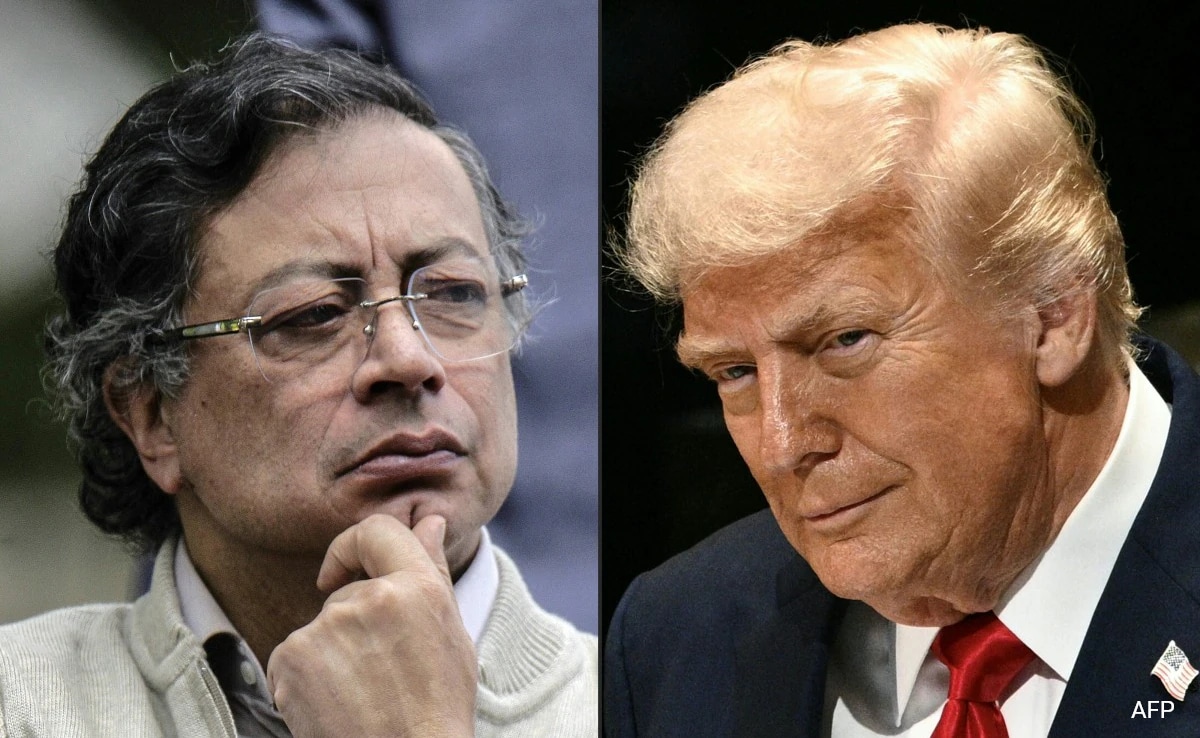
The diplomatic relationship between the United States and Colombia has deteriorated dramatically since Donald Trump and Gustavo Petro assumed their respective leadership positions.
Trump's recent decision to withhold millions in aid to Colombia and label President Petro as a drug trafficker has severely damaged long-standing bilateral ties and could potentially influence Colombia's upcoming 2026 presidential elections.
With Trump threatening "significant" punitive tariffs, Colombian businesses are experiencing anxiety while investors display growing concern about economic stability.
Interestingly, Colombian President Gustavo Petro appears undisturbed by this conflict with Colombia's largest trading partner, instead leveraging the dispute strategically.
The former guerrilla fighter turned political leader has embraced this confrontation, using it as a mechanism to energize his supporter base and potentially sway Colombian voters ahead of the May presidential elections.
In response to Trump's actions, Petro has withdrawn Colombia's ambassador from Washington, publicly criticized Trump through extensive social media posts and at United Nations forums, and increasingly adopted nationalist rhetoric.
"President Trump doesn't like us being out of his control," Petro stated on X, formerly Twitter, while suggesting possibilities of a US invasion and claiming "they want a coup against me."
During his New York visit last month, Petro encouraged US military personnel to disregard Trump's orders, which subsequently resulted in a US visa ban against him.
Recently, Petro expressed support for US demonstrations, posting 'No to kings' and sharing protest videos on social media platforms.
The transformation in US-Colombian relations since Trump and Petro assumed leadership could not be more pronounced.
For decades, the two nations collaborated in combating drug cartels, maintained robust trade relations, and enjoyed close political cooperation. Colombia was widely considered the United States' most reliable ally in South America.
Currently, "Petro is looking for a confrontation with Washington," according to Theodore Kahn from global risk consultancy Control Risks in Bogota.
Kahn suggests that Petro intends to use this diplomatic conflict to influence his Historic Pact party's presidential primary this Sunday and shift the electorate leftward.
Although constitutionally prohibited from seeking another presidential term, Petro remains determined to influence the selection of Colombia's next leader.
Trump and his Secretary of State, Marco Rubio, appear equally interested in shaping Colombia's political future.
Trump has described Petro as "a rated and very unpopular leader, with a fresh mouth toward America," while Rubio has consistently supported Petro's political opponents, including right-wing former president Alvaro Uribe.
Petro may be calculating that these international confrontations will enhance his domestic popularity and influence, similar to how Brazilian leftist President Luiz Inacio Lula da Silva benefited from such dynamics.
"There is a calculation by Petro to use foreign policy, as we saw with his stance on the Gaza war, to recover lost popularity," explained Yan Basset, political science professor at Bogota's Rosario University.
Petro's approval rating currently remains below 40 percent.
In reality, "the crisis benefits no one," and reduced cooperation would negatively impact both Washington and Bogota, according to Gimena Sanchez from the Washington Office on Latin America, a human rights organization.
The diplomatic rift could particularly affect Colombia's military and security services, which generally remain cautious about Petro and favor close cooperation with the United States.
Given Colombia's free trade agreement with Washington, this dispute could significantly impact the Colombian economy.
Nearly one-third of Colombian exports are destined for the United States, according to official data.
Maria Claudia Lacouture, president of the Colombo-American Chamber of Commerce, emphasized that the implications of Washington's message cannot be "taken lightly."
The sectors most vulnerable include oil, coffee, flowers, and minerals such as iron and ferronickel.
Javier Diaz, head of the National Association of Foreign Trade (Analdex), warned about uncertainty among businesses, stating: "We hope diplomatic channels are activated."
Washington's threats have intensified polarization in a country still recovering from decades of internal conflict.
On the political right, former presidents Alvaro Uribe and Andres Pastrana recently demanded that Petro clarify any potential connections to drug cartels.
Source: https://www.ndtv.com/world-news/colombia-president-gustavo-petro-donald-trump-at-loggerheads-over-drug-war-9494964