
Trump's Critical Asia Tour: Navigating Trade Tensions with China and Regional Diplomacy
- Date & Time:
- |
- Views: 69
- |
- From: India News Bull
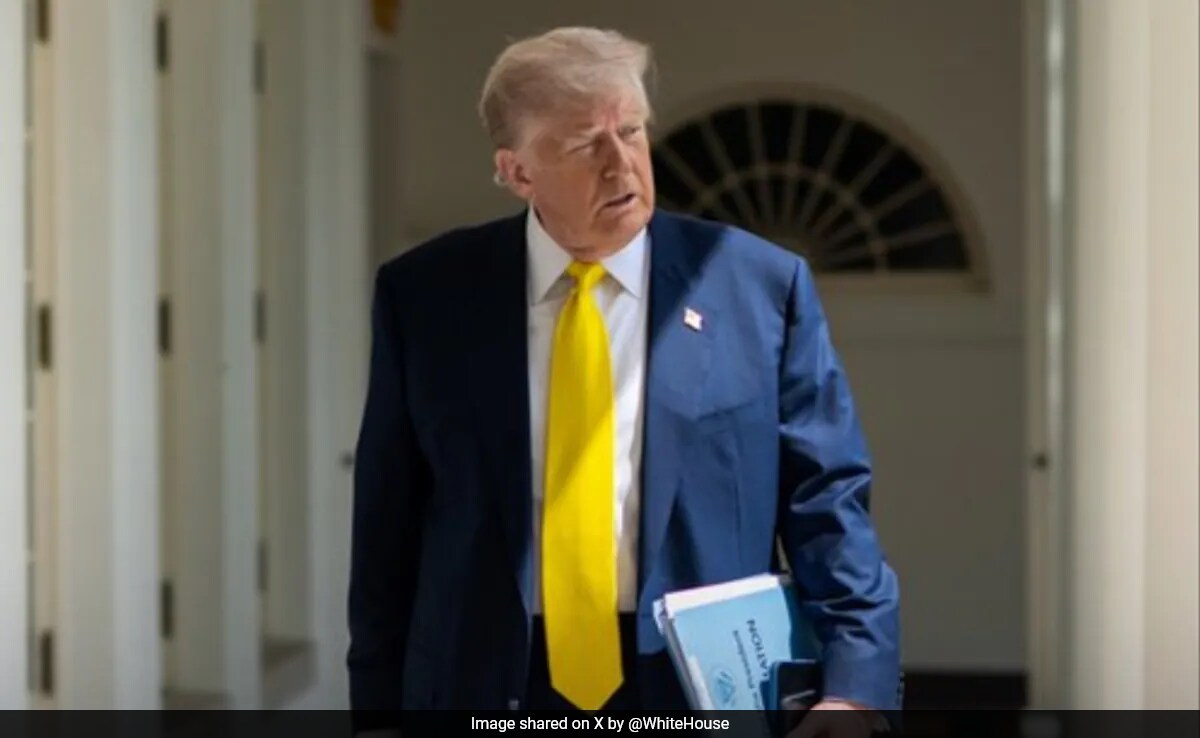
US President Donald Trump.
President Donald Trump is preparing for a critical Asia trip later this week, embarking on an extensive journey that could determine outcomes on several global economic fronts.
The cornerstone of this diplomatic tour will be an anticipated meeting with Chinese President Xi Jinping, where the future of global commerce hangs in the balance. Any miscalculation could reverberate through American businesses already destabilized by Trump's tariff policies, workforce reductions, and political tensions.
Since returning to office in January, Trump's improvisational diplomatic approach has yielded mixed results. While Hamas released hostages to Israel, the Middle East ceasefire remains tenuous. Trade relations with China have fluctuated considerably, and Russia's Ukraine invasion continues despite Trump's conflict resolution attempts.
Details about Trump's itinerary have been somewhat mysterious, lacking official White House confirmation for much of the schedule. On Monday, Trump confirmed plans to visit Malaysia for a regional summit, followed by Japan where he aims to secure foreign investments.
The President will also travel to South Korea to address trade matters and meet with Xi. Beijing has yet to confirm this meeting, while both leaders have recently exchanged threats regarding tariffs and export limitations.
"I have a very good relationship with President Xi of China," Trump told reporters while aboard Air Force One on Sunday. He indicated willingness to reduce tariffs provided China makes concessions, including purchasing American soybeans, reducing fentanyl precursor exports, and eliminating restrictions on critical rare earth minerals.
Trump expressed optimism on Monday, stating, "I think we're going to end up having a fantastic deal with China" that would be "fantastic for the entire world."
With Trump's departure imminent, uncertainty surrounds the trip's specifics—unusual even for a president known for strategic ambiguity.
"The whole trip has seemed so uncertain from the beginning," noted Bonnie Glaser, a managing director at the Washington-based German Marshall Fund.
This marks Trump's first Asia visit since returning to office. Though he has hosted regional leaders at the White House, he hasn't established the same foundational relationships that he maintains with leaders from other continents.
When questioned about Trump's plans, presidential spokesperson Anna Kelly responded that he "will participate in meetings and events in Asia that will result in many great deals for our country," adding, "Stay tuned!"
Trump's Asia strategy has centered on using tariffs to address perceived trade imbalances, creating anxiety among export-dependent nations. His upcoming meeting with Xi has generated particular concern about potential economic fallout from any escalation between the world's two largest economies.
"There will be some appreciation for the fact that he's there, but I don't think it will go far enough to quell the doubts that are pervasive in the region," Glaser predicted.
The Republican president has streamlined his foreign policy team since his first term, replacing traditional National Security Council advisory structures with a smaller group of trusted allies.
"There's not very many White House staff to do this kind of work," observed Rush Doshi, a former China policy specialist under President Joe Biden. "All of this puts us in uncharted waters."
Michael Green, a former Bush administration National Security Council member who now leads the United States Studies Centre in Sydney, noted the absence of a clear Asia strategy from Trump. "Everyone is waiting to see where he's going to come down on all of this," he remarked.
Others view Trump's approach more favorably. Anthony Kim from the Heritage Foundation emphasized that Japan and South Korea are eager to strengthen partnerships with the administration, conveying a message of "let's sit down, talk about relevant details to make a deal."
Malaysia is hosting the Association of Southeast Asian Nations summit, which Trump attended just once during his first term. This year's gathering offers an opportunity to showcase Trump's peacemaking initiatives, which have become central to his foreign policy agenda.
Earlier this summer, Thailand and Cambodia clashed along their disputed border, prompting Trump to threaten trade deal withdrawals unless hostilities ceased. "They were willing to come together and talk to avoid more economic pain," explained Ja Ian Chong, a political science professor at the National University of Singapore.
Malaysia and the United States have been working toward an expanded ceasefire, with Malaysia's foreign minister indicating that Trump "looks forward" to signing an agreement at the summit.
Japan is Trump's next destination. Washington and Tokyo recently completed a trade agreement including $550 billion in investment commitments for American projects.
Japan is undergoing political transition, with Sanae Takaichi expected to become the nation's first female prime minister on Tuesday. As a protégé of the late Prime Minister Shinzo Abe, with whom Trump maintained close relations during his first term, Green suggested Takaichi "has the potential to also play that role."
Maintaining Trump's commitment to U.S. alliances "requires a level of interaction and trust that none of the Asian leaders have," Green noted.
The culmination of Trump's journey will likely be South Korea, host of this year's Asia-Pacific Economic Cooperation summit, where Trump anticipates meeting with Xi.
Tensions have escalated recently, particularly after China announced restrictions on rare earth mineral exports. Trump threatened retaliatory tariffs at levels he admitted would be unsustainable.
Doshi outlined three potential outcomes from the Trump-Xi meeting: "deal, no deal or disaster." He suggested China feels empowered after Trump retreated from earlier tariff threats when Beijing restricted rare earth magnet exports. "The Chinese feel they have President Trump's number," Doshi said. "They feel that if they push on this, he'll fold."
On Monday, Trump stated that China has "treated us with great respect" since his return to office. He acknowledged, "I could threaten them with many other things," but added, "I want to be good to China."
Trade negotiations with South Korea present another challenge, as the country faces potential U.S. tariffs that could impact its automotive industry. Seoul has resisted Trump's demand for a $350 billion investment fund similar to Japan's commitment.
"There's some momentum to the talks," said Wendy Cutler, a veteran U.S. trade negotiator now serving as senior vice president at the Asia Society. "But I don't want to overstate it, because there are some fundamental differences about this fund that need to be sorted out."
She observed that while last-minute negotiations are common, in this instance "there are so many balls in the air."
Source: https://www.ndtv.com/world-news/us-president-donald-trump-expected-to-begin-asia-visit-this-week-whats-at-stake-9489586