
Louvre Heist Exposes Critical Museum Security Gaps: Staff Cuts and Delayed Upgrades Raise Concerns About Cultural Heritage Protection
- Date & Time:
- |
- Views: 61
- |
- From: India News Bull
The recent theft of royal jewels from France's premier museum has raised critical questions about the security measures protecting the nation's invaluable cultural treasures.
The audacious heist at the Louvre Museum has sparked widespread concern about how robbers armed with power tools could successfully break in and escape with priceless crowns and gemstone necklaces featuring sapphires and emeralds.
Security challenges are particularly daunting at the Louvre, which spans an enormous 73,000 square meters and houses approximately 35,000 artworks requiring protection.
Government officials revealed that a security review of the vast Paris institution was already underway before the incident occurred. Meanwhile, labor unions have highlighted ongoing issues regarding reductions in security personnel.
The security concerns at the Louvre are not new. In 1998, then-director Pierre Rosenberg characterized the museum's security as "fragile" following the daylight theft of a painting by French master Camille Corot.
When current director Laurence des Cars assumed leadership in 2021, she requested a comprehensive security audit from Paris police authorities.
Culture Minister Rachida Dati confirmed that recommendations from this audit had been provided "a few weeks, a few months ago" and implementation had recently begun, though she offered no specific details.
The culture ministry reported that alarms connected to the Apollo Gallery windows were triggered when thieves executed what was described as a "particularly fast and brutal break-in."
According to the ministry, five museum guards stationed in the gallery and surrounding areas "immediately intervened to implement security protocol," causing the thieves to flee. Fortunately, no injuries were reported.
Labor representatives claim the museum's security has been compromised by significant staffing reductions in recent years, despite increasing visitor numbers.
One union source, speaking anonymously, stated that approximately 200 full-time equivalent positions had been eliminated at the museum over the past 15 years, from a total workforce of nearly 2,000.
"We cannot do without physical surveillance," the source emphasized.
The SUD union released a statement condemning "the destruction of security jobs" at the Louvre.
Just weeks earlier in mid-June, museum staff had conducted a brief walkout protesting "understaffing" issues they claimed prevented them from fulfilling their responsibilities effectively.
David Belliard, a Green party deputy mayor of Paris, questioned on social media: "This robbery comes a few months after museum employees warned about security flaws. Why were they ignored by the museum management and the ministry?"
In response to growing concerns about the Louvre's condition, President Emmanuel Macron announced earlier this year an extensive renovation project estimated to cost up to $930 million.
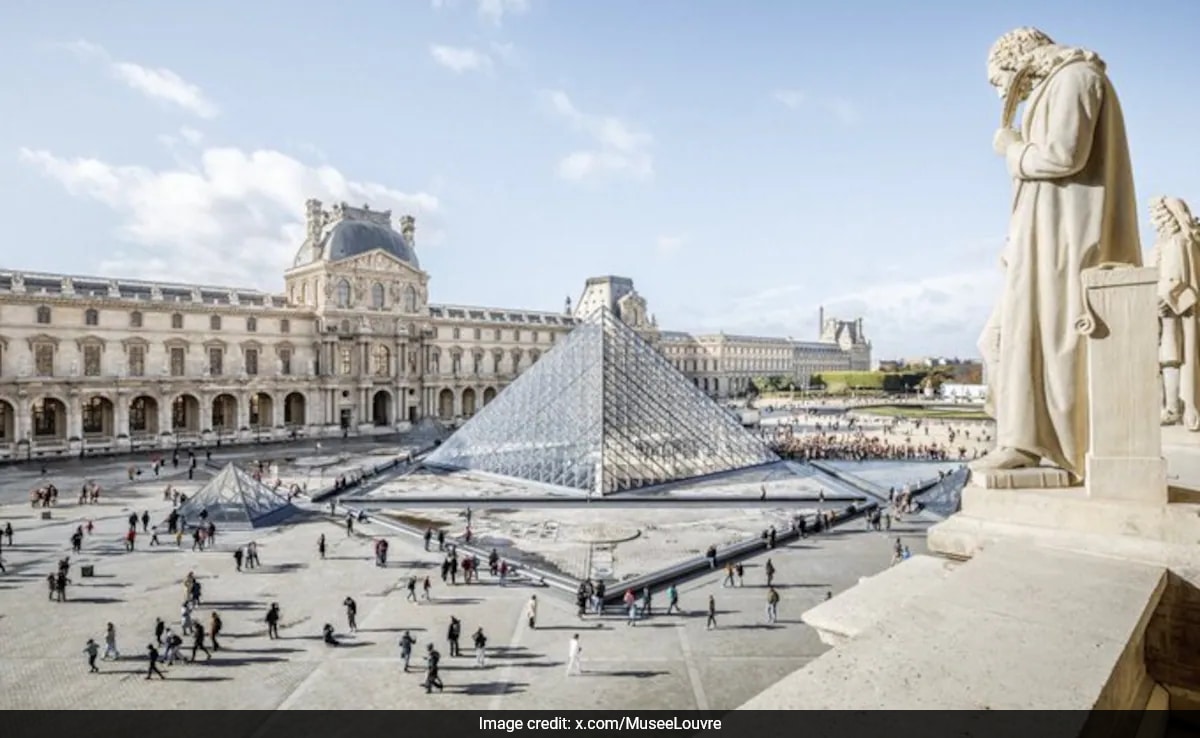
The ambitious plan includes constructing a new entrance to alleviate congestion at the iconic glass pyramid by 2031, along with a dedicated exhibition space for the Mona Lisa.
Dati confirmed that the renovation project incorporates a new "security master plan."
The culture ministry also stated that security measures would be "improved with new-generation cameras deployed."
The union source interviewed expressed hope that funding "will be up to the protection required by our establishment."
The Louvre incident represents just the latest in a series of French museum thefts. Only last month, thieves broke into Paris's Natural History Museum overnight and stole six kilograms of gold nuggets.
"Museums are increasingly targeted for the valuable works they hold," noted the Central Office for the Fight against Trafficking in Cultural Property (OCBC) in early October.
The office further stated that gold objects "are particularly exposed, especially since the security of a museum does not equal that of a bank."
According to OCBC statistics, museum burglaries reached a peak of 31 in 2015, with nine recorded in 2023 and 21 in 2024. France designates 1,200 venues as national museums.
Following the heist, authorities and art world experts speculated about the perpetrators and the potential fate of the stolen treasures.
Interior Minister Laurent Nunez suggested on radio that "a seasoned team" of thieves was likely responsible, one that had "already committed other deeds of this nature."
Alexandre Giquello, president of leading auctioneer Drouot Patrimoine, expressed skepticism about the jewels being stolen to order, describing the famous treasures as "totally unsellable in their current state."
"In this operation, the most complicated part is not the theft, but the fencing," he told television channel LCI.
Source: https://www.ndtv.com/world-news/paris-louvre-heist-lays-bare-museum-security-complaints-9486036