
Israel Identifies Bodies of Two Hostages as Gaza Ceasefire Negotiations Enter Second Phase
- Date & Time:
- |
- Views: 61
- |
- From: India News Bull
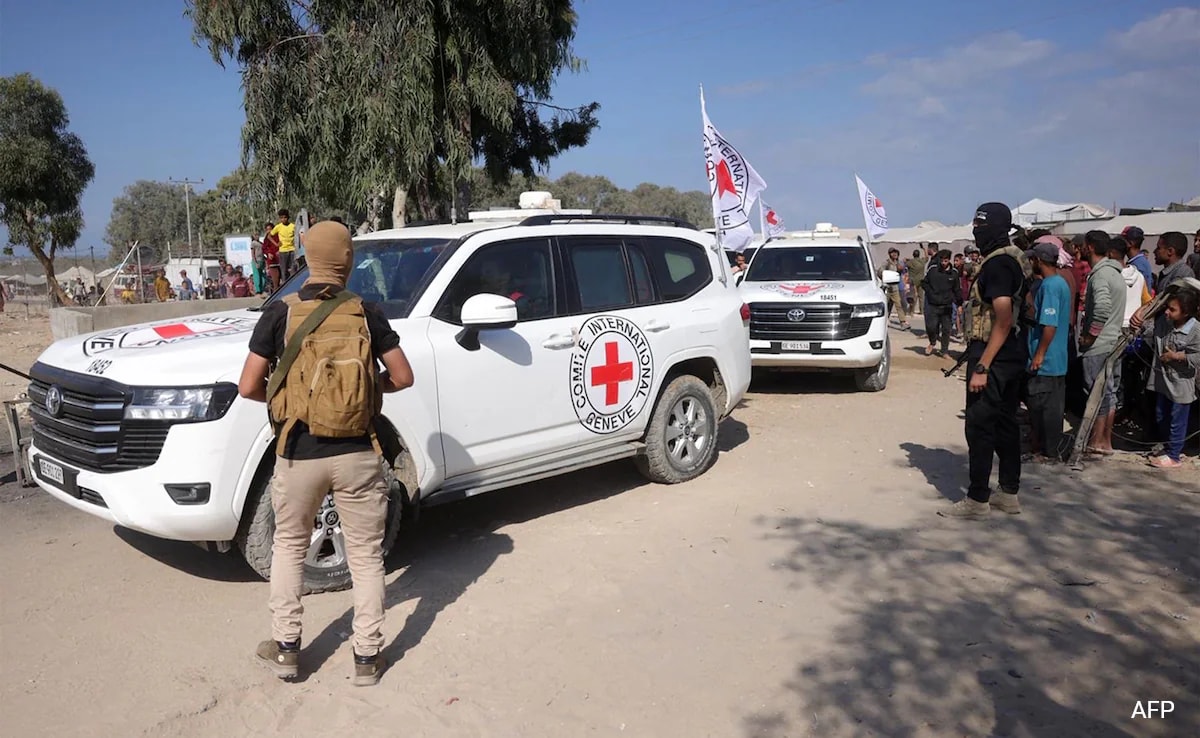
Hamas has handed over 13 bodies, 12 of which have been identified as hostages. (File)
Israel identified the remains of two hostages Sunday morning after Hamas delivered their bodies to the Red Cross the previous night, while Hamas announced the commencement of talks for the second phase of ceasefire negotiations.
The Israeli Prime Minister's office confirmed the bodies belonged to Ronen Engel, a father of three from Kibbutz Nir Oz, and Sonthaya Oakkharasri, a Thai agricultural worker killed at Kibbutz Be'eri. Both individuals were believed to have been killed during the October 7 attack with their bodies subsequently transported to Gaza. Engel's wife, Karina, and two of his three children were kidnapped and later released during a ceasefire in November 2023.
Israel has threatened to maintain the closure of the Rafah border crossing between Gaza and Egypt "until further notice." Netanyahu's office stated that reopening Rafah would be contingent upon Hamas fulfilling its ceasefire obligation to return the remains of all 28 deceased hostages.
Of the 13 bodies Hamas has transferred, 12 have been confirmed as hostages. Israeli authorities indicated that one body was not identified as a hostage.
The exchange of remains, alongside aid deliveries into Gaza and future governance of the devastated territory, constitute critical elements of the ceasefire agreement reached on October 10, intended to end two years of conflict.
Prior to the war, the Rafah crossing was the only passage not under Israeli control. It has remained closed since May 2024, when Israel seized control of the Gaza side. A fully operational crossing would significantly ease Palestinians' ability to seek medical treatment, travel, or visit family in Egypt, where tens of thousands of Palestinians currently reside.
The Palestinian Authority's Interior Ministry in Ramallah announced procedures on Sunday for Palestinians wishing to transit through the Rafah crossing. Those seeking to exit Gaza will find Palestinian Embassy staff from Cairo at the crossing to issue temporary travel documents permitting entry into Egypt. Palestinians wishing to enter Gaza must apply at the Cairo embassy for appropriate entry documentation.
According to the Gaza Health Ministry, which operates under the Hamas-run government, Israel's military campaign has resulted in over 68,000 Palestinian fatalities. These figures are considered reliable estimates of wartime casualties by UN agencies and numerous independent experts, though Israel has disputed them without providing alternative figures.
The Red Cross reports thousands more individuals remain missing.
The Hamas-led attack that triggered the war resulted in approximately 1,200 deaths, primarily civilians, with 251 people abducted.
Israel reported Sunday that Hamas militants fired upon troops in southern Gaza's Rafah city, within Israeli-controlled areas that fall within agreed-upon ceasefire boundaries. No injuries were reported. Both Hamas and Israel have accused each other of violating the fragile truce.
Hamas has announced that discussions with mediators regarding the second phase of the ceasefire, introduced by US President Donald Trump, have commenced.
Hamas spokesman Hazem Kassem stated late Saturday that the second phase of negotiations "requires national consensus." He added that Hamas has initiated discussions to "solidify its positions," without elaborating further.
Under Trump's plan, negotiations will address Hamas disarmament and the establishment of an internationally supported authority to administer the Gaza Strip.
Kassem reiterated that Hamas would not participate in the governing authority of post-war Gaza. He explained that Hamas-run government bodies in Gaza continue to manage day-to-day affairs to prevent a power vacuum.
"Government agencies in Gaza continue to perform their duties, as the vacuum is very dangerous, and this will continue until an administrative committee is formed and agreed upon by all Palestinian factions," he stated.
Kassem advocated for the prompt establishment of a Community Support Committee, comprised of Palestinian technocrats, to manage daily operations.
Hamas rejected Sunday a US State Department claim regarding credible reports of an imminent Hamas-planned attack against Gaza residents.
"This planned attack against Palestinian civilians would constitute a direct and grave violation of the ceasefire agreement and undermine the significant progress achieved through mediation efforts," the State Department stated Saturday.
Hamas dismissed these as "false allegations," and accused Israel of supporting armed groups operating in Israeli-controlled areas. The organization urged the US administration to pressure Israel to cease supporting these groups and "providing them a safe haven."
Hamas-led fighters have engaged in clashes with at least two armed groups in eastern Gaza City, which Hamas alleges are involved in aid looting and collaboration with Israel. They executed several suspects publicly, actions that have been widely condemned as extrajudicial killings.
The Hamas-run Interior Ministry maintains that its forces are working to restore law and order across areas from which Israel's military withdrew following the ceasefire.
Source: https://www.ndtv.com/world-news/israel-identifies-bodies-of-2-hostages-as-gaza-border-crossing-with-egypt-remains-closed-9482946