
Trump's Controversial Military Strikes Against Venezuela: Blurring Lines Between Drug War and Counterterrorism
- Date & Time:
- |
- Views: 38
- |
- From: India News Bull
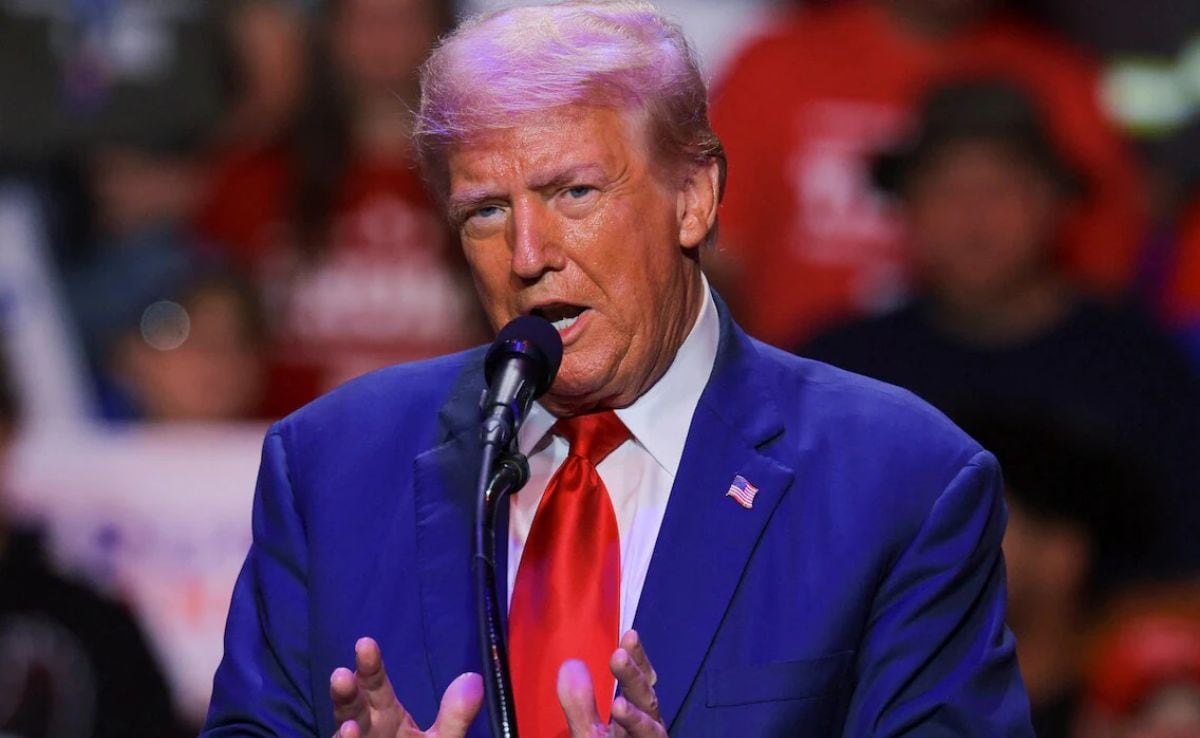
Trump's administration has yet to provide evidence that vessels targeted in US military operations were transporting narcotics.
Washington:
President Donald Trump is increasingly approaching the war on drugs with tactics reminiscent of counterterrorism operations.
The Trump administration is justifying strikes against Latin American criminal organizations using legal frameworks established after the September 11, 2001 attacks, which authorized lethal force against al-Qaida operatives responsible for the World Trade Center and Pentagon attacks.
However, today's targets represent a fundamentally different adversary—criminal syndicates originating in Venezuelan prisons, motivated not by anti-Western ideology but by profits from drug trafficking and other criminal enterprises.
Legal scholars argue that Trump's deployment of overwhelming military force against such groups and authorization of covert action within Venezuela, potentially aimed at removing President Nicolás Maduro, pushes the boundaries of international law. This approach coincides with expanded domestic military deployments, including National Guard presence in American cities and Trump's openness to invoking the nearly 150-year-old Insurrection Act for civil unrest situations.
US military strikes have resulted in at least 27 casualties across five operations targeting boats allegedly carrying narcotics.
These operations—the most recent occurring Tuesday with six fatalities—have proceeded without formal legal proceedings or congressional declarations of war. This raises significant questions about the legal basis for Trump's actions and their potential impact on diplomatic relations with Latin American nations, which harbor deep historical resentment over US military interventions during the Cold War era.
Furthermore, the US intelligence community has contradicted Trump's central claim that Maduro's government collaborates with the Tren de Aragua gang to orchestrate drug trafficking and illegal immigration into the United States.
Trump's declaration of an "armed conflict" with drug cartels relies on the same legal authority invoked by the Bush administration for the war on terror following 9/11, including provisions for capturing combatants and using lethal force against leadership targets.
However, the United Nations charter specifically prohibits the use of force except in self-defense situations.
"You just can't call something war to give yourself war powers," explains Claire Finkelstein, professor of national security law at the University of Pennsylvania. "However frustrated we may be with the means and results of law enforcement efforts to combat the flow of drugs, it makes a mockery of international law to suggest we are in a noninternational armed conflict with cartels."
Following 9/11, al-Qaida was clearly planning additional civilian-targeted attacks. Cartels, meanwhile, primarily focus on drug trafficking—which, while harmful to American security interests, provides questionable grounds for invoking war powers, according to Geoffrey Corn, Texas Tech law professor and former Army senior adviser on law-of-war matters.
"This is the government, in my humble opinion, wanting to invoke war powers for a lot of reasons"—including political considerations, Corn stated.
"Even if we assume there's an armed conflict with Tren de Aragua, how do we know everyone in that boat was an enemy fighter?" he questioned. "I think Congress needs to know that."
When asked at a White House press conference why the Coast Guard isn't employed to intercept Venezuelan vessels and confiscate drugs, Trump responded, "We have been doing that for 30 years and it has been totally ineffective."
The president also indicated potential strikes within Venezuelan territory, which would significantly escalate tensions and legal complications. Current operations have been limited to international waters outside any nation's jurisdiction.
"We've almost totally stopped it by sea," Trump claimed regarding drug trafficking. "Now we'll stop it by land."
Questioned about a New York Times report describing his authorization of covert CIA operations in Venezuela, Trump—who has criticized the 2003 Iraq invasion that removed Saddam Hussein—declined to confirm whether he had authorized actions to remove Maduro, calling such questions "ridiculous."
Multiple US laws and executive orders since the 1970s prohibit assassinating foreign officials. However, by designating Venezuelans as unlawful combatants, Trump may be attempting to circumvent these restrictions, potentially returning to an era when the United States regularly conducted covert regime change operations in countries like Guatemala, Chile, and Iran.
"If you pose a threat, and are making war on the US, you're not a protected person," Finkelstein noted.
During Trump's first term, Maduro faced US federal drug charges including narcoterrorism and cocaine importation conspiracy. This year, the Justice Department increased the reward for information leading to Maduro's capture to $50 million, labeling him "one of the largest narco-traffickers in the world."
Trump's Venezuela focus overlooks key drug trafficking realities: most American overdose deaths result from fentanyl transported overland from Mexico. While Venezuela serves as a significant drug transit zone, approximately 75% of Colombian-produced cocaine—the world's largest supply—travels through eastern Pacific routes rather than Caribbean channels.
Constitutionally, war declarations belong to Congress. However, there's little indication that Trump's allies will challenge his expansive view of presidential authority to target cartels blamed for thousands of American overdose deaths annually.
The Republican-controlled Senate recently defeated a Democratic war powers resolution that would have required congressional authorization before further military strikes.
Despite pressure even from some Republicans for greater transparency, the Trump administration has not provided Congress with evidence proving that targeted vessels were transporting narcotics, according to two US officials speaking to The Associated Press. Independent Senator Angus King of Maine reported that Senate Armed Services Committee members were denied access to the Pentagon's legal analysis regarding the strikes' compliance with US law during a classified briefing.
Legal challenges are unlikely to influence the White House position. A 1973 Supreme Court decision stemming from a Democratic congresswoman's attempt to sue the Pentagon over Vietnam War expansion into Laos and Cambodia established significant barriers to challenging military orders, Finkelstein explained.
Meanwhile, relatives of Venezuelans killed in these operations face substantial obstacles to pursuing legal action in US courts following several Supreme Court rulings limiting foreign citizens' ability to file lawsuits.
The military strikes occurred in international waters, potentially enabling International Criminal Court investigations similar to its war crimes probes against Russia and Israel—which, like the United States, do not recognize the court's jurisdiction.
However, the Hague-based court is currently managing a sexual misconduct investigation that prompted its chief prosecutor's recusal. Additionally, US sanctions following its indictment of Israeli Prime Minister Benjamin Netanyahu have further hampered its operations.
Source: https://www.ndtv.com/world-news/war-on-drugs-vs-terror-trumps-military-pressure-on-venezuela-blurs-lines-9471103